
It was brilliant to attend a couple of empowering and enriching workshops with Chris Tse the David Malouf poet in residence for 2025, at the Queensland Writer’s Centre.
These were both held on a Saturday mornings in December 2025.
A shared focus of the two workshops was process, and understanding where we were beginning our journeys at the start of the workshop and what could extend our knowledge and skills by the end of each of our two- and half-hour workshops. A few of us but not all attended both workshops.
As a facilitator Chris drew on the strength and knowledge about poetry, language, practice and cultures, in the room, before adding his personal stories and experiences into the mix, which is a sign of an excellent facilitator.
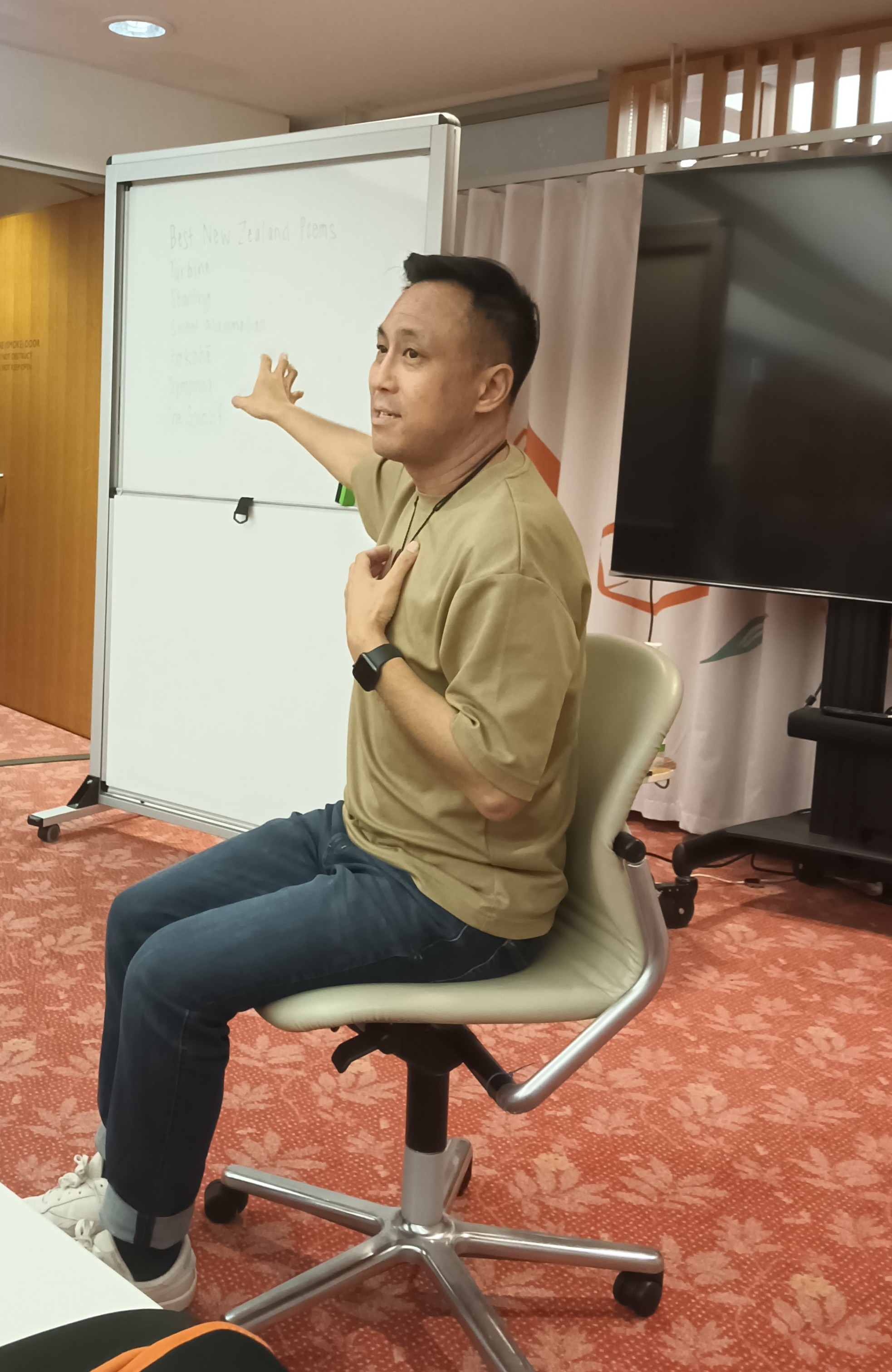
In the first workshop, ‘You speak a my language’ (Men at Work reference) we explored ‘Language’ in a dialogic style, through discussions of language, power, connections, between Australia and Aotearoa/ New Zealand.
In one activity we worked in small groups to analyse three very different New Zealand poets and learnt from these interesting mentoring texts about the forms verse poem, villanelle, and innovative free form poem in which choices about type face were decolonising.
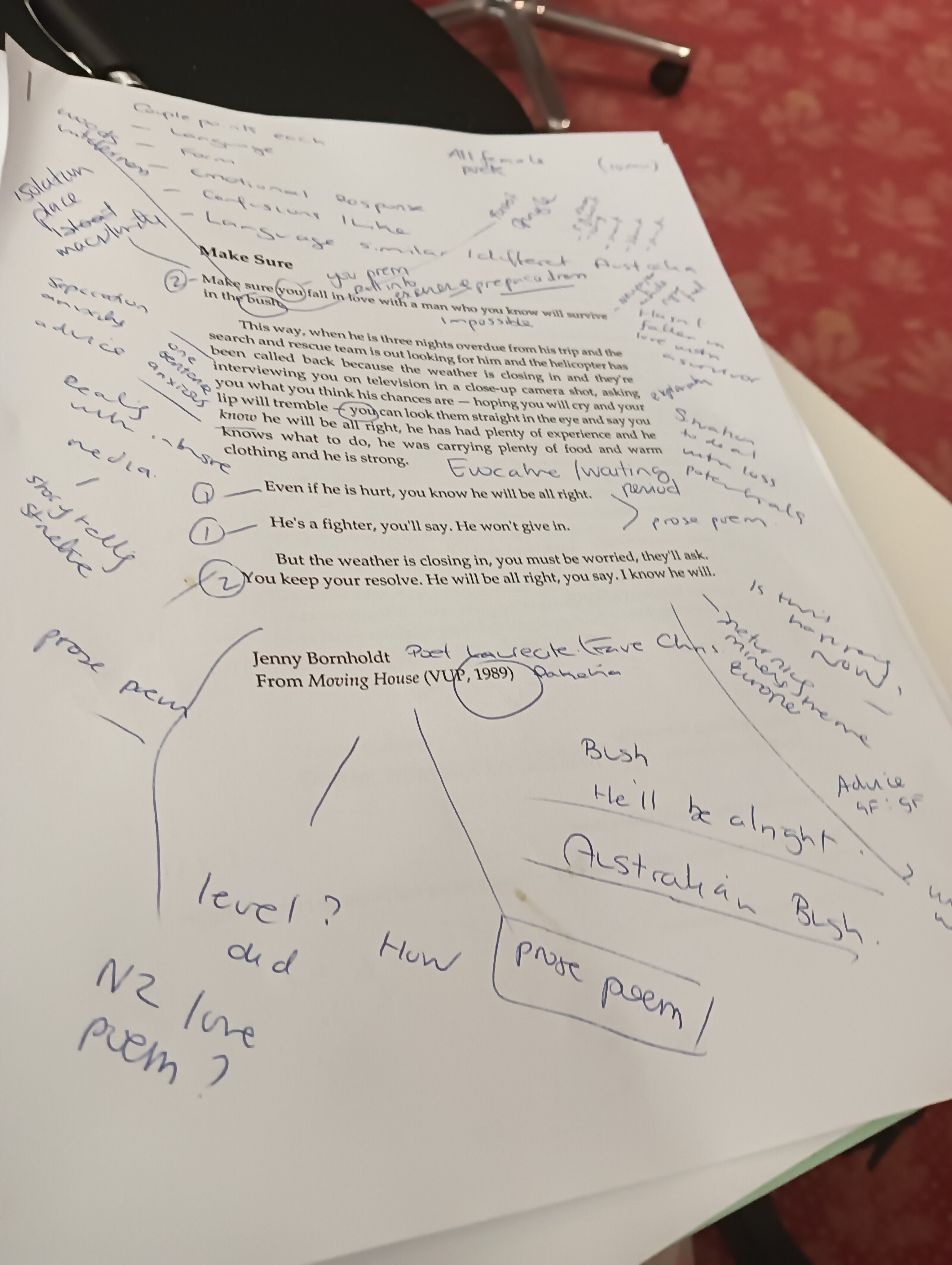
Workshop participants were such an interesting group of readers, writers, and appreciators who keenly shared their connections with this art form and ideas about the potential powers of poetry as well as some of their personal stories.
Participants were an interesting mix of cultures reflective of multicultural Australia, who engaged in a lot of interesting intercultural dialogue including about the things that are so difficult to translate the original phrase is said in English. I especially enjoyed reconnecting with Damon and Alex and spending time with Ellen on some of the reading the poems in depth work.
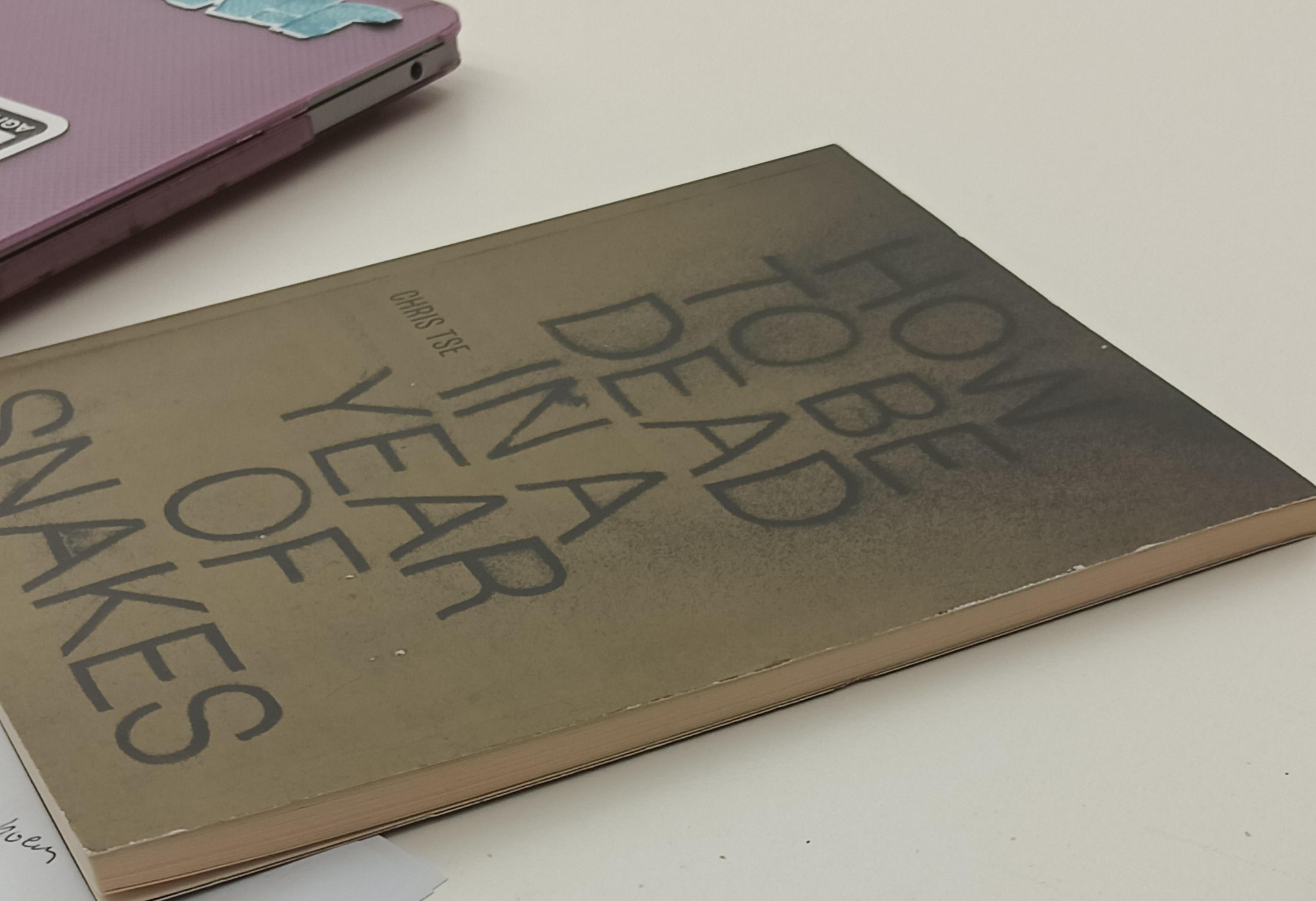
Chris by request, treated us to a reading of his work, from How to Be Dead in a Year of Snakes, at the end of the first workshop.

In the second workshop, ‘We are on each other’s team’ (Lorde reference) we learnt about collaborative poetry and analysed some interesting examples of this.
This workshop was playful and had both breadth and depth. We revisited or learnt for the first time about literary games, as a playful way to generate text to play with. (Noting the poetry magnets in the tearoom of the Queensland Writers Centre) We used aspects of found poetry, erasure, surrealist games and more, as well as looking at theatre poetry examples.
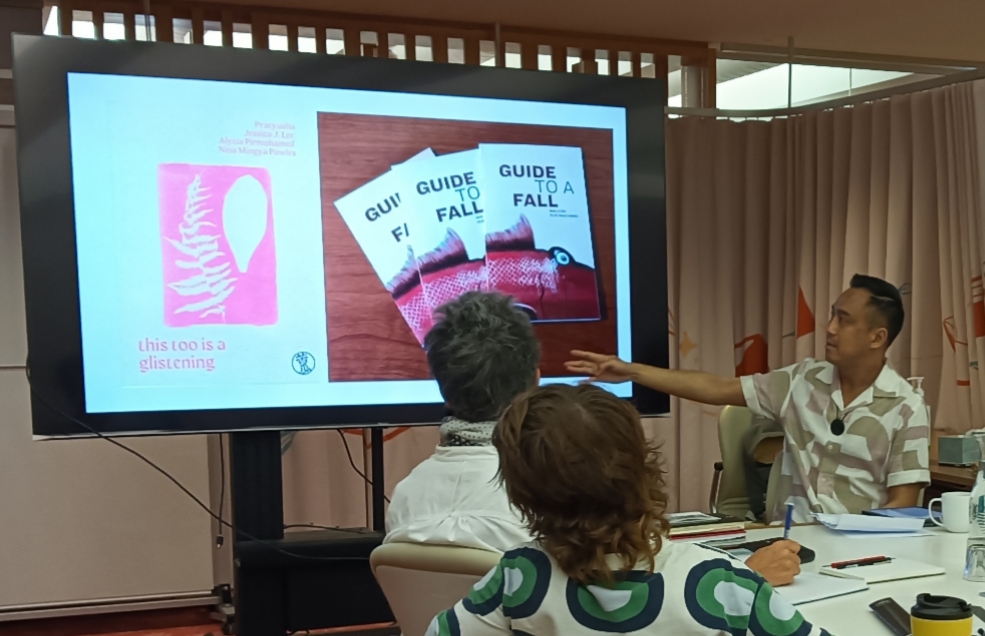
We looked back at poetry history for collaborations, and biographies of collaborators we might not have heard about, which workshop participants were very appreciative of, as we witnessed the research Chris had put into contextualising the activity of collaboration.
Chris presented us with a couple of interesting case studies and gave us a helpful summary of important things to consider when collaborating, especially the need to put aside ego.
I found this workshop inspiring, for not just my own personal practice, but thinking about my future lessons with high school students and made detailed notes to help me put some aspects of the workshop into my future lessons.
Chris generously was happy for me to do this, to further the cause of poetry with all age groups as we also had conversations during his visit about the power poetry can give to children and youth. He also encouraged us to use the methods in our future practice as individuals and collectives.
There is a kind of collaborative poetry, where mentor texts, and other poets become our collaborators for a new work, and since the workshop I have been expanding my own research into forms that are like this and will be useful as a teacher and practitioner.
Another interesting technique was Chris giving three groups each a different ‘how to’ prompt to collaborate with, to give us time to focus on how we worked together rather than coming up with a topic from out of thin air. Writing prompts can be great for that, as they give just enough structure and freedom to work within time limit constraints.
A special thanks to Abi and Georgia, my co-collaborators for the main practical exercise of the workshop. You both made it a lot of fun, and we had an interesting discussion of what a house means to us metaphorically and interculturally. Although we didn’t really tell you how to lock one, but rather the reasons we felt a house shouldn’t need to be locked and how a safe house felt.
We did however use the power of three, perspectives and a unified clap (thanks Chief from Conference of the Australian Pasifika Educators Network) for your influence on my workshop!
Thanks to Queensland Writers Centre for supporting/ coordinating Chris’s trip for the David Malouf Residency, to our staff members for the workshops, Lizzie and Ryo, and especially to Chris.
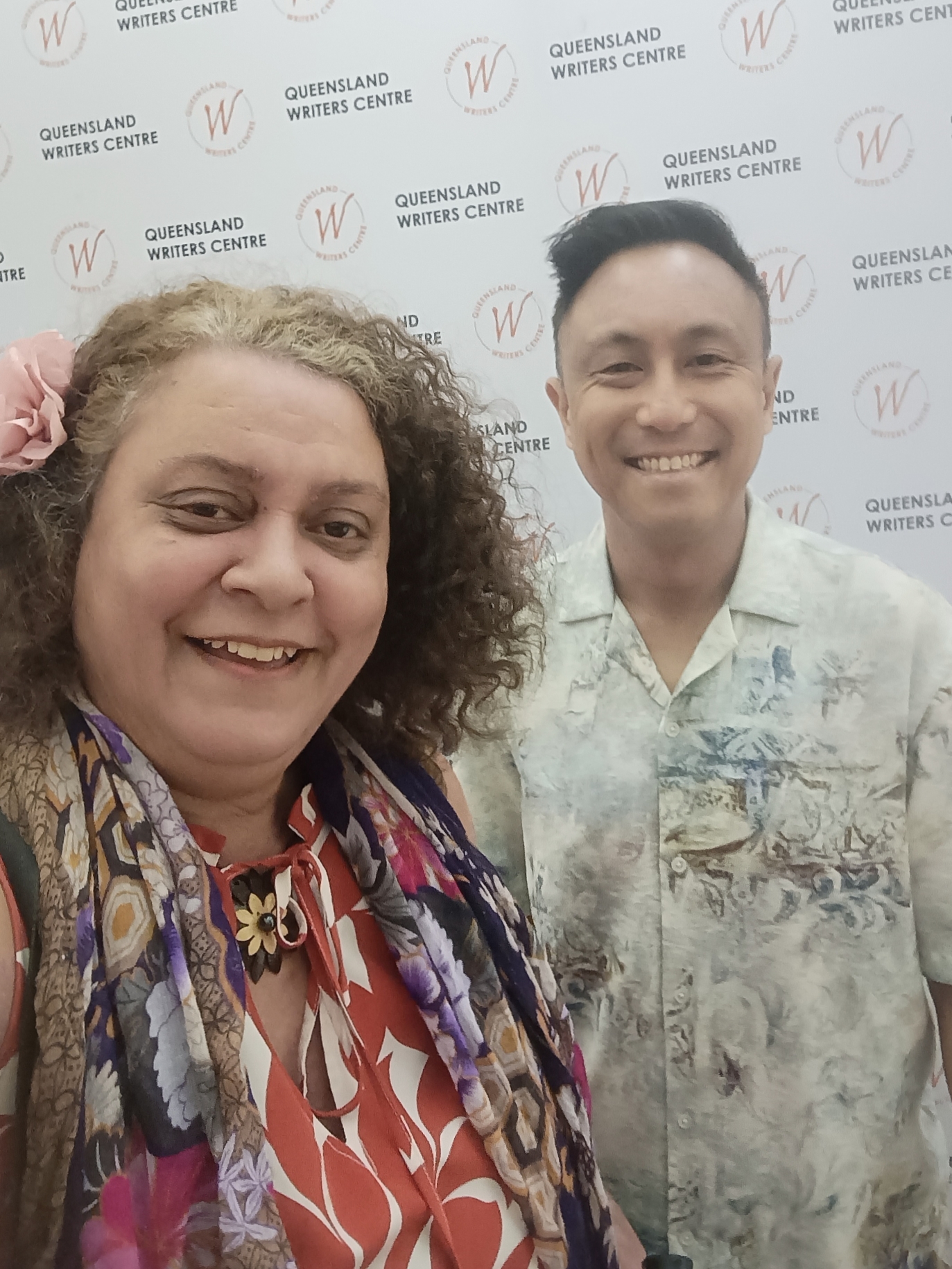
 June Paisa Perkins