Brave, Bold, Genre con (part 2) The Uncanny Valley

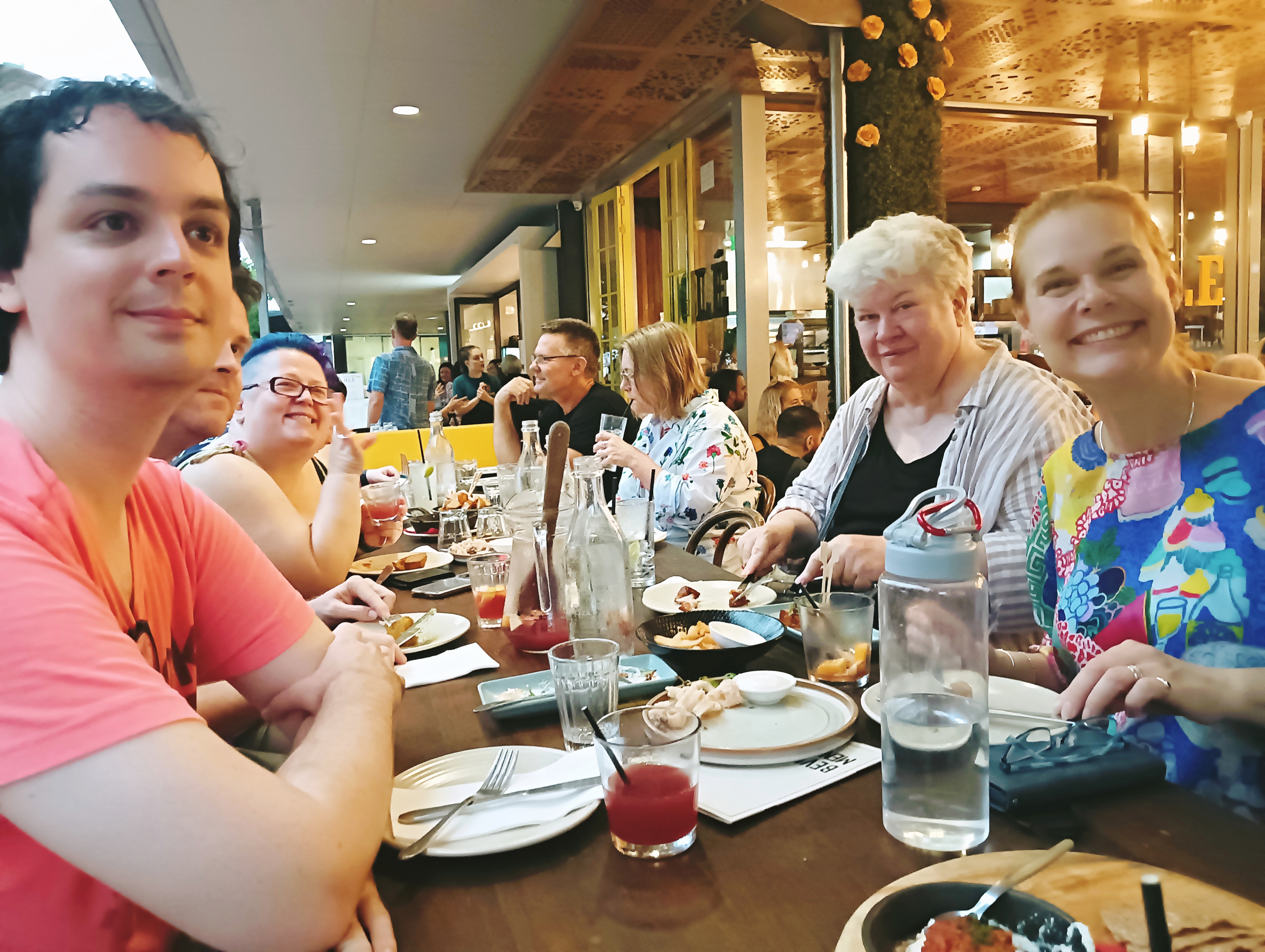
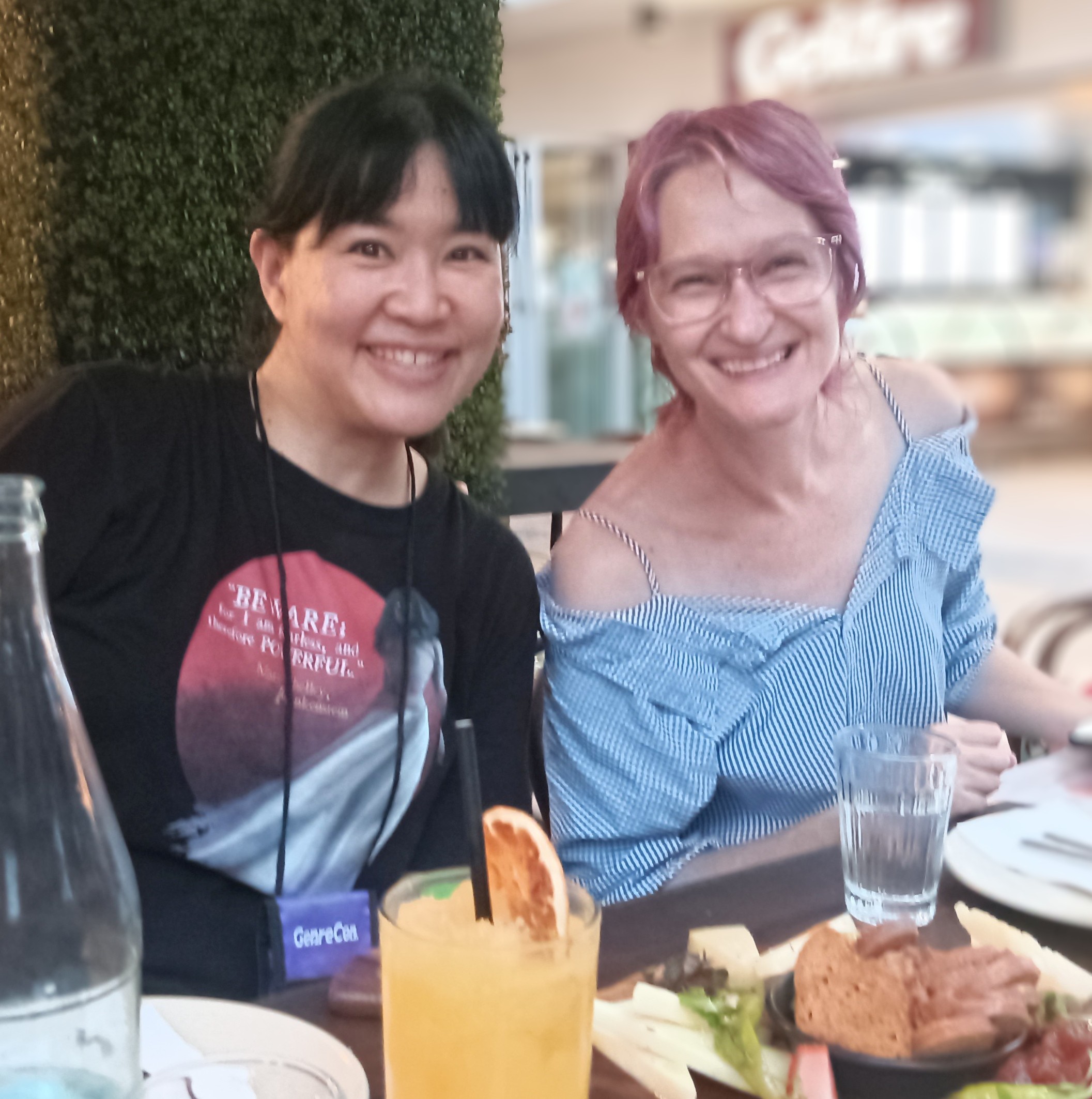
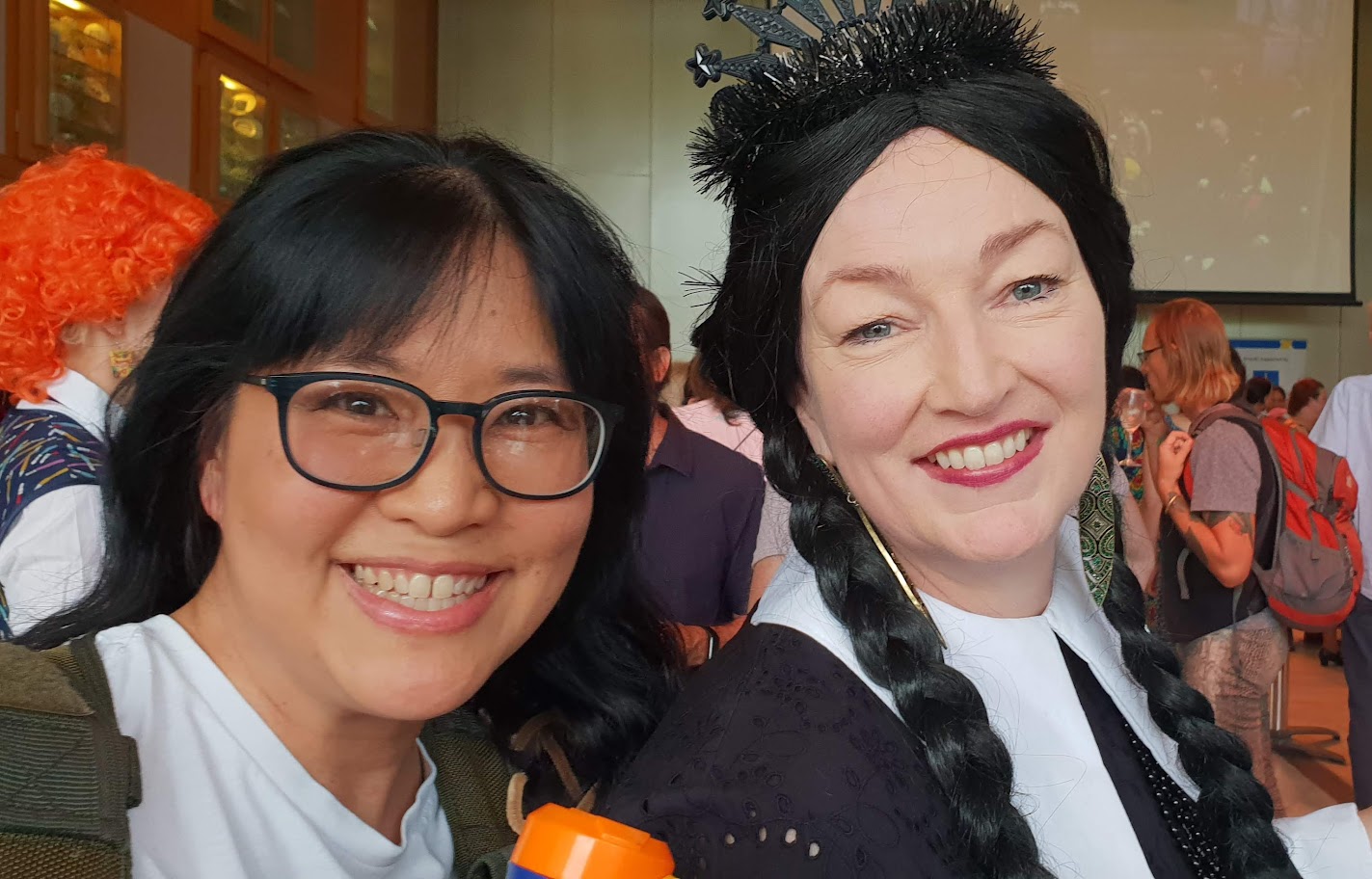
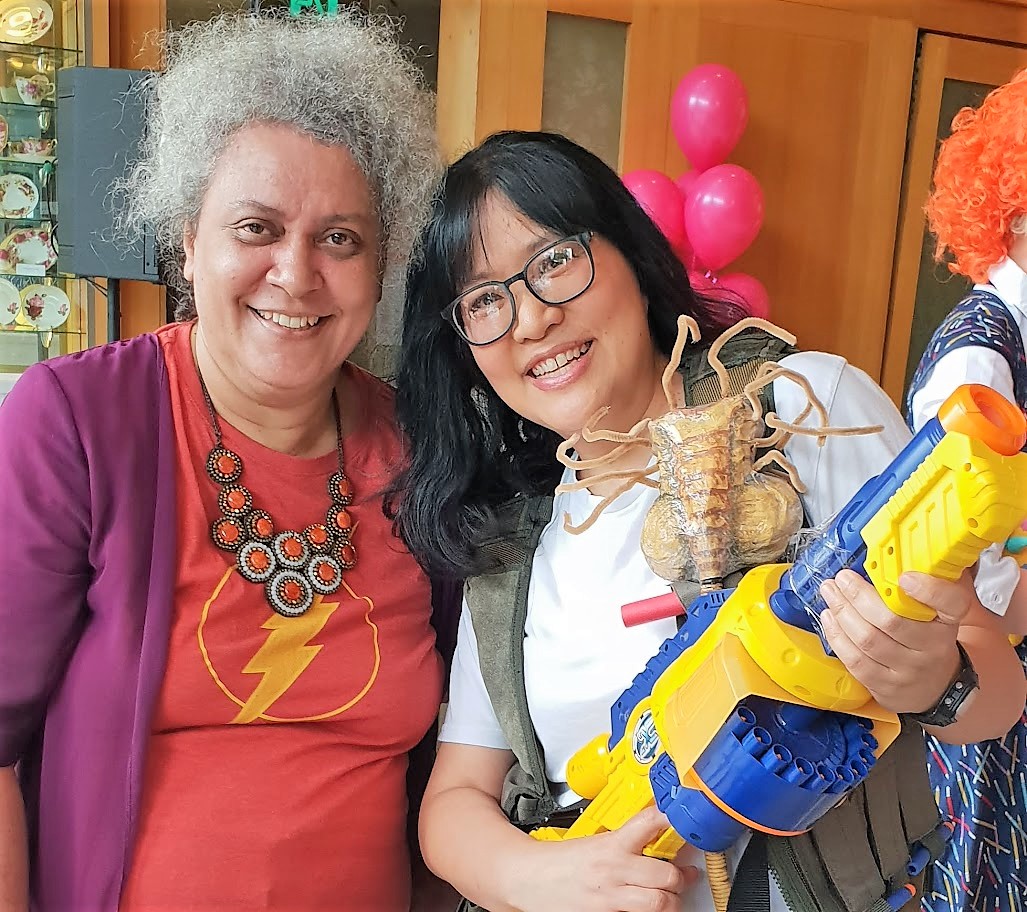
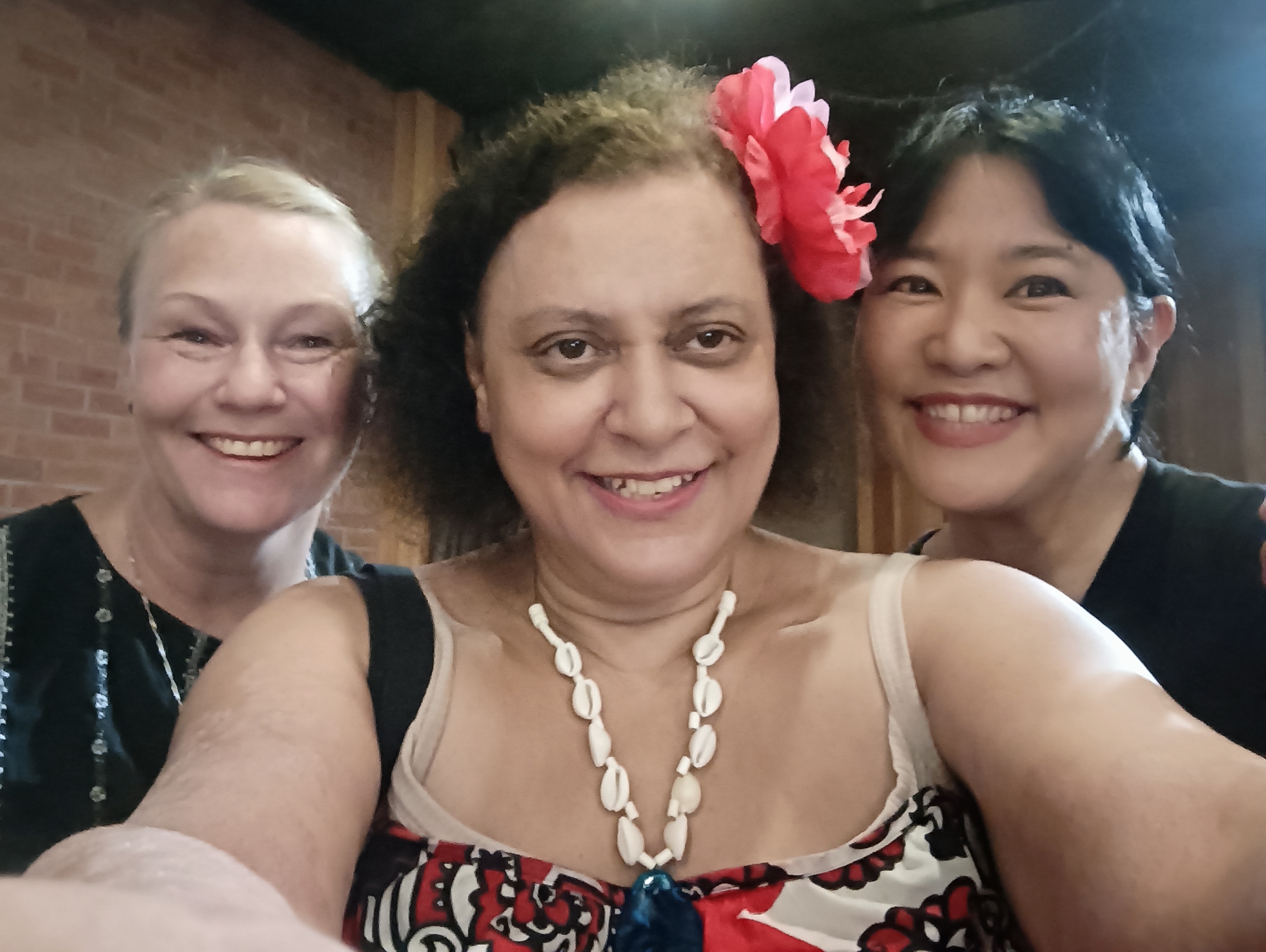
Nene Cohen, Pamela Jeffs, Geneve Flynn, Lauren Elise Daniels, & finding out about legal deposit from National Library Canberra, delegate attending.

The titles of many of the sessions for Genre-Con this year were very enticing.

For instance Whales, Rivers and Serpents Australian Crime, Meet Me in the Grey Area: From YA to NA to Adult, Campfires, Cobwebs and Corpses,and Getting Graphic with Graphic Novels.

So yes that did successfully make me excited about the above sessions, but sometimes there were a few I would have loved to make it to, but there was an equally attractive session at the same time. Argh. This is when it is handy to have a friend make that session and swap notes!

This is an excellent challenge to have at a conference!

But what genre do you write June? You might ask. Well I am willing to try and combine many genres. I find that some of my stories are fantastical tales, for Young Adults (YA), to adult, and I love reading and watching crime, not sure about writing it, but I find the genre super interesting because I read and watch so much of it. I am working on a poetry novel that could end up being YA. YA encompasses many genres.

In Brisbane, some of the loveliest writers you can meet, are the Horror and Speculative Fiction writers. I’ve been reading some of their works since the last conference, and love the folk tale, culturally influenced horror, what is scary with a deep message.
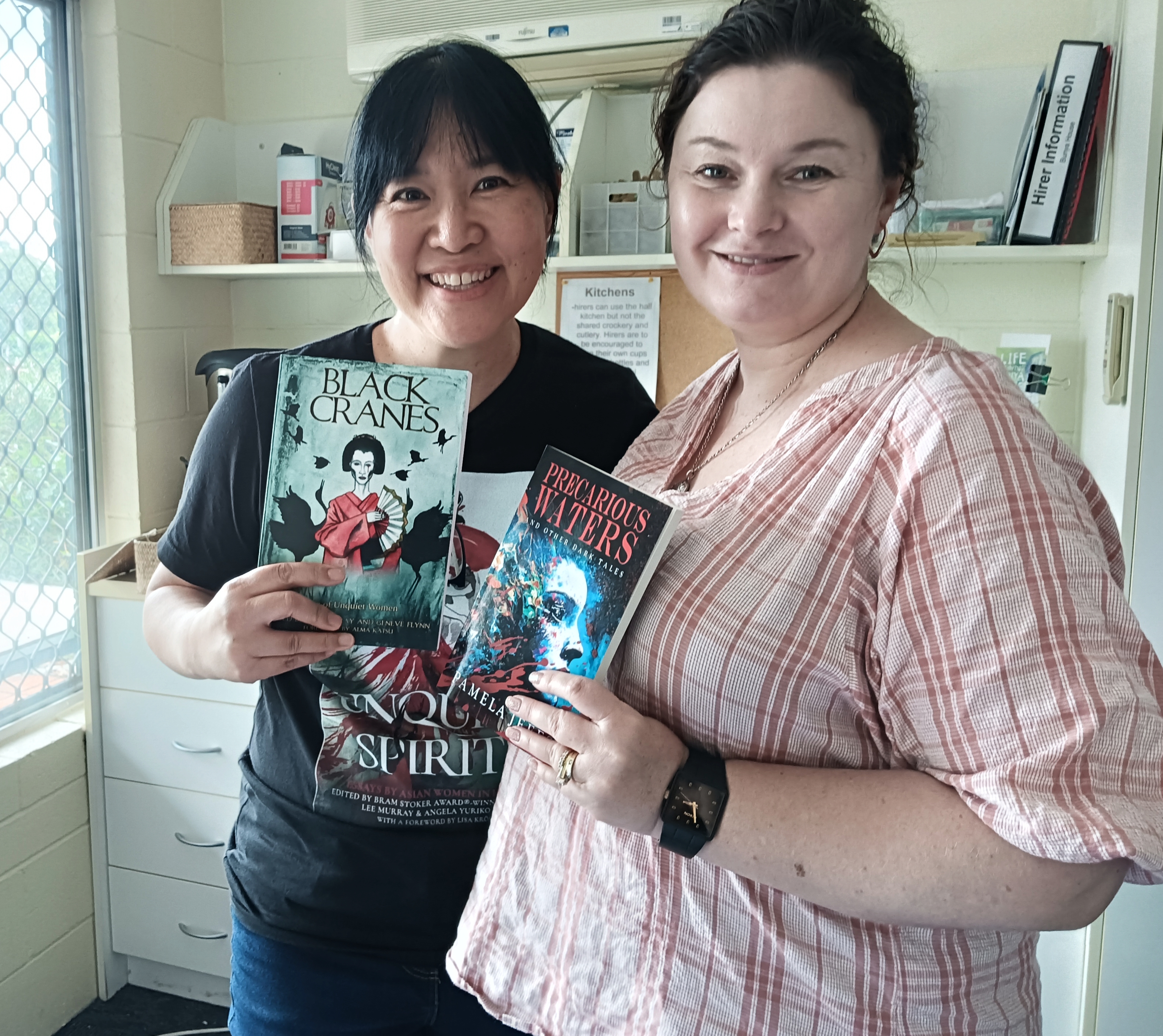
Geneve Flynn and Pamela Jeffs, at Author Gala Event, March 17th Bunya House: photography June Perkins

I recently did some storytelling, and realised I am attracted to rewriting fairy tales and folktales, to challenging norms, and ideas. I’ve also been working on my Grandmother’s stories as passed on from my Mum and considering what can and should be kept the same, and what could be adapted to a diaspora granddaughter’s experience of today.

Okay so here is a run down of one session I particularly enjoyed.

Who knows maybe one day I will come up with crime fiction, although mine may well be a cozy mystery.

Whales, Rivers and Serpents Australian Crime
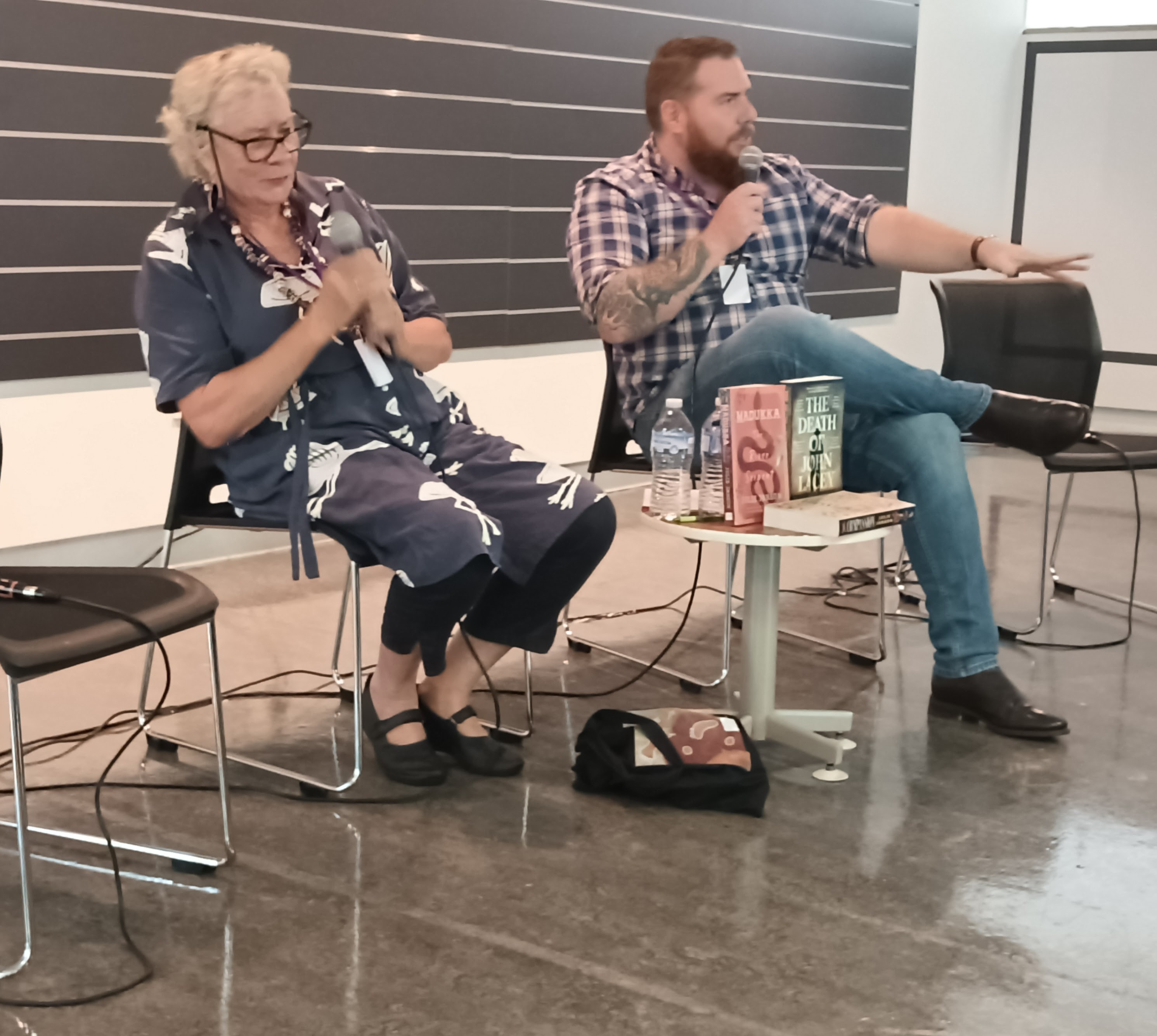
Julie Janson and Ben Hobson, Genre Con, State Library February, 2024

Julie Janson and Ben Hobson ran their session like a podcast, interview format. This was quite relaxed, organic whilst being informative.

They outlined that both of them had taken ten years to publish their first crime novels. Both come from a teaching background, and Ben is still in the teaching.

Julie’s background is drama.  And she began writing plays to assist with and motivate literacy in the communities she worked in. One of her favourite crime shows is Vera.

Ben’s work is an examination of what might happen to a person if they are backed into a corner.  What are people capable of when something is really challenging? 

Julie likes to put a character into jeopardy and seeks inspiration from Aunties, Sisters, actors like the late Lillian Crombie.

Ben likes to inhabit characters and improvise them rather than completely pre-plan.

Julie describes a process where scenes from real life can be inspiration for moments in life. She tells us an anecdote of a bikie, describes him as imposing, his request being camomile tea in the kitchen. Her planning process is to follow the shape of drama, beginning, middle, end, and climax points. ‘To write interesting crime fiction, live an interesting life, makes for an interesting book, knowing about several places.  Using terrible experiences gives authenticity to writing.’ Julie quotes Graham Greene ‘Every Writer has a slither of Ice in their Heart’ where they are capable of transforming anything for the sake of art, from their world and people around them.

Ben like’s using  the ‘uncanny valley’, outback noire.

(ASIDE: Would you believe this is the first time I have ever heard of the uncanny valley’? Obviously I have not written much crime or scary stuff before. )

“The uncanny valley phenomenon can be described as an eerie or unsettling feeling that some people experience in response to the not-quite-human”

Julie crime fiction is a genre of truth-telling and suited to First Nations authors and explorations of crime and history. Historical crimes you have to stick to the facts.  Different kinds of truth can be examined in crime fiction.

Somebody from the audience asked if writing crime kept either author up at night. Both answered no.

Julie even said in fiction you can change the outcomes and give more agency to your characters, to have more power than they may have in reality.
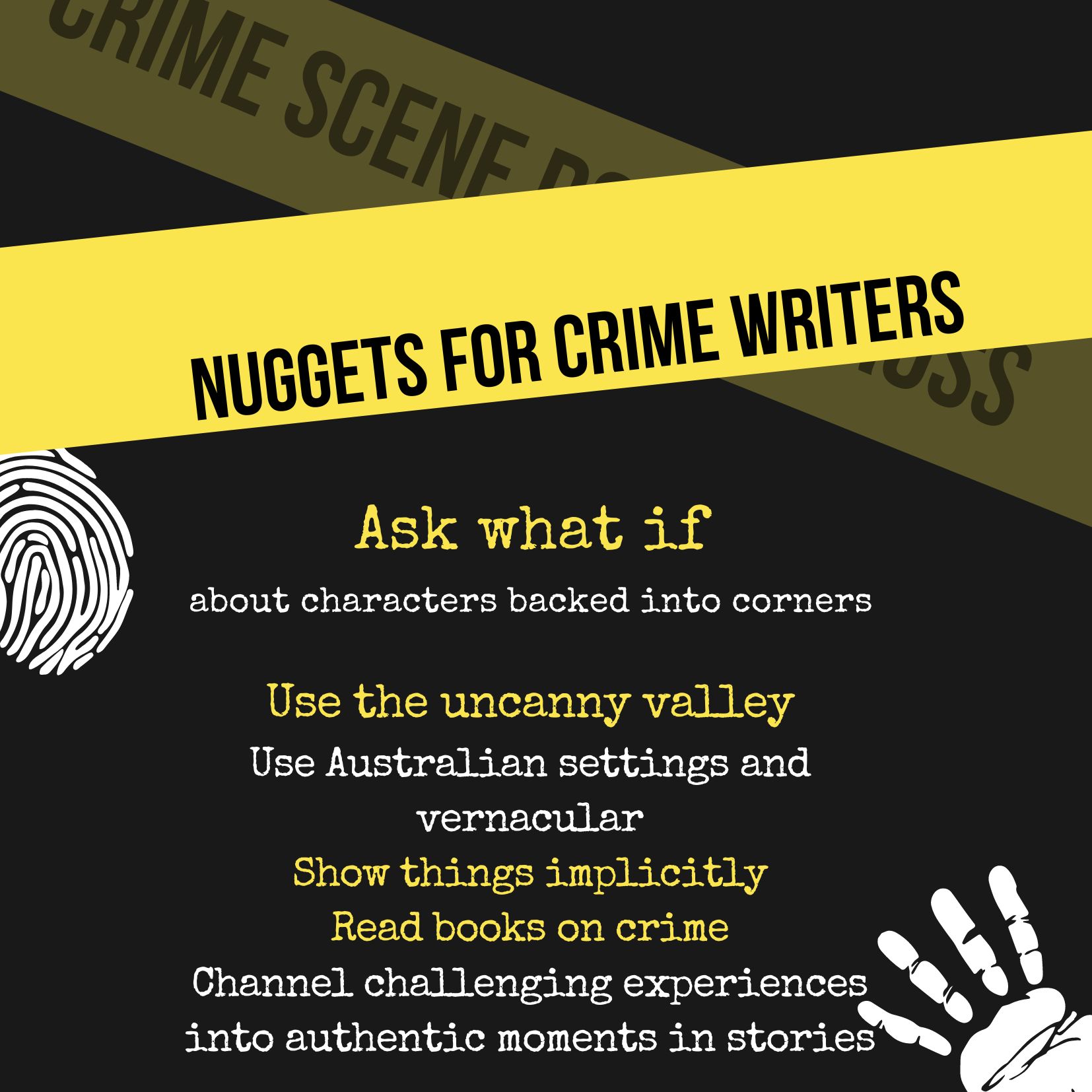
A summary of the workshop nuggets, created in Canva by June Perkins

More blog posts to come…

For more on the uncanny valley

https://www.newscientist.com/article/mg23230970-500-exploring-the-uncanny-valley-why-almost-human-is-creepy

https://www.britannica.com/topic/uncanny-valley

https://www.verywellmind.com/what-is-the-uncanny-valley-4846247

And interesting settings for scary
https://horrortree.com/10-under-utilised-horror-settings

Brave, Bold,Genre-Con 2024 (part 1)

Melanie Hill, June Perkins, Geneve Flynn The Loft West End, Genre Con Launch Event

This years’ Genre-Con, was a weekend of panels, special events, and workshops – beginning on Friday 23rd of February and finishing on Sunday the 25th. Amongst the presenters were Julie Janson, Patrick Ness, Kate Cuthbert, Jake Corvus, Paul Mason, CS Pascat, Rachel Amphlett, David Shield, Kathy George, Gary Lonesborough, Ben Hobson, Kim Wilkins, Siang Lu, Vanessa Len, Sandra Markaresz and Lori-Jay Ellis.

The theme was Brave, Bold, Genre.

The first event I attended was the launch night at The Loft in West End. Attendees were greeted by a string quartet as they wove their way up the stairs and past the candles into the meeting area.

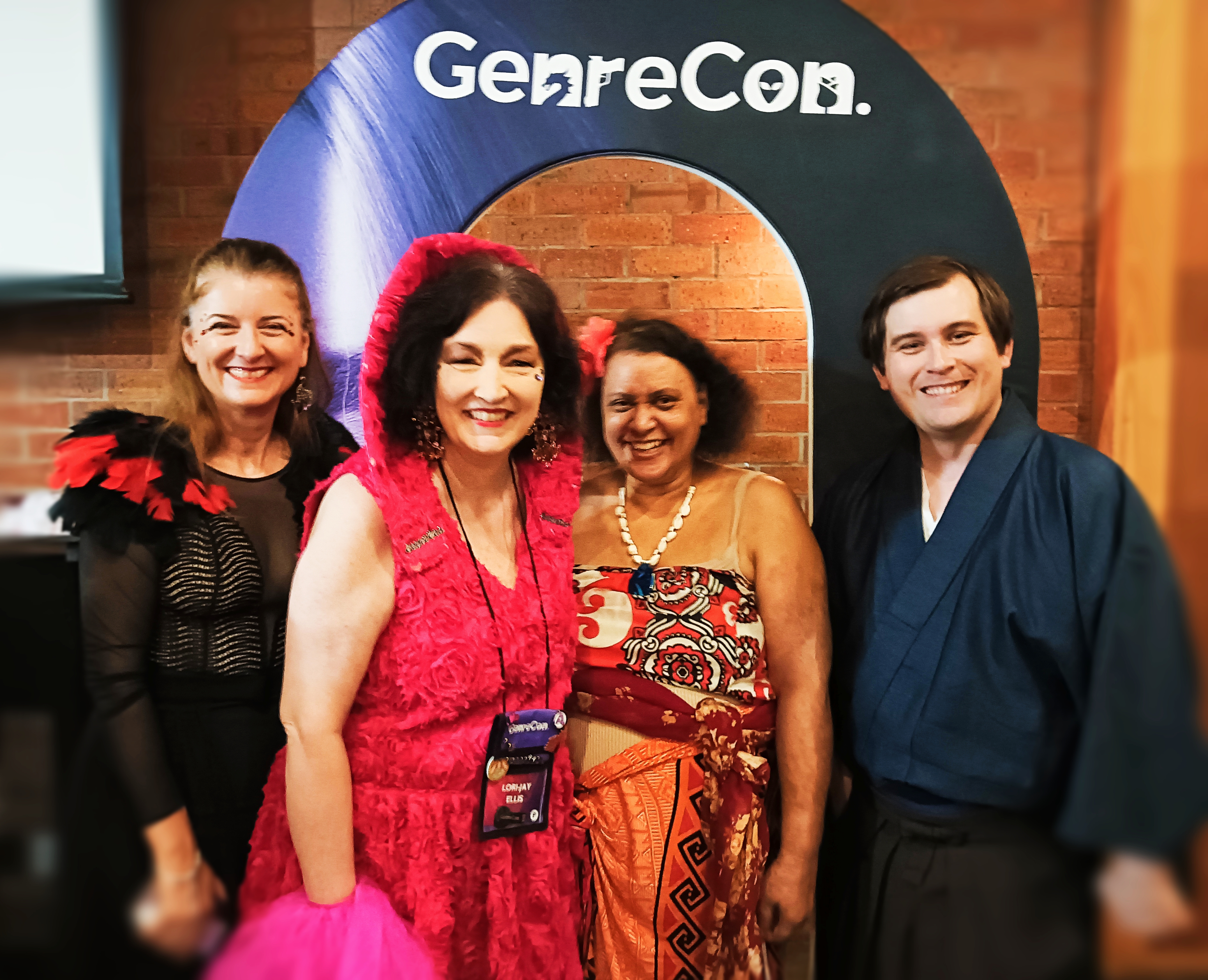
Sandra Makaresz, Lori-Jay-Ellis, June Perkins, David Shield – The Loft West End, Genre Con Launch Event

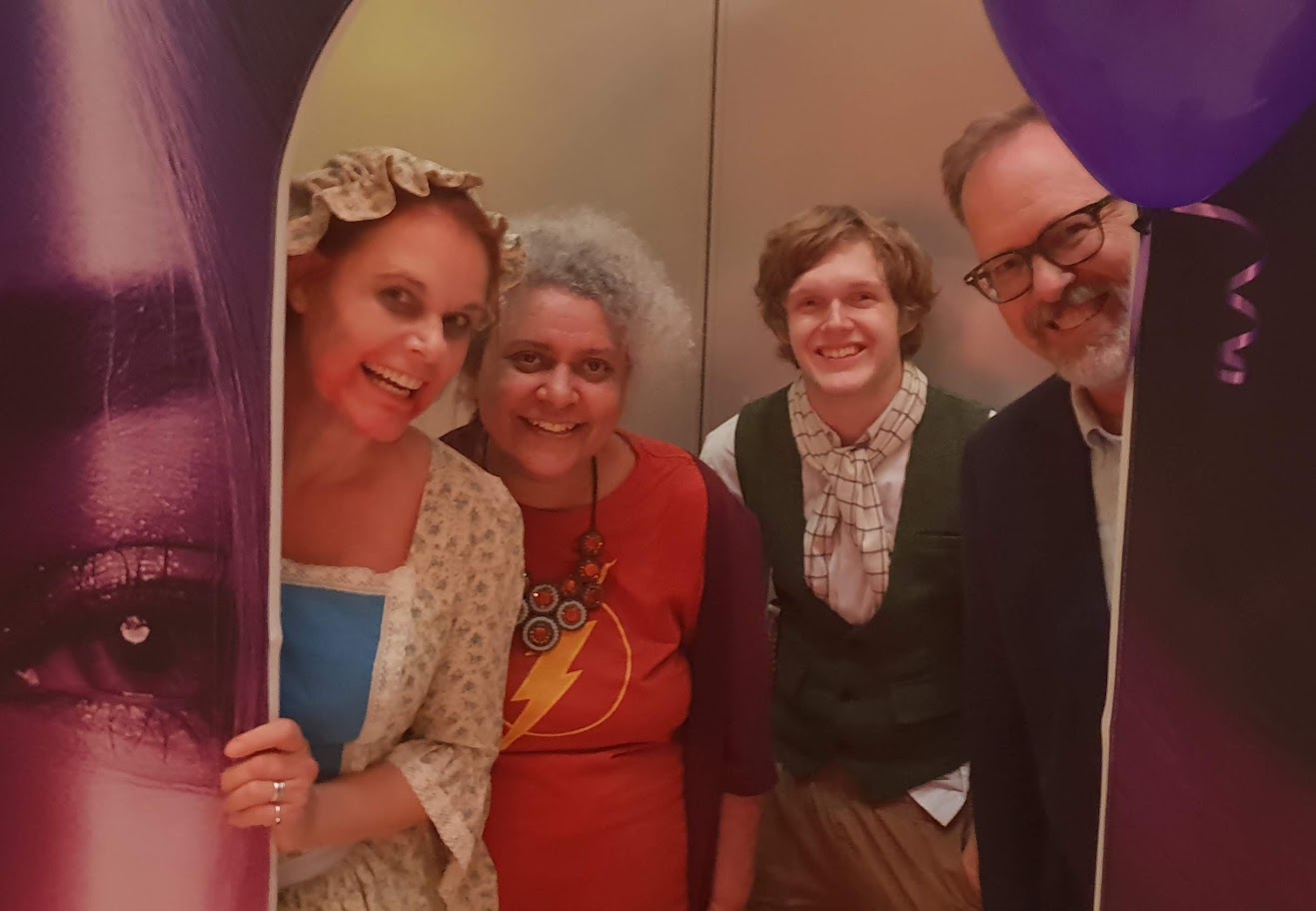
Many participants took the opportunity to take up the conference organisers invitation  to cos-play, with Wonder Woman, Peter Pan, Tank Girl, Emily Pankhurt, Moana, just some of the characters people chose to attend as.  The staff came as Effie Trinket in a variety of costumes.with one in a butterfly dress and Lori-Jay as promised in Effie’s queenly dress.

Patrick Ness, joked that he did not get the memo about the “fancy dress” but it would have probably made him too stressed to find a suitable costume.  He also read a winning work from one of the Queensland Writers Centre monthly competitions, Smooth by Laree Chapman.

Genre con was sold out! And this made for a packed auditorium for the opening address and throughout the weekend. YA was a central theme over the weekend, as YA goes across all genres.

The Opening Session

The opening session was introduced by Lori-Jay and included a short speech by Julie Janson, before Patrick Ness delivered the keynote.

Lori-Jay, CEO of the Queensland Writers’ Centre, after a brief acknowledgement, began with the metaphor of the conjurer, quoting from Terry Pratchett.

He’s not a wizard, in other words, but a conjurer.

Wizards don’t have to work. They wave their hands, and the magic happens. But conjurors, now . . . conjurers work very hard. They spend a lot of time in their youth watching, very carefully, the best conjurers of their day. They seek out old books of trickery and, being natural conjurers, read everything else as well, because history itself is just a magic show. They observe the way people think, and the many ways in which they don’t. They learn the subtle use of springs, how to open mighty temple doors at a touch, and how to make the trumpets sound.

And they take Centre Stage and amaze you with flags of all nations and smoke and mirrors, and you cry: “Amazing! How does he do it? Where’s the rabbit? Did he really smash my watch?”

And in the back row we, the other conjurers, say quietly: “Well done. Isn’t that a variant of the Prague Levitating Sock? Wasn’t that Pasqual’s Spirit Mirror, where the girl isn’t really there? But where the hell did that flaming sword come from?”

And we wonder if there may be such a thing as wizardry, after all . . .

Terry Pratchett

She invited us to find at least three golden nuggets, to take home from the conference, to apply to our writing craft and encouraged attendees to find their writing tribe and to take the opportunity to enter the Writers Centre micro fiction writing competitions.

Julie, after acknowledging the First Nations and a small joke about, she had thought whether she should do an interpretative dance instead of a talk, but thought better of it: addressed the theme Brave and Bold. 

Julie’s writing is a search for truth, looking at the crime of colonisation and its ripples into contemporary experience. This takes the form of crime fiction with First Nations characters centre stage. 

She shared her love of the library which lit her love for literature. She mentioned Oodgeroo Noonuccal and Roger Merrit  playwright (The Cake Man) as bold and brave inspirations to her writing. Other inspirations for Julie are writers like Alice Walker who look at the complexities of the past. 

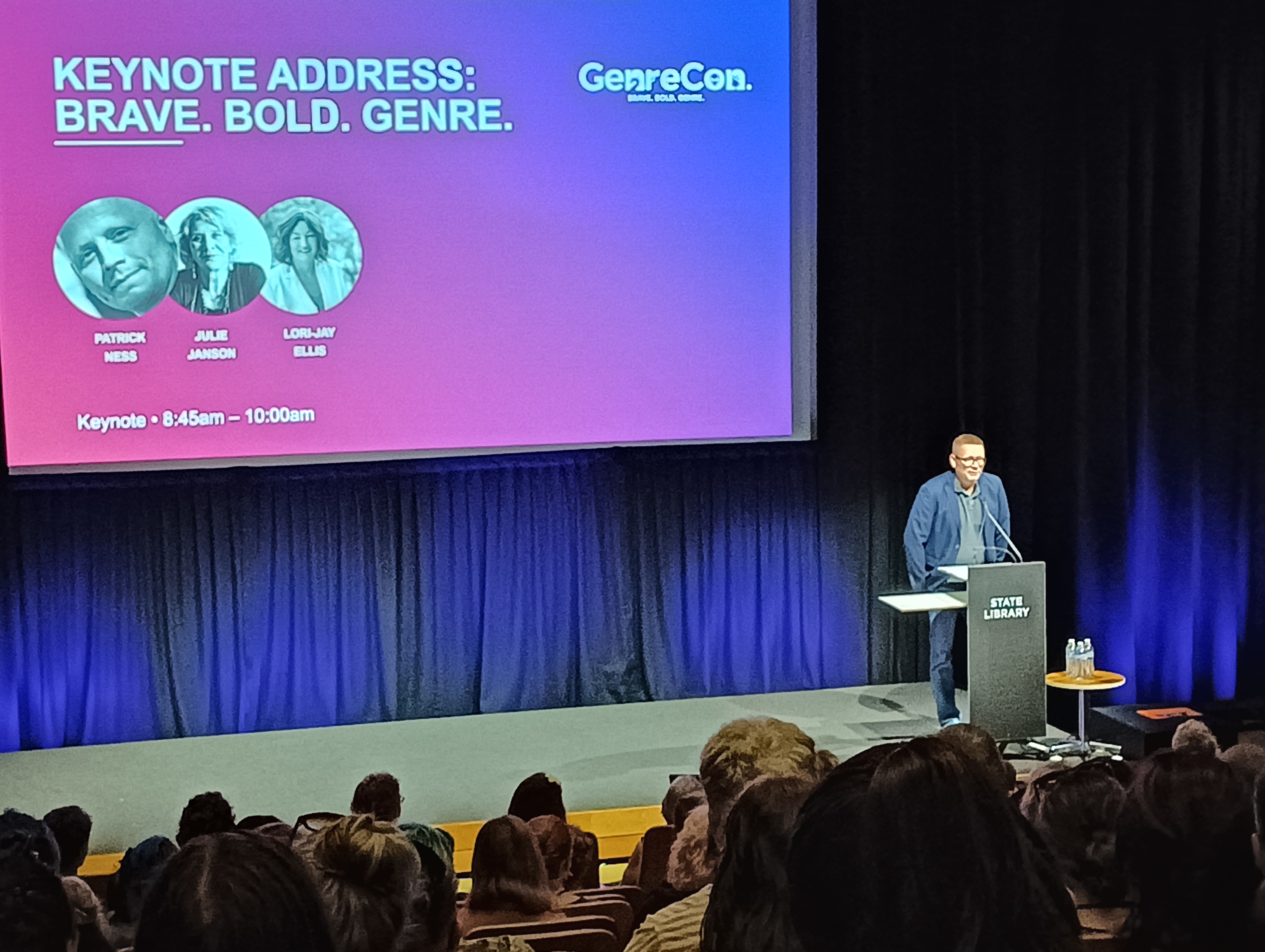
Genre Con, held at State Library: Patrick Ness, Opening Key Note, Queensland Writers Centre: photography June Perkins

Patrick Ness’s keynote was an honest and vulnerable speech of the role of love and spite in his writing process with an overall message of Whatever is happening in your life, Write anyway. Unpacking these three ideas as core philosophies, Patrick then shared with us aspects of his life story and the wisdom it led to, which he left totally up to us to accept or reject.

In his speech he acknowledged the First Nations, and commented that this is something he does not see happen in America.

He used the metaphor of his life being like a warehouse, where every age is there to draw upon for inspiration. But in doing so, the selections need to be used in a way that is worth it for the writer. He told us some of his life story, like thinking a lot about death, and that at eight he thought the world was going to end because of the religion his family followed.

Patrick shared that he made 72 queries, with 5 answers and 2 replies, and one of these then became his agent and is still his agent today. He noted that whilst he had won the Carnegie prize with his first novel, he then struggled with his next draft  novels to find his voice. He ended up being inspired by the narrative voice of the novel Riddley Walker which he discovered whilst living at Oxford and then kept going forward.

Patrick Ness Personal Writing Strategies

  • He does not use outlines.
  • He sets for himself rules like show love, without anyone saying it, and without hugs.  Try to portray love in a ‘real way’.
  • He often has a Song or music for books as a background in mind
  • He might have 3-4 scenes images that will be in the book to write towards 
  • He has an emotional touchstone

After the opening plenary, there were several simultaneous sessions. These included panels, a speakeasy, workshops covering Romance, Crime, Speculative Fiction, YA, Science Fiction and Graphic novels as well as self publishing, audio books and the Queensland Writers suite of competitions. I will detail some of these in the next blog.

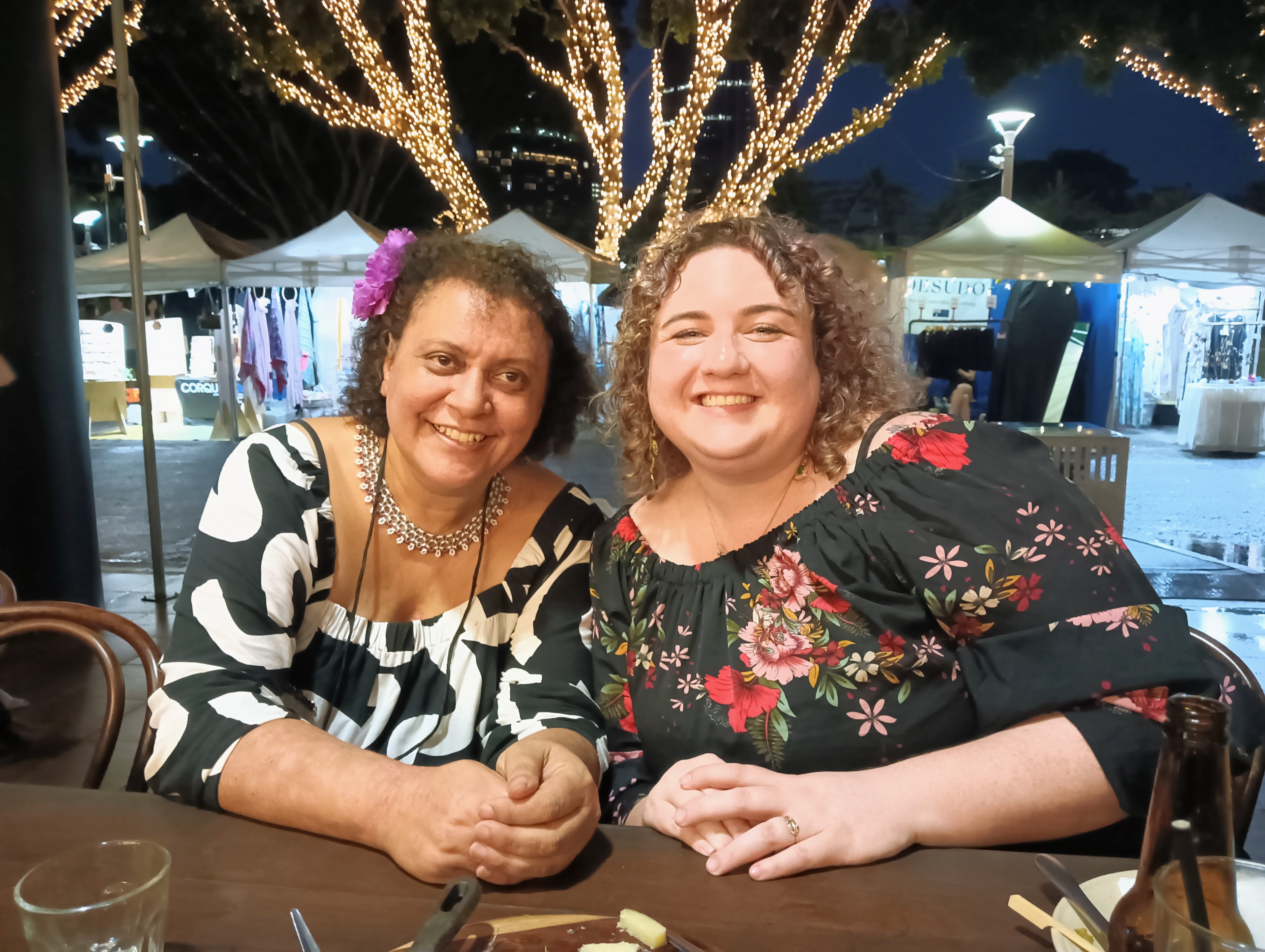
However, it is not just the knowledge and skills covered in the sessions but the friendships and connections at these events that make them a joy for Genre Conjurers. At the end of the first day many of us gathered to have dinners or after conference drinks.

After first day participants in the conference gather to have dinner, and find their writing tribes
After the first day, Genre Con get-togethers

More posts on genre con on their way.

Yuuingan Dhilla Yari 2023

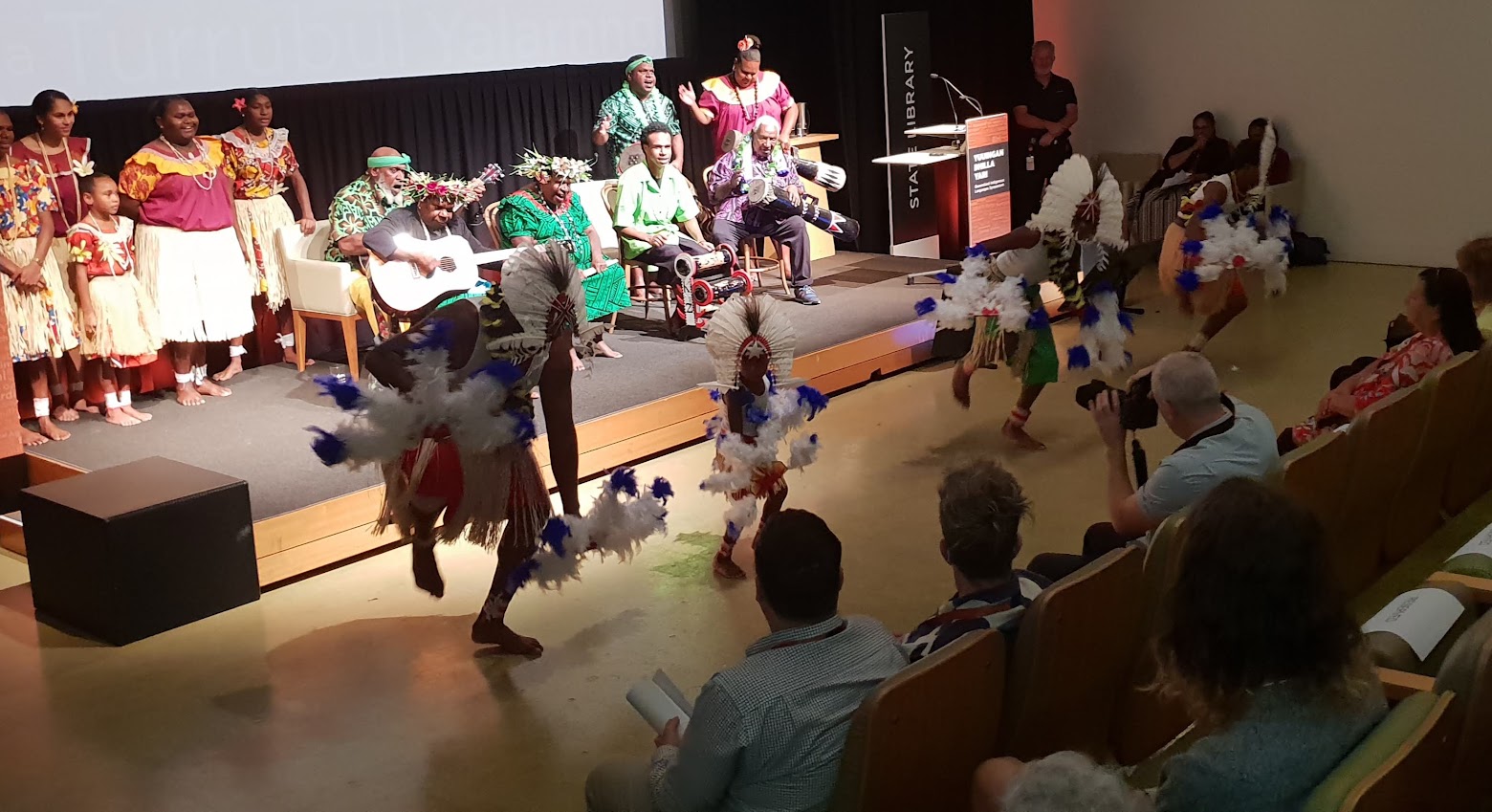
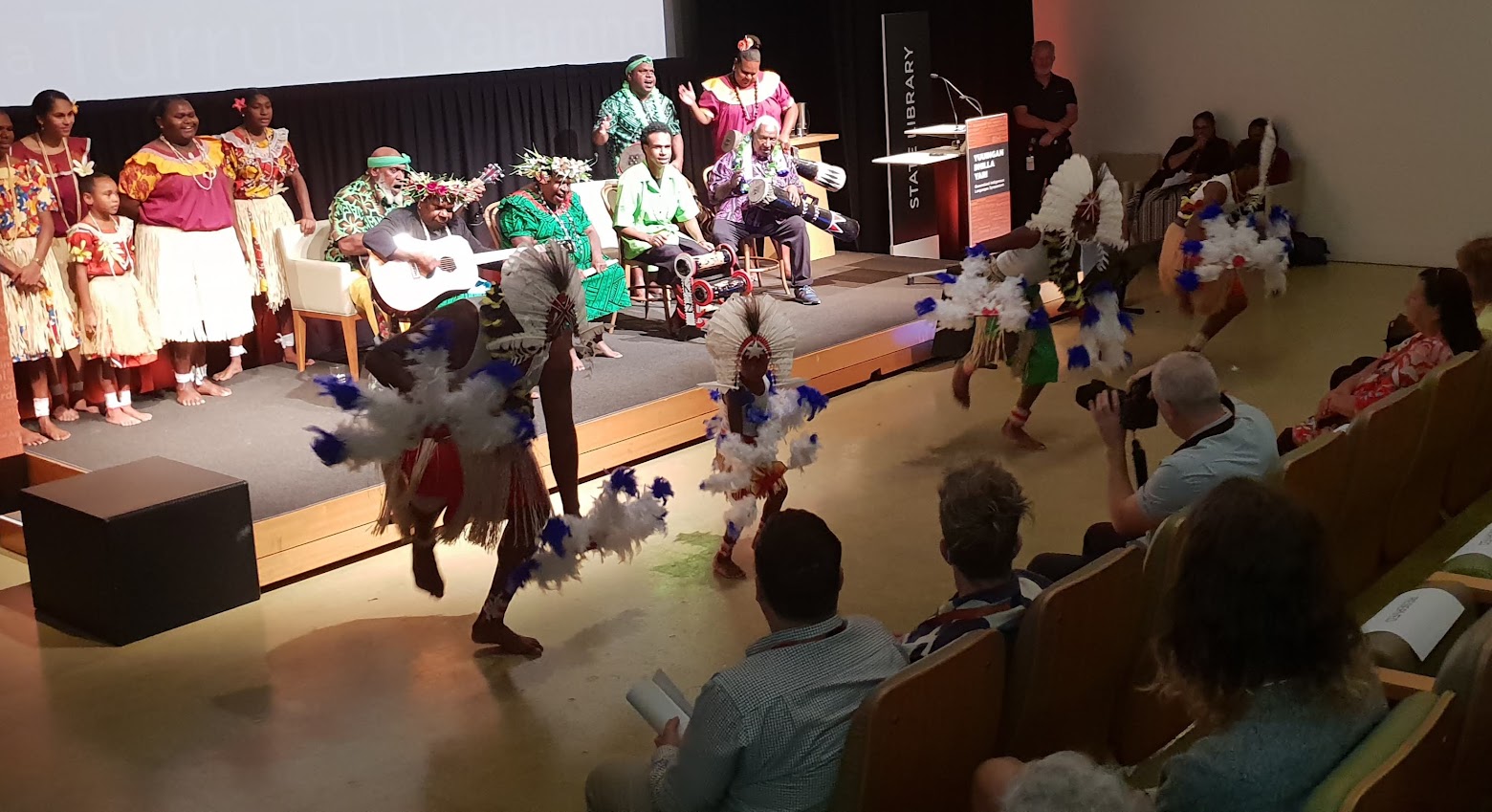
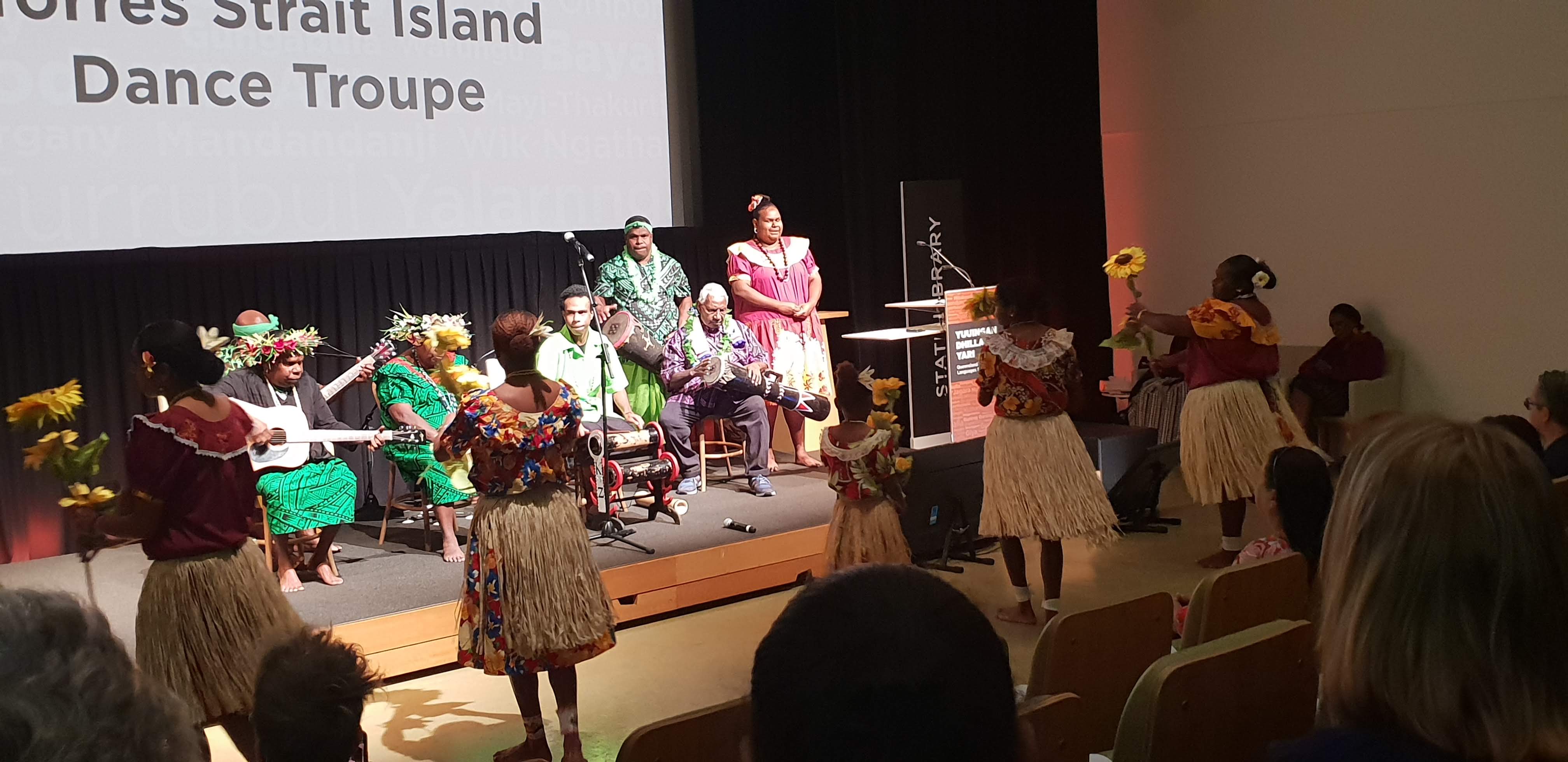
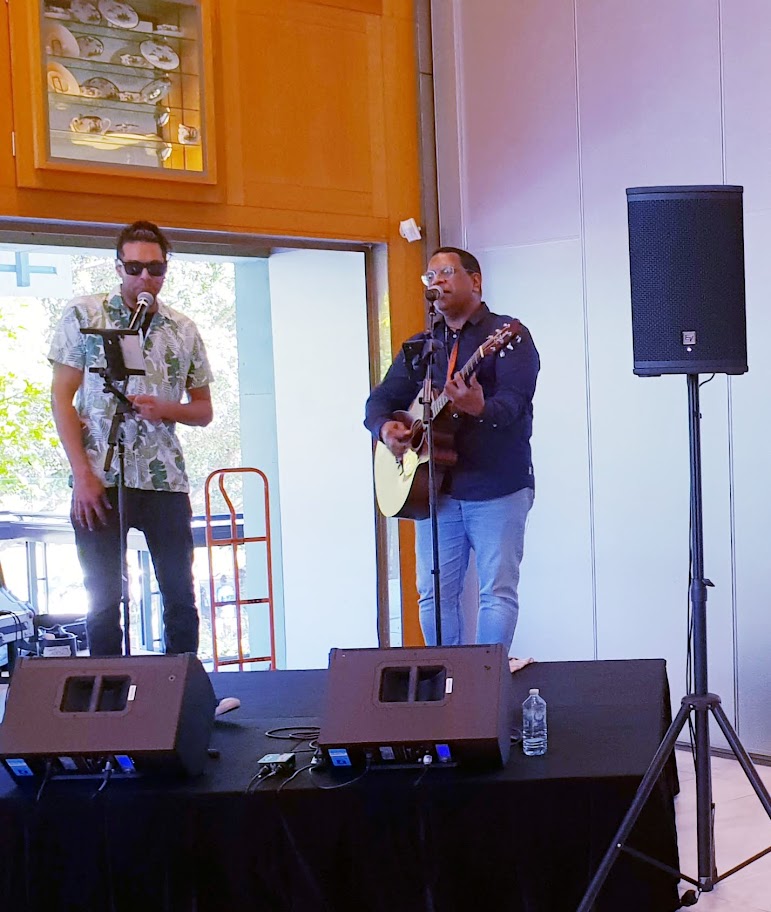
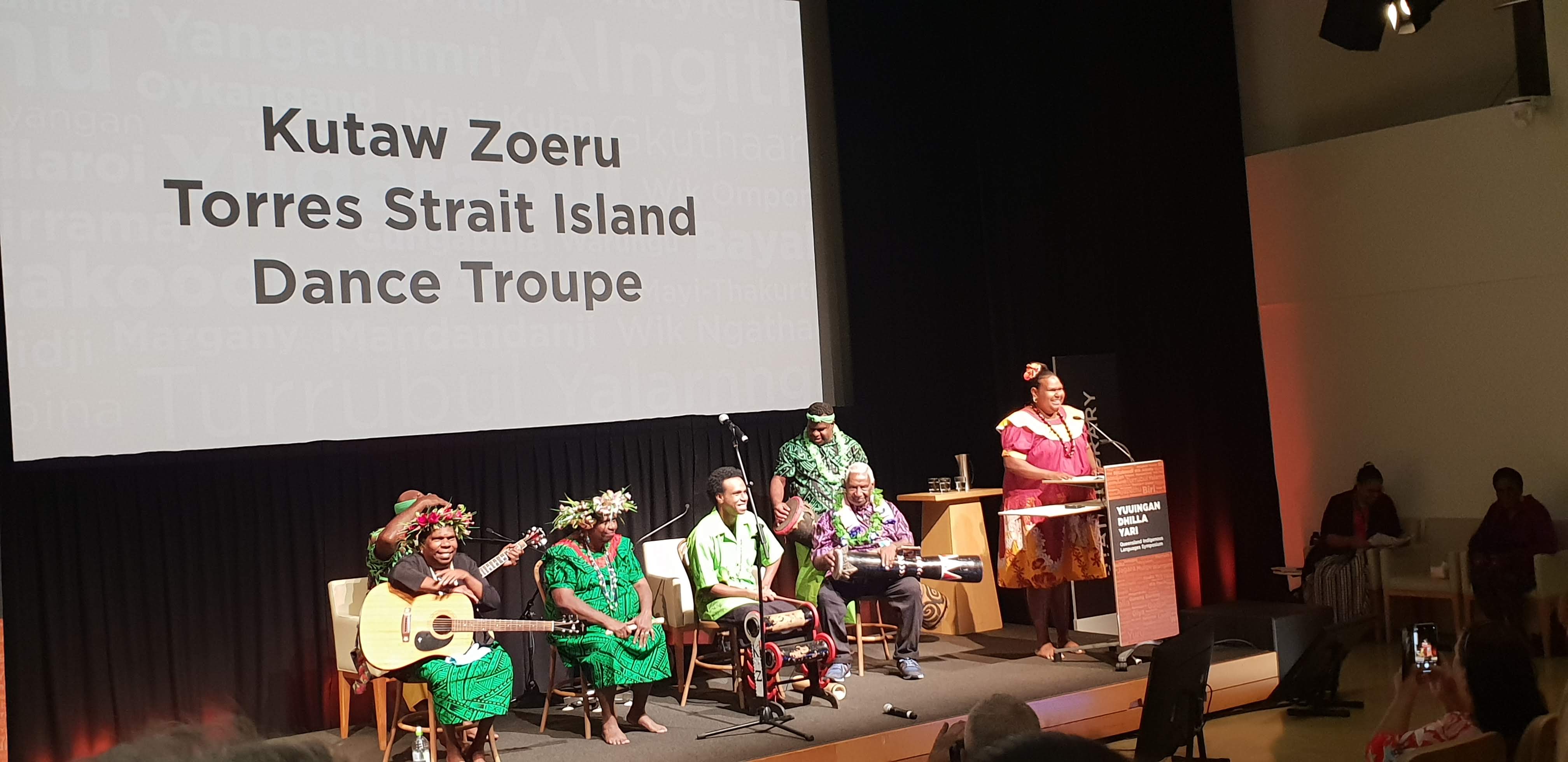
The highlights of the Queensland Indigenous Language’s Symposium held at the State Library Queensland, on 4th of May 2023 were: the Kutaw Zoeru Torres Strait Islander Dance Troupe; learning about the project and policy work of First Languages Australia; and all the afternoon workshops particularly the presentation of Desert Pea Media, on building creative bridges between Elders and younger generations in community.

The major focus of this years symposium was youth. There was a youth workshop stream attached to the event, which occurred at the same time as the workshops for adults. In these sessions, held at the Edge, youth were learning about song and poetry and writing in language and language song recording.

The symposium brought together Aboriginal and Torres Strait Islander languages speakers, language workers, organisations, cultural leaders and youth for a full day of keynote presentations, panel discussions and workshops; to provide a platform to look towards the future and share strategies, initiatives and best practice models, to ensure the ongoing revival of Queensland Indigenous languages in the 21st century for and by future generations.

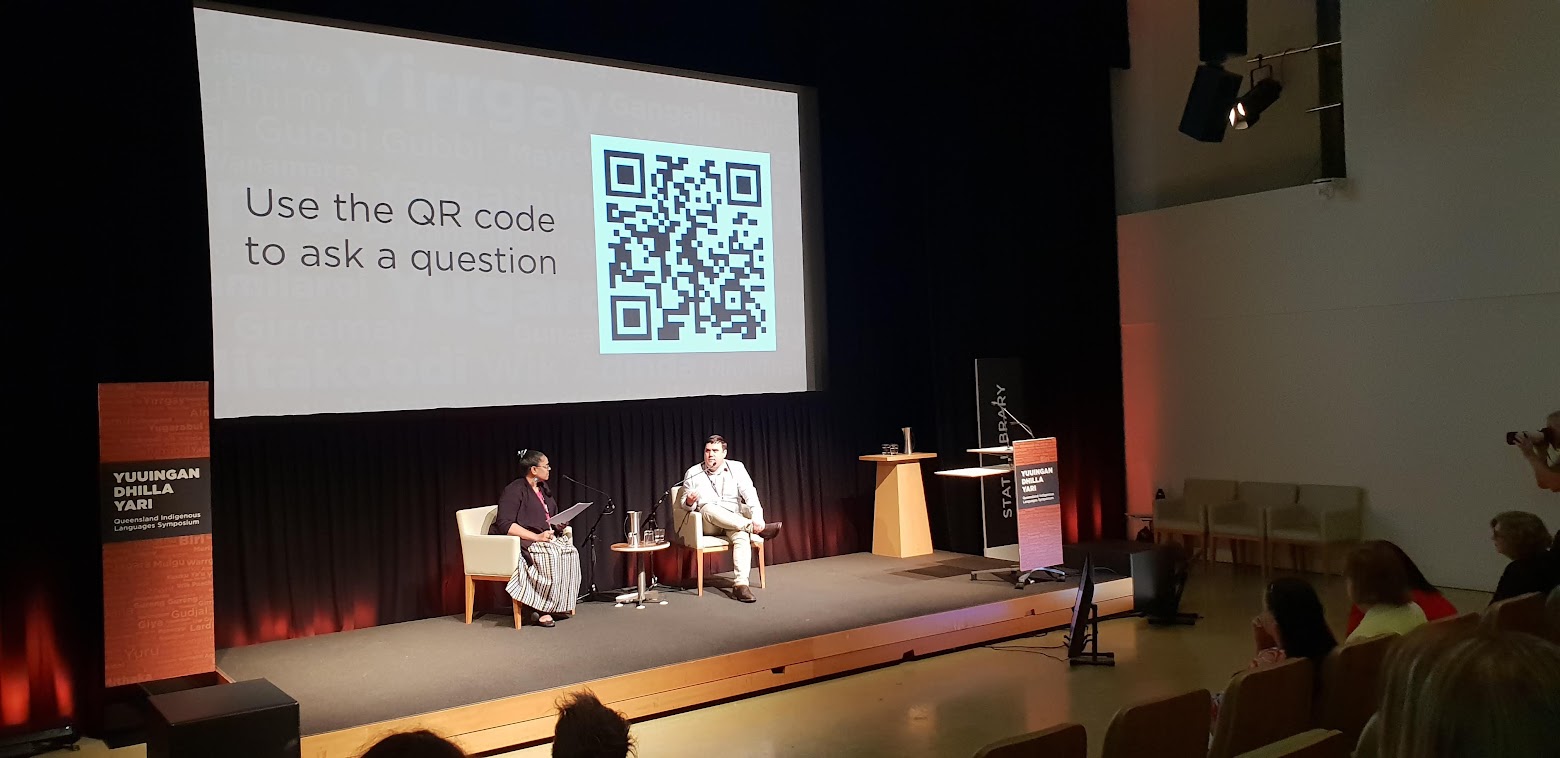
Master of Ceremonies, Rhianna Patrick, introduced all speakers and the dancers with warmth and enthusiasm whilst alerting the audience to the slido system to pose questions. They could identify themselves or do so anonymously, for the panel sessions throughout the day, which could be accessed QR Codes.

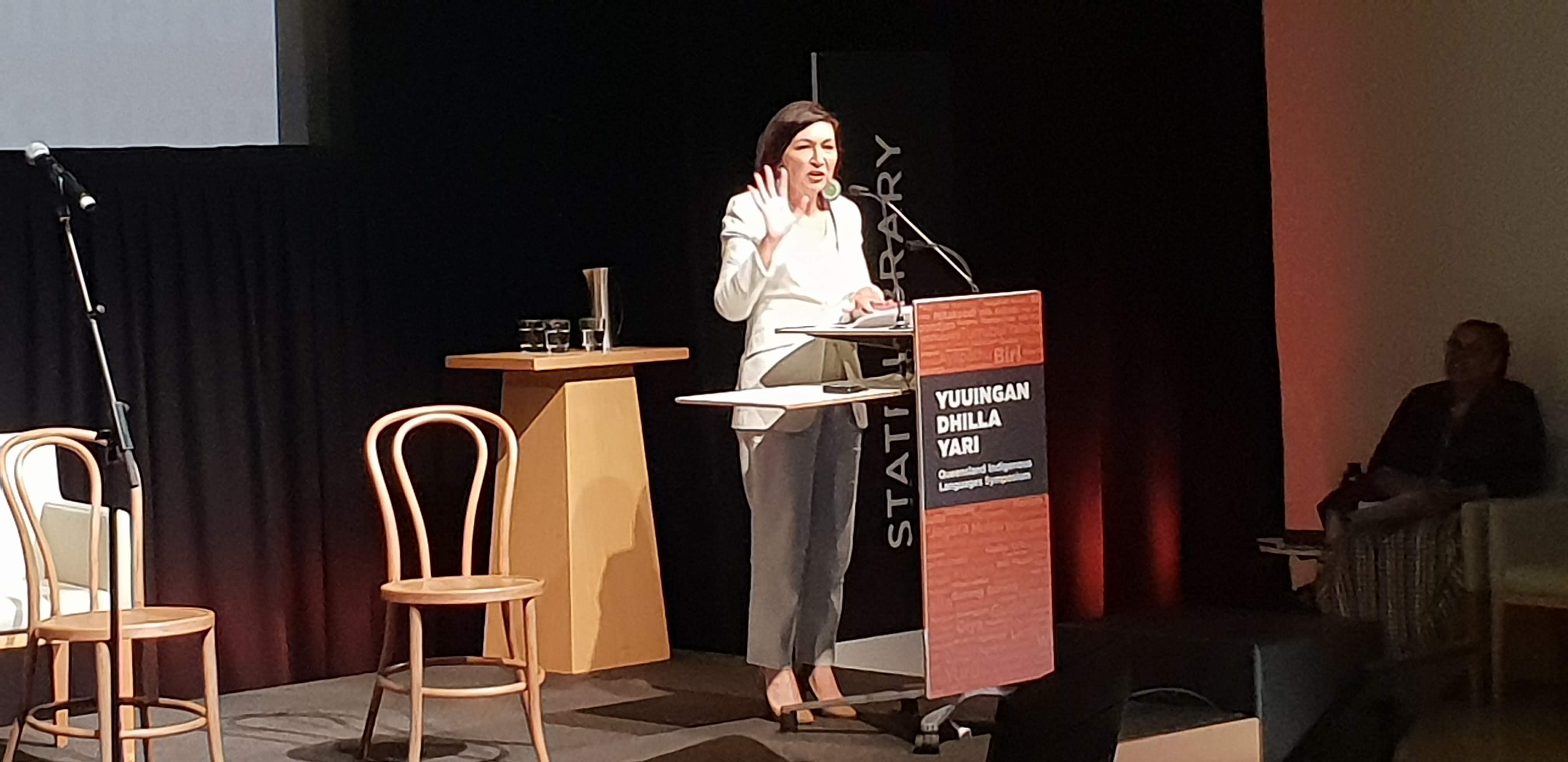
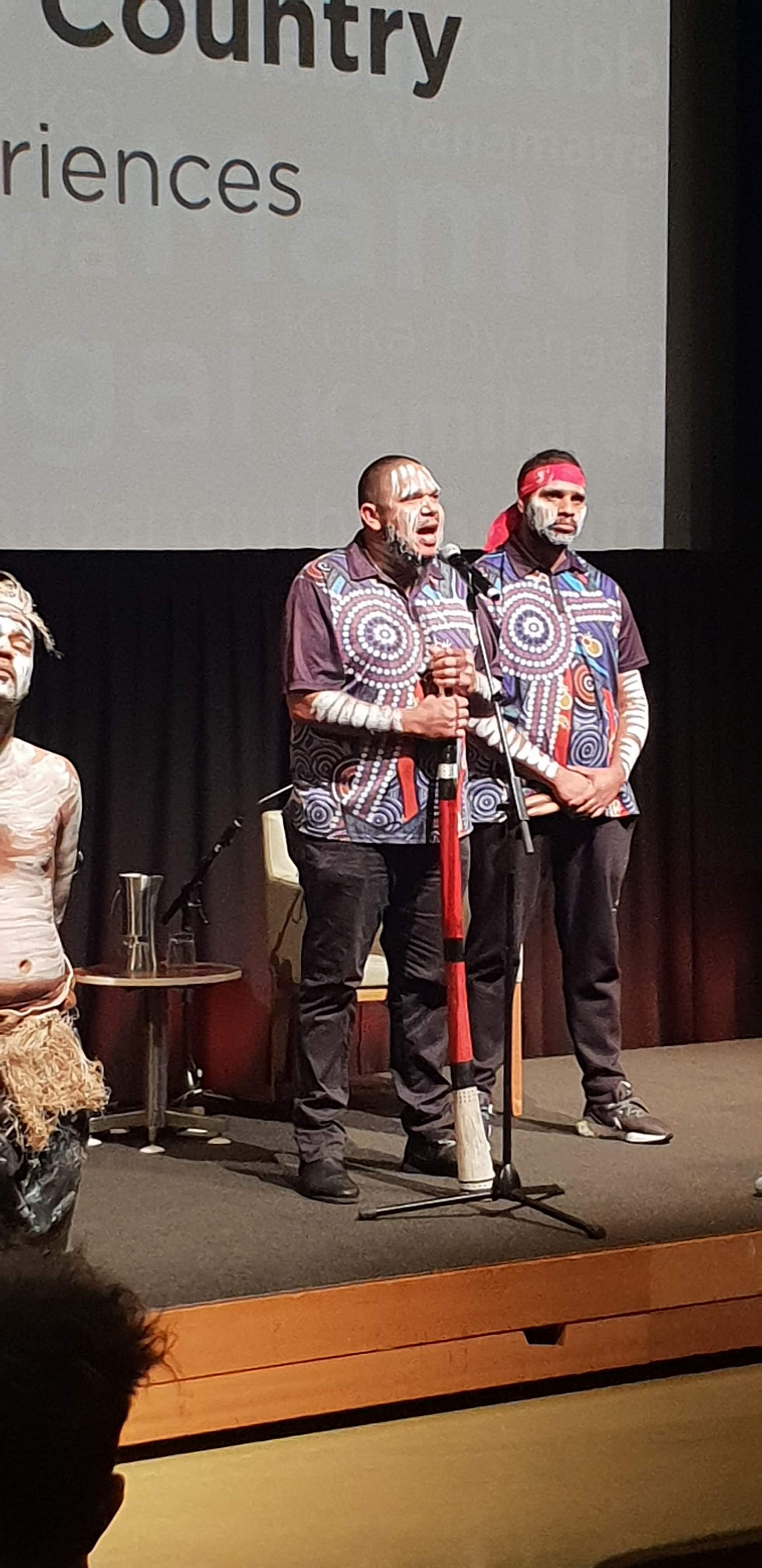
Tribal Experiences, welcomed us into the space with story, performance and speech. Then Minister Honourable Leeanne Enoch, MP who since the symposium has been appointed to Minister for Treaty and Minister for Aboriginal and Torres Strait Islander Partnerships, in her address focused on how important it is for First Nations people to reclaim language, which is a vital part of their cultural DNA. Truth telling, reclamation are all part of the healing for First Nations community. Waking up ‘dormant aspects’ ‘of culture so First nations can hear their languages is a powerful thing.

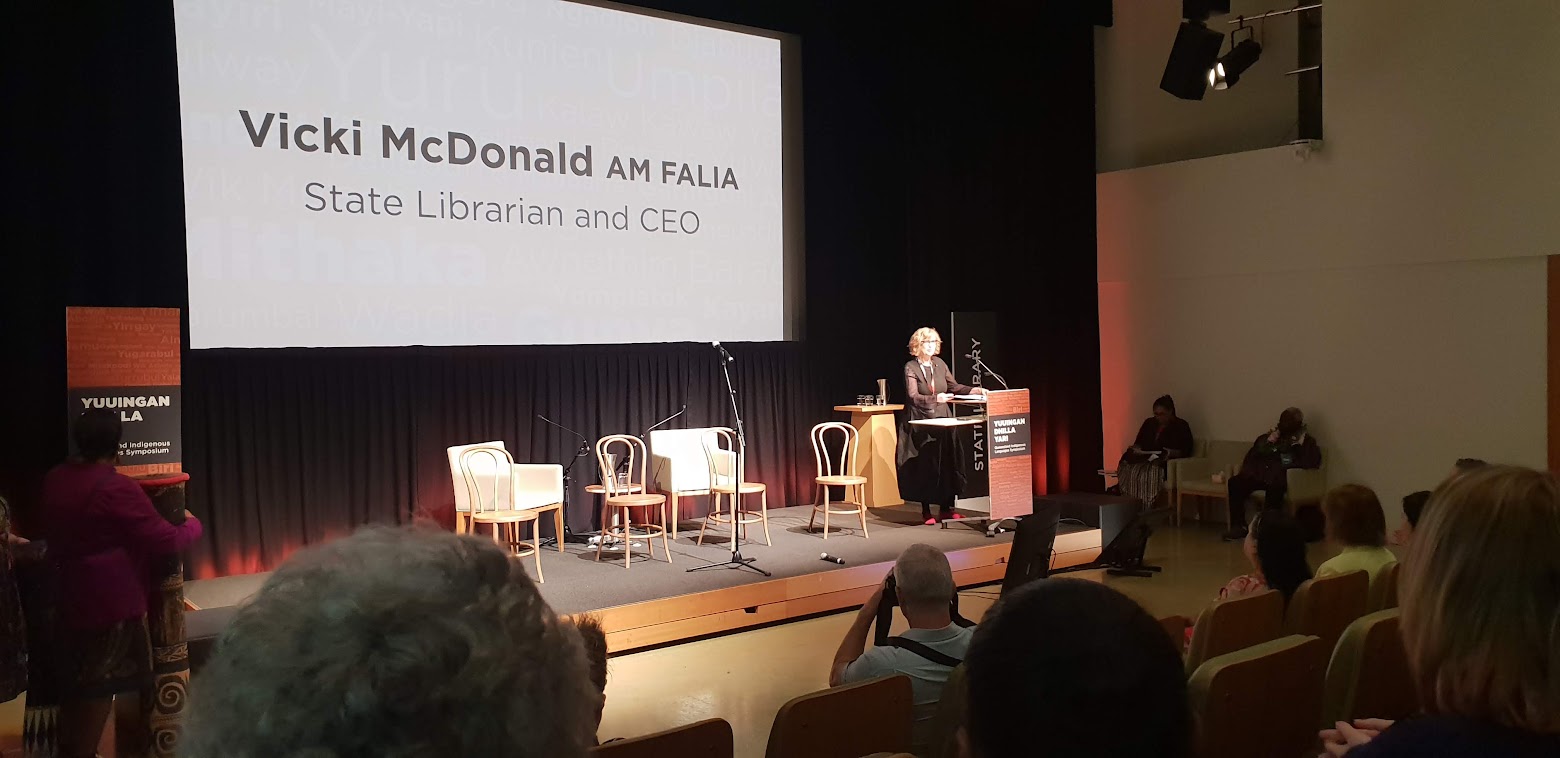
Vicki MacDonald (State Library CEO), gave an impressive beginning in the local language, and informed us there will be a further two symposiums and wished all of the symposium attendees well.

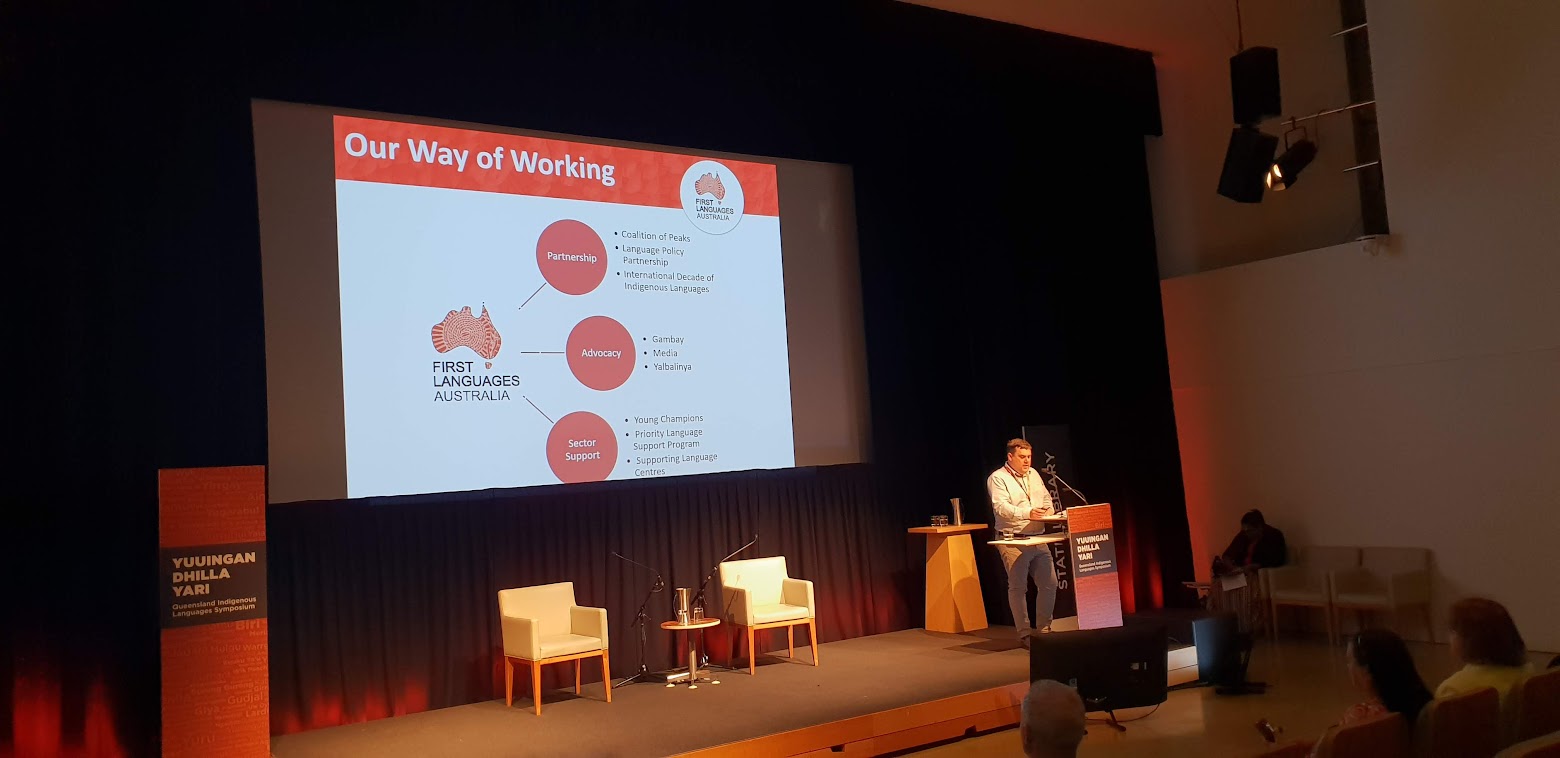
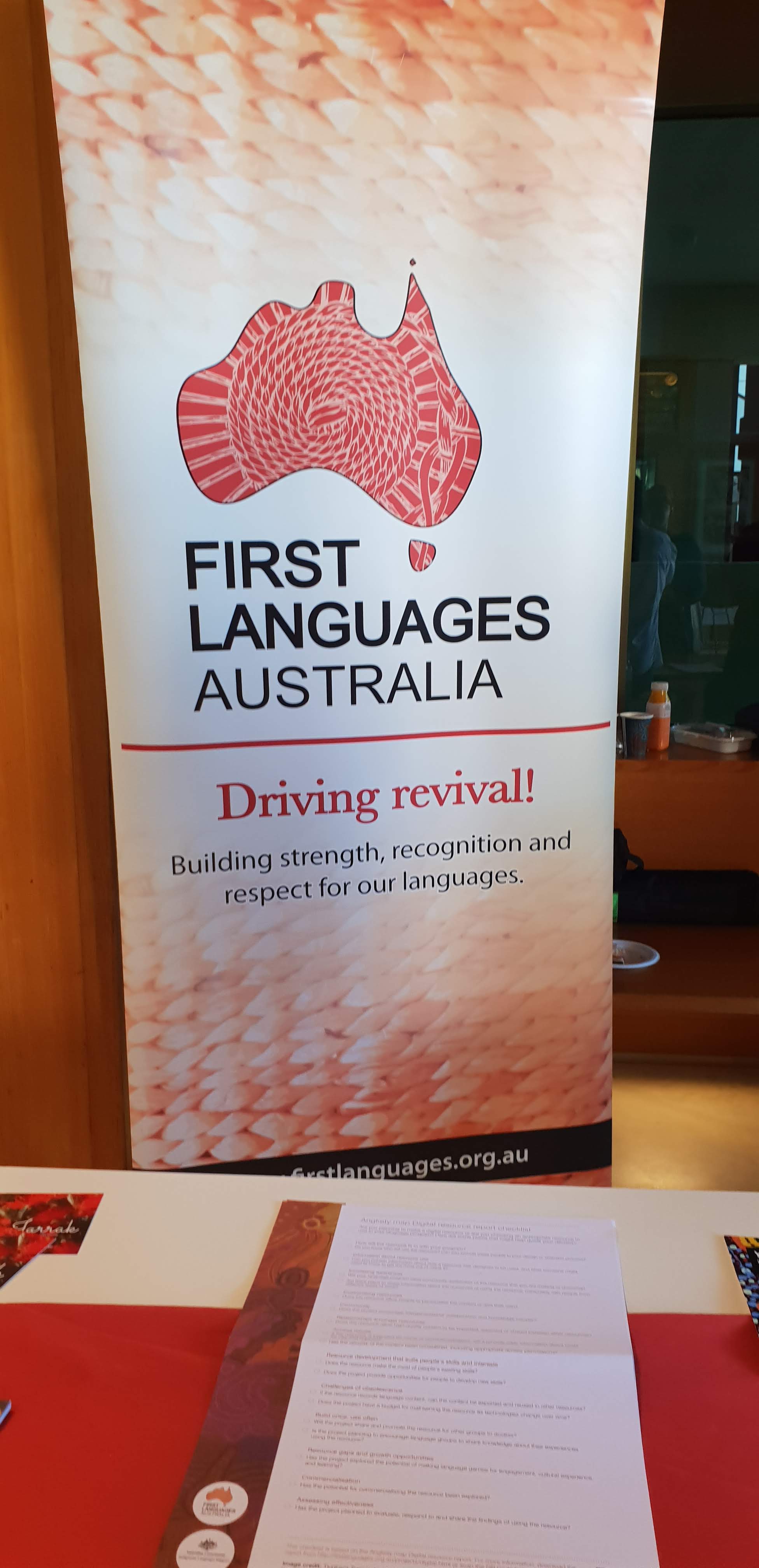
The consideration of advocacy, sector support and partnership by one of the key note speakers, Beau Williams CEO from First Languages Australia, was extremely comprehensive. It was interesting to find out about the impact of collaborations and community driven initiatives. The ultimate goal of this diverse and interrelated initiatives is to strive for wide spread speaking of language rather than just preservation.

It was wonderful as a former ABC Open guest producer and contributor for the 500 words project, to see that another project of ABC Open, the mother tongue project had such a big impact on the development of further projects even though it no longer exists, and that ABC have a large number of video resources supporting First Nations language intergenerational sharing.

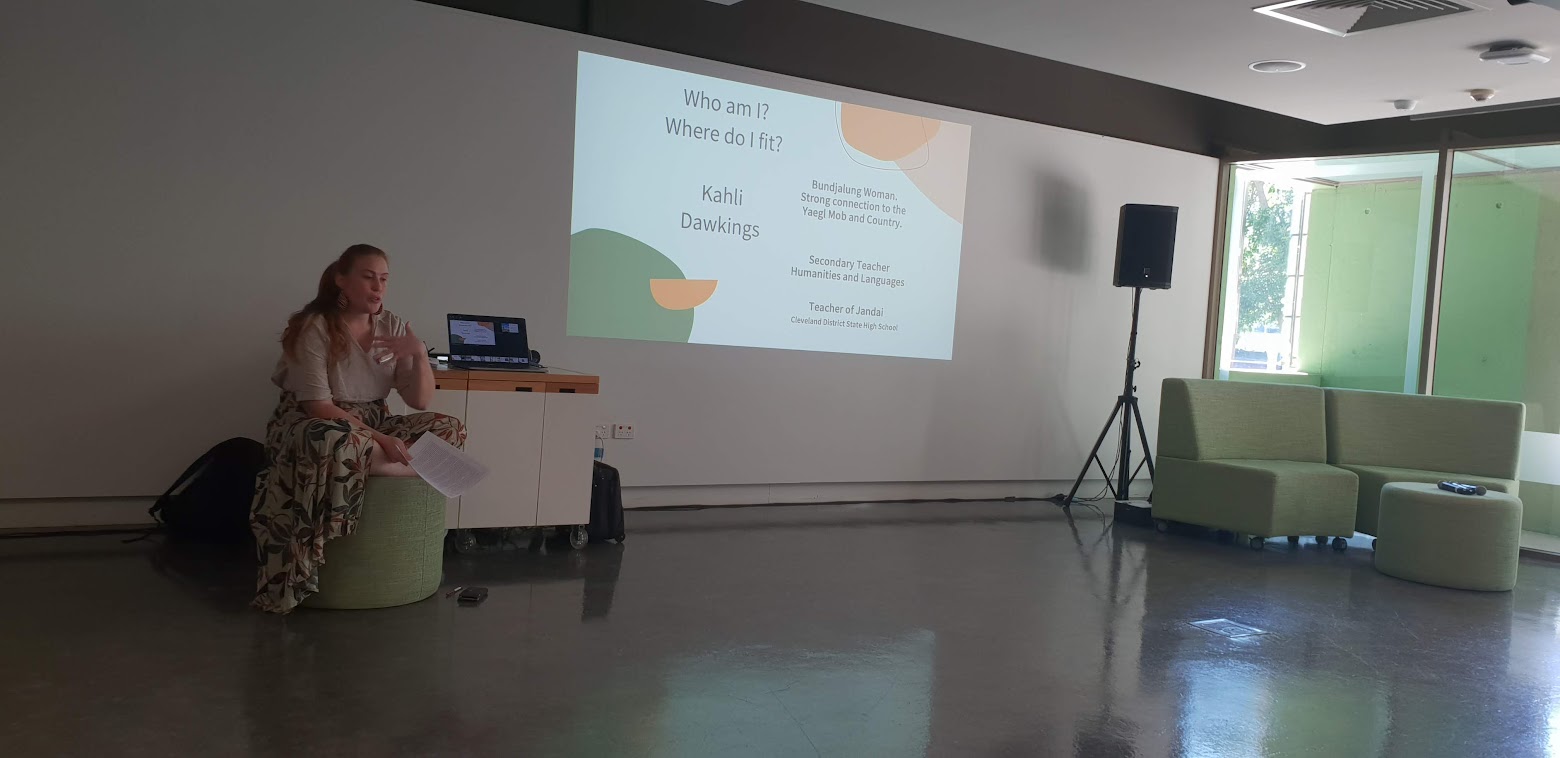
I was impressed and delighted to learn of the introduction of Jandai language class at Cleveland Highschool by Kahli Dawkings, where Jandai is taught alongside other languages such as French, and is being sensitively, gradually and appropriately implemented within the the school. Kahli Dawkings, although First Nations, explained how, she was not from that language area, but worked closely and respectfully with the Elders to introduce the program.

It was inspiring to learn about the intergenerational dialogue being fostered by Desert Pea Media , and used to empower the creation of high quality, expressive videos bringing together values, languages, well being, and contemporary youth expressions to build community. This session, with practical examples of videos was highly creative and warmly received by the audience.

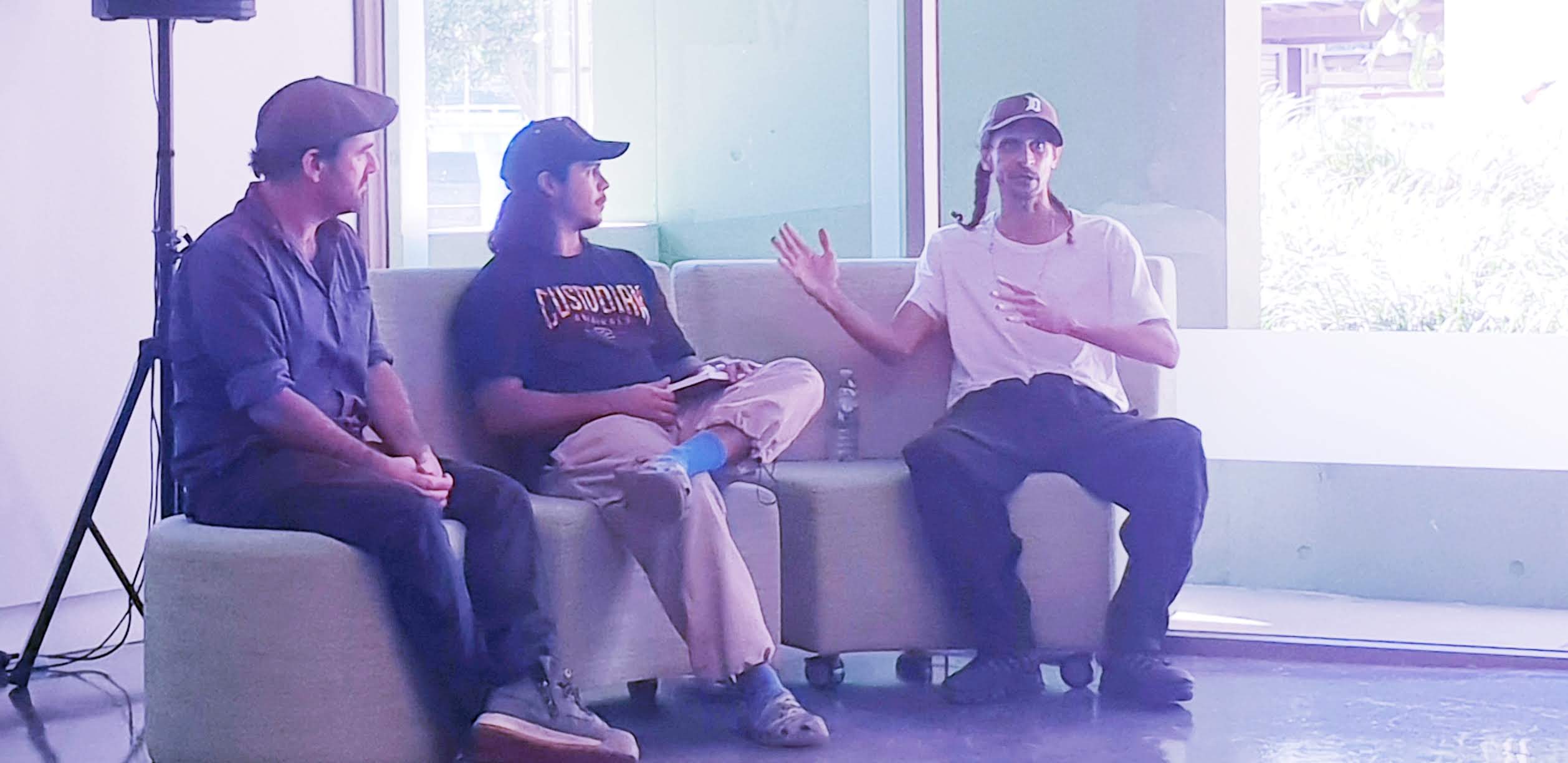
When non-Indigenous participants asked questions, of the three presenters, Toby Finlayson, creative director and two highly engaging Hip Hop First Nations Artists about best practice of how they could respectfully become involved with First Nations projects, Toby, shared how important friendship is and working in organic and respectful ways. If you work well with people you will be invited to do more work. They have also found over time that their model of working for a few weeks a time in community has led to invitations to return and work more long term, and they are embarking on more long term residencies within communities.

The final session I attended was with, Joyce Bonner Schultz, and her daughter who demonstrated they have been working together, to keep  Butchulla culture and language alive. This session turned into gifting the knowledge of some of that language with the audience, and a beautiful discussion of the stories of the creatures the words represented, including a sharing of a story that a traditional name chooses you through a significant event that may occur three times on country. This storytelling aspect was also present in the earlier presentation of the Torres Strait dancers, who explained their dances sunflower dancing, crane dancing, pelican dance and tide in, tide out.

By the end of the day I had a series of super interesting resource links to look up, an even deeper sense of the holistic connection between language, culture, environment, closing the gap, and well being and an appreciation of the opportunity the International Decade of the Indigenous Languages presents for First Nations people to have community driven projects firmly established across the country. I also knew some words for animals and places, like the creek.

The major take home message of the symposium for the basket of all attendees, was that the renewal and awakening of First Nations languages is happening in culturally appropriate and innovative ways; and language is not gone but dormant and in the cultural DNA of First Nations people. The many ways in which to achieve this reclamation and renewal are through, media, education, community, Elders and young people working together, policy, action, and collaborations born from friendship and respect. The title of the symposium, friends, basket, talk, is highly apt, to that message.

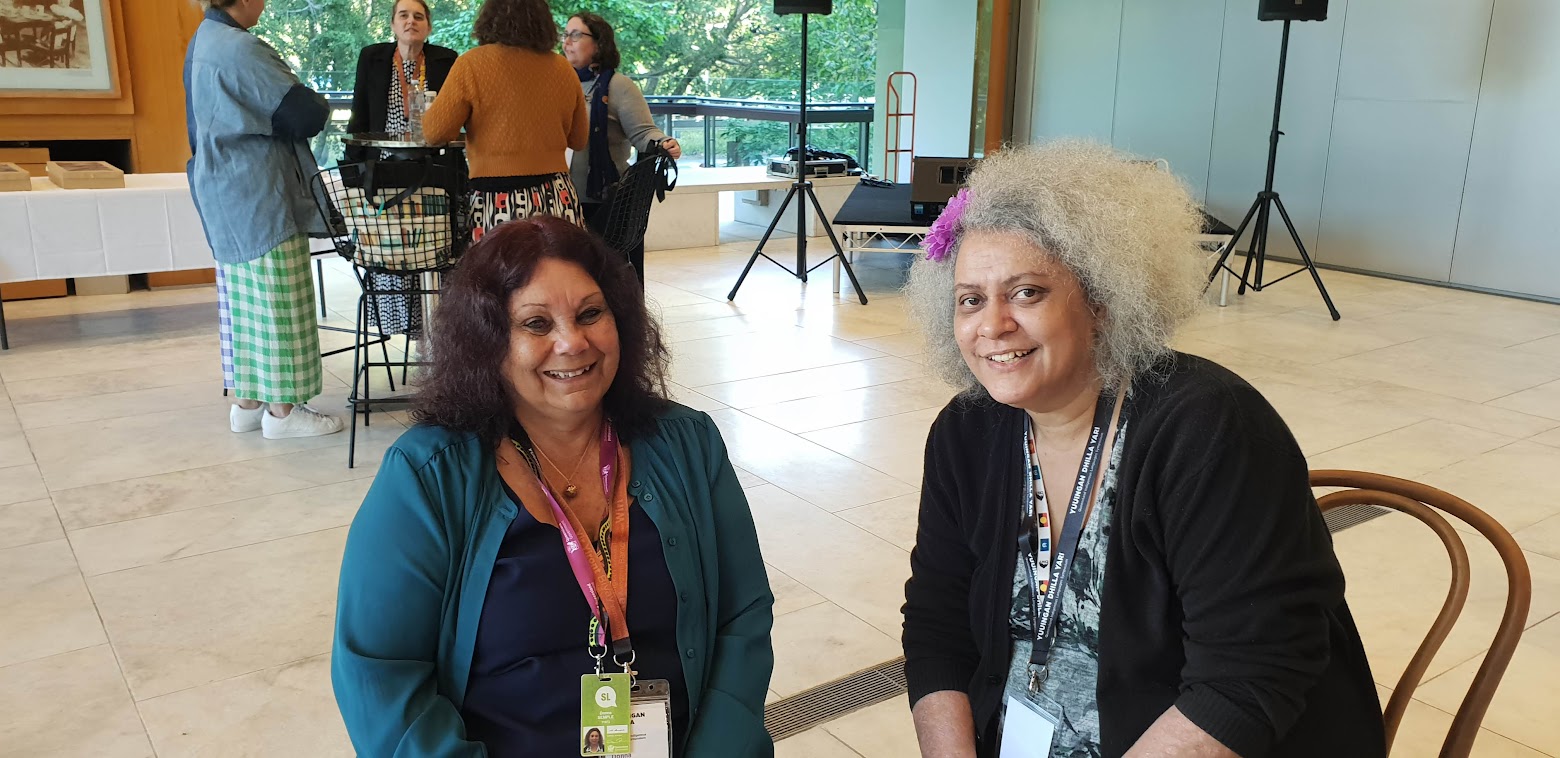
On a personal level, I found the atmosphere of the symposium to be welcoming of all attendees and many presenters were approachable for questions and chats between sessions. I particularly enjoyed ongoing chats with a librarian who attended the event and we later found we had a mutual friend in her cousin.

The experience and knowledge shared at the symposium encouraged me to continue to share and renew my relationship with my mother’s language, from Maipa Village, Papua New Guinea as part of the global interest and valuing of First Nations across the Pasifika Region, and inspired by the symposium. And to reach out and learn about First Nations languages of any local area I might travel to or engage with as a teacher or creative writer.

[Note: Yuuingan Dhilla Yari – Friends, Basket, Talk from Yuggera Language] From Gaja Kerry Charlton and the Yagarabul Elders Cultural Heritage and Languages Aboriginal Corporation who provided the name for the Symposium]

Articles and Videos of Interest

Word Up

Awaye

Little J and Big Cuz

Indigenous Names and Languages in the National Conversation

Genre Con Opening Night

It was an enthusiastic and joyful opening night last Friday, when the first Genrecon (themed Forbidden Doors) in person for three years, happened in Brisbane on the Terrace of the State Library QLD after having to be online during the pandemic and floods.

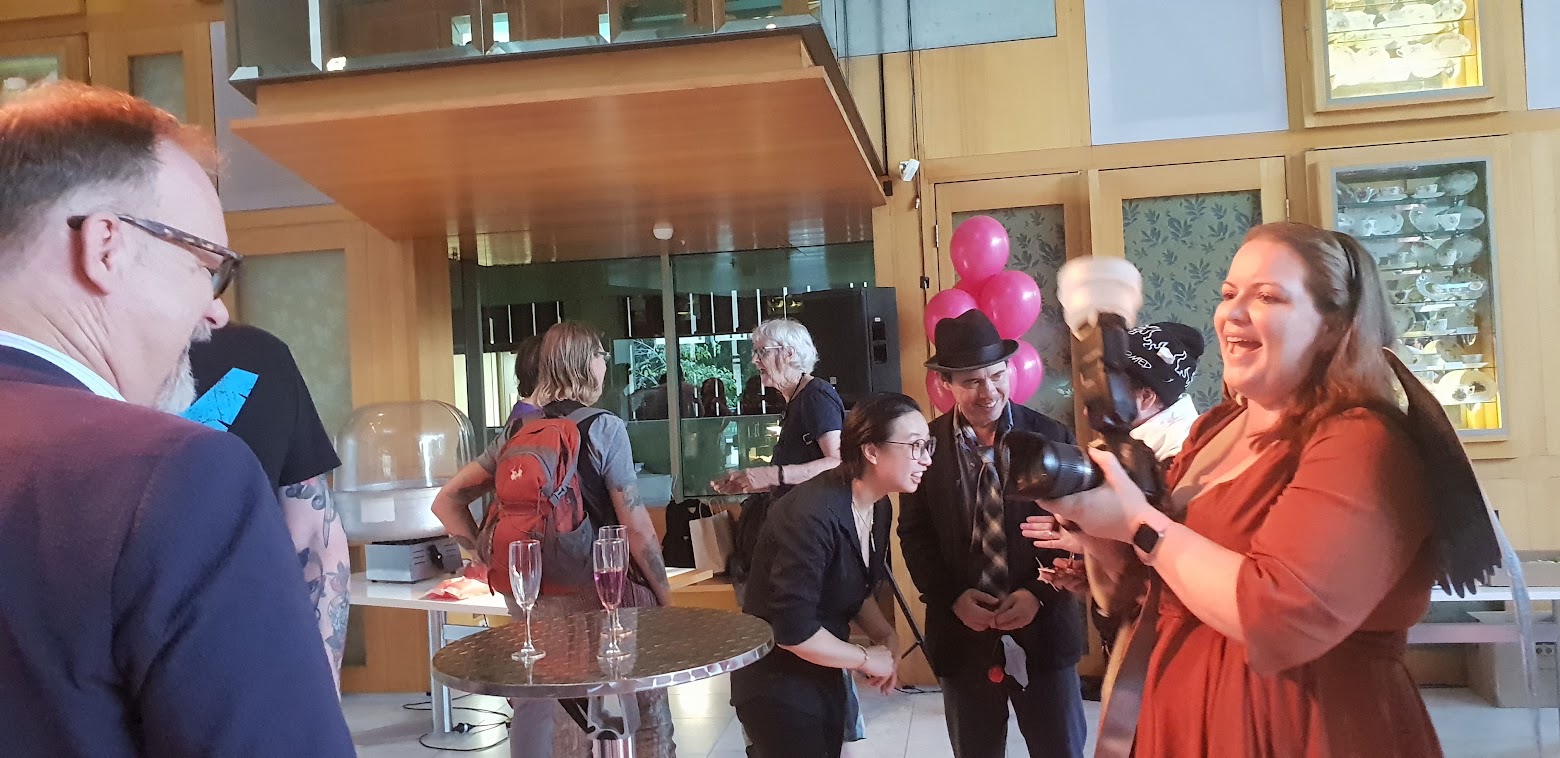
It included fairy floss, popcorn, sushi, Japanese beer, sandwiches, a back drop of Rocky Horror Show silent on a big screen, some cosplay for launch night for this who wanted to, socializing, and a celebration of all things to do with Fantasy, spec fic, crime, romance, fairy tale as well as combination genres.

You could if you like talk to some of the best selling authors, like Garth Nix who were super friendly and encouraging of emerging and budding authors and who stayed throughout the weekend for more than just their own panels. Other presenters and writers in attendance were Nalini Singh, Natasha Lester, Rob McDonald, J.P. Pomare, and Jay Kristoff, Ali Sinclair, Leanne Young and more.

Lori-Jay Ellis (CEO of the QLD Writers Centre), was delighted to launch the event, and spoke up talented best selling Queensland writers, as well as our international and interstate visitors for the conference and the best cos players.

Roaming photographer Jemma Polari, and also MC board member, captured some of the joy and creativity of the evening. Other board members also in attendance over the weekend were Lara Cain Grey and Stephen Torre.

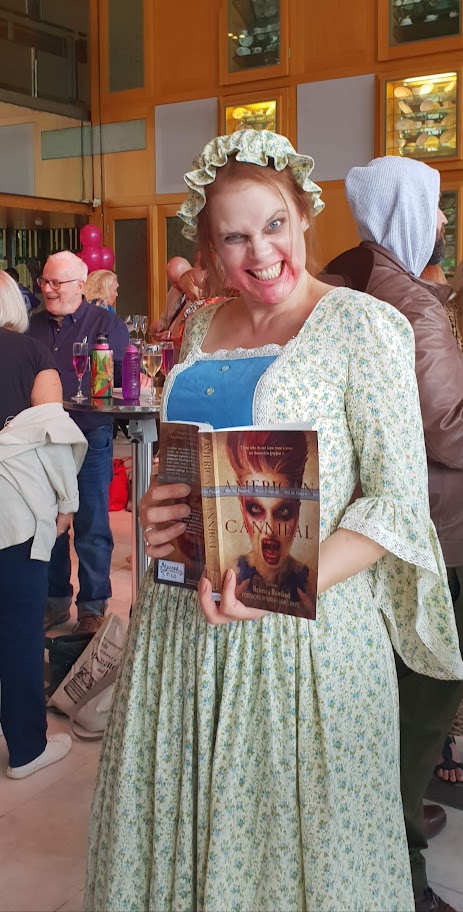
The amazing Lauren Elise Daniels, editor, writer, writing across a number of genres, soon to be panellist and panel host over the next few days strutted her costume out in super scary style.
There were speeches and prizes for a writing competition (Jay Mckensie won for February Girl), and costumes, with Writing Centre CEO, Lori-Jay aka, Wednesday Addams, and sponsors and organisers (Craig Cauchi came as Lori-Jay’s favourite character/actor). Which included the major one of the QLD Writers Centre and the State Library, but other sponsors are listed on the website and were dutifully and gratefully thanked.
Raelene Purtill won best costume, and gave a thank you speech in character!

One of the major highlights of Genrecon, was being able to learn about genres you might not have considered writing before, and realising you perhaps could. As well as being surrounded by writer tribes you might not have known before.

As well as of course for some connecting with their much missed writing tribe, separated by said floods, and pandemics and lack of interstate travelling rights.

The enthusiasm, knowledge and skill of the horror and speculative fiction writers, as well as writers of paranormal romance, was so enjoyable to witness.

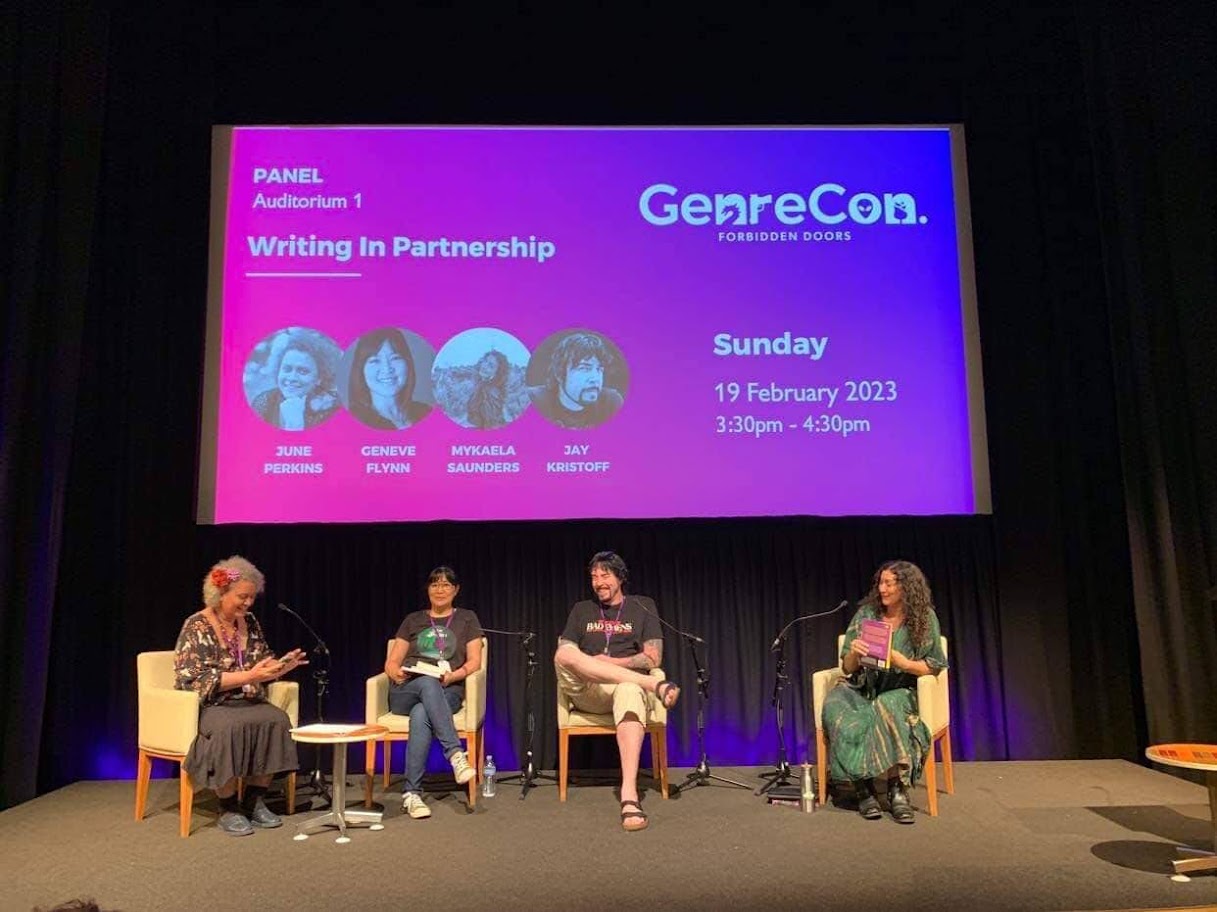
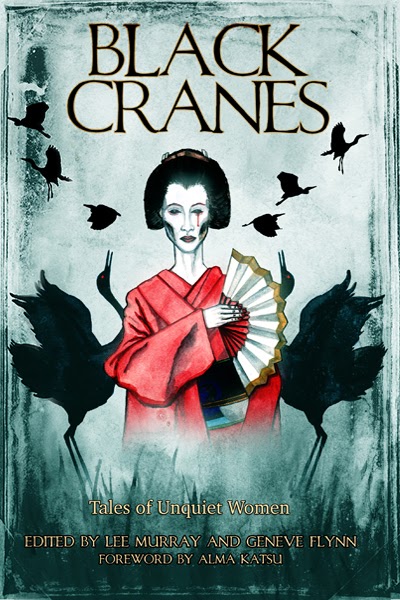
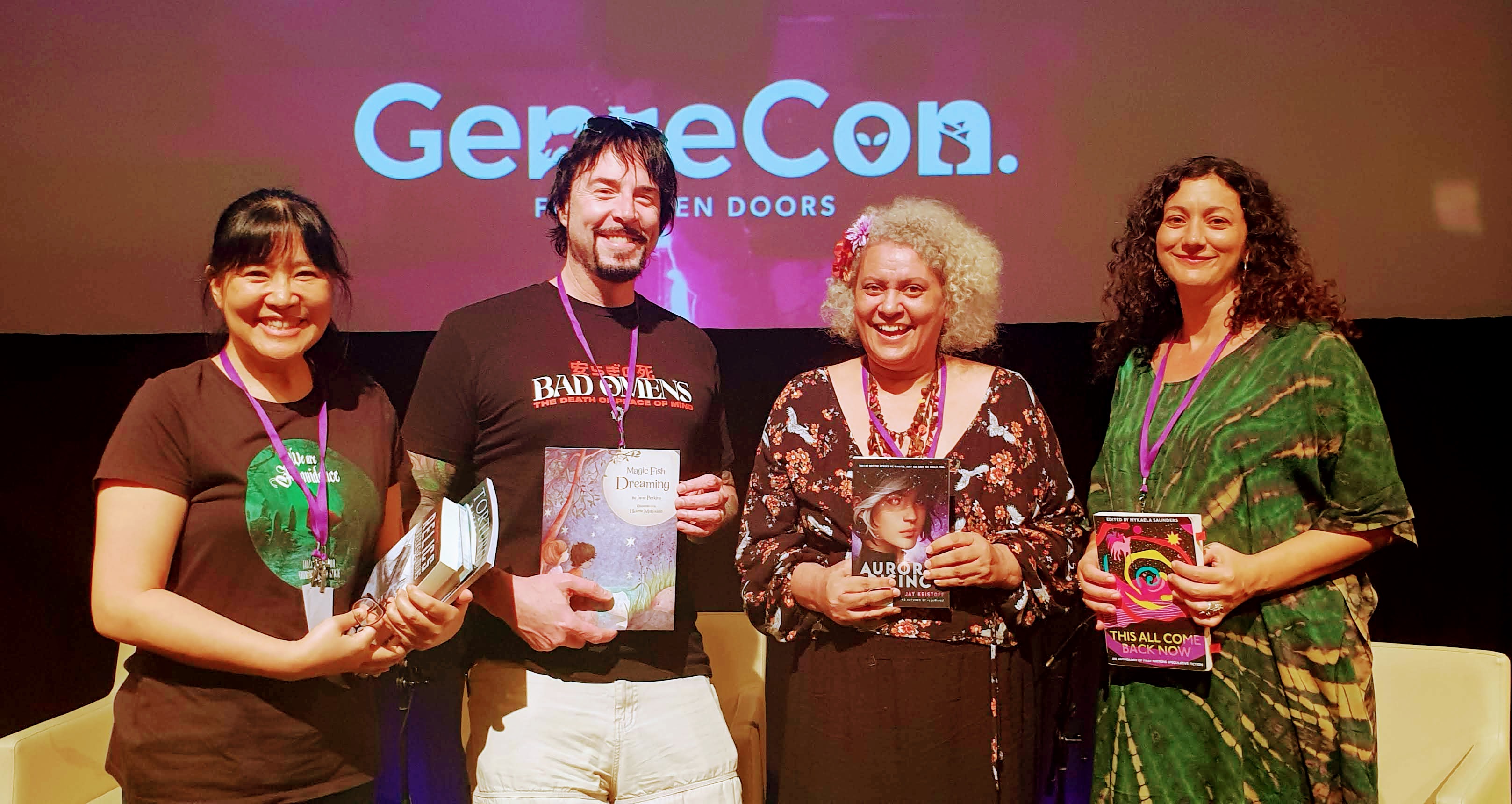
I particularly enjoyed talking to creators, like Geneve Flynn, over the weekend, author/ co-editor of Black Cranes who I was later to host on a panel, Writing Partnerships.

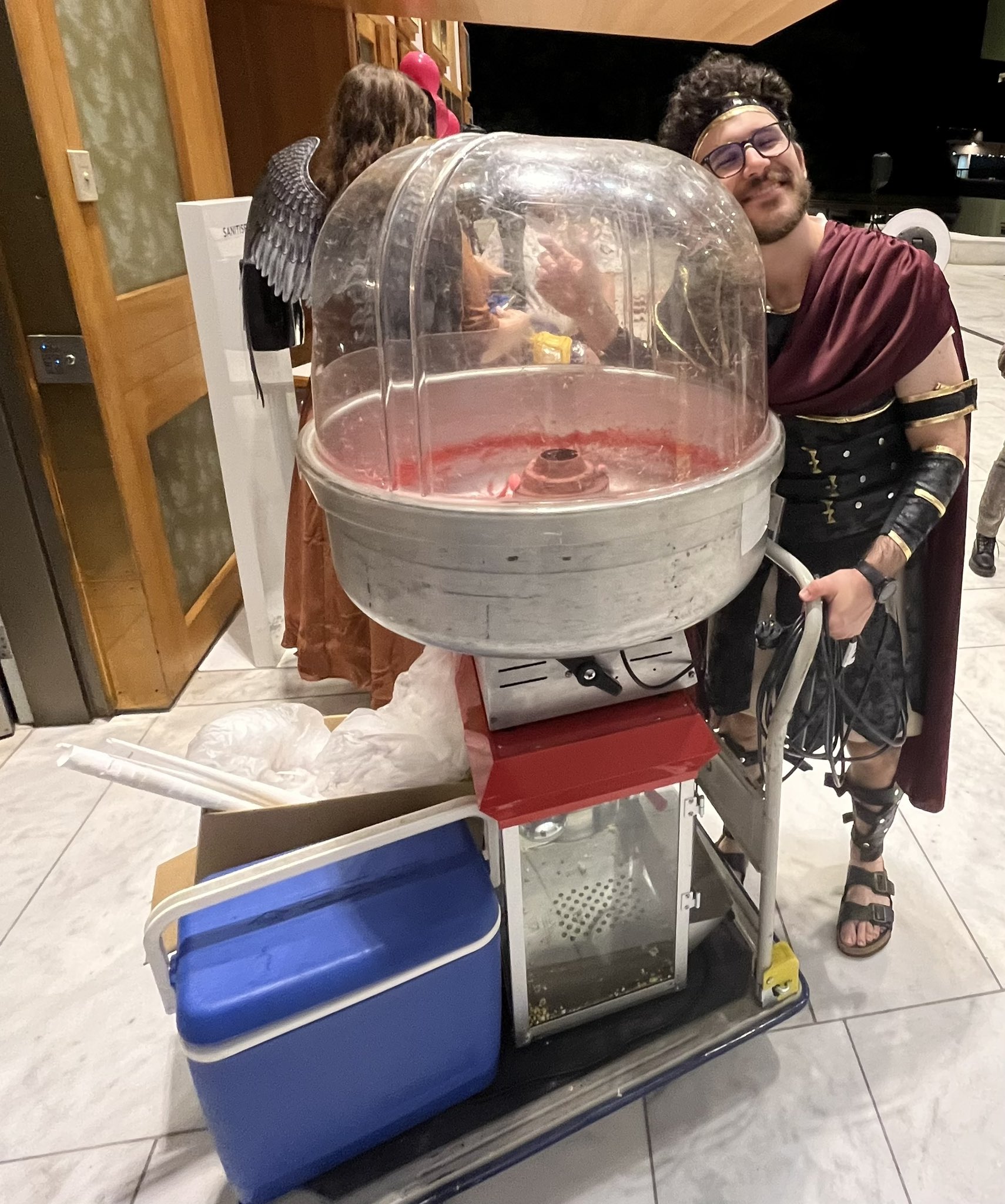
There are some tremendous photographs of genrecon being posted online, with one of my favourite being this one by Garth Nix which captures Craig Cauchi communing with the Fairy Floss machine in full gladiatorial glory. You can find many by following the hashtag #genrecon2023

More posts to come…

Writing Partnerships & Collaborations

It was inspirational to discuss the ins and outs of how to create successful writing collaborations, with award winning authors Geneve Flynn, Jay Kristoff, and Mykaela Saunders at Genre Con 2023.

Most of the audience had little experience of this, and were curious to learn more, especially about the personal qualities to look for in potential collaborators and the mechanics of managing a writing partnership.

We examined this from the point of view of writing partners, collaborating editors and creating publishing opportunities to bring collectives together to have a voice.

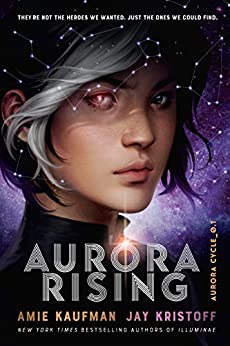
Jay’s first meeting with his writing partner, Amie Kauffman, was over their difficulties in navigating overseas taxation for individual books they had coming out, and came about because of a suggestion from a third party who said they could help each other out. They then had a breakfast meeting which led to a cowriting friendship, now spanning eight years and two series Illuminae and the Aurora Cycle.

Geneve met one of her co-editors by bravely introducing herself to Lee Murray, at a previous years Genre Con. Lee was a writer she greatly admired, and it turns out also had much in common with. Lee suggested they collaborate on editing an anthology. Geneve said, ‘How could I possibly have said no’ to an offer like that. Geneve has a professional editing background but Lee (who is also a professional editor) knew more people to approach to contribute to such a collection.

Mykaela gathered her contributors from a combination of personal networks and emails to people whose work she had long admired, such as Alexis Wright. She also did wider community call outs, and combined both well known authors, and emerging authors. University of Queensland Press took on her project to create Australia’s First, First Nations Speculative anthology, but of course there had been speculative writers around before that, who may not have been fully acknowledged.

The panellists shared that for them an essential element of partnership is .. to want what is best for the work

The panellists shared that for them an essential element of partnership is for all involved to want and focus what is best for the work, and this means having excellent communication free of ego, and producing an agreed outline of how work will be divided at the beginning of the process.

I shared the example of Terry Pratchett and Neil Gaiman, who had a wonderful writing partnership, which Neil has written about.

This is how we wrote a novel together. I’d write late at night. Terry wrote early in the morning. In the afternoon we’d have very long phone conversations where we’d read each other the best bits we’d written, and talk about stuff that could happen next. The main objective was to make the other one laugh.

From Neil Gaiman, Terry PRATCHETT AN Appreciation

The audience wanted to know whether writing partnerships can be maintained through online communication, to which Jay said, “Amie and I always meet in person for planning” and then he explained they continue through electronic communications.

Both Geneve and Jay, have developed synergies with their collaborators where each brings different strengths to their projects. Geneve with several anthologies now collaborated on, with different co-editing partners, showed an enthusiasm for this form. One of these, Relics, Wrecks and Ruins, she did with one of the collaborating editors now passed on and includes Neil Gaiman as one of the contributors.

Jay’s writing partnership, led to both Amie and him, being able to write full time, due to the immense success of their cowritten series Illuminae Files.

‘Collaboration has been life changing.’

Jay KRISTOFF

Jay explained their joint processes in some depth. He explained that in a planning session, nothing is too crazy for a suggestion in such sessions. It’s no holds barred.

The panel delved into how editors make choices.

For instance sometimes writing teams, as well as anthology selectors, have to make tough decisions at times, to ensure the best and most relevant work is included in their final work or collection.

Sound communication and compatibility is key to making tough decisions . . .

For all of the panellists sound communication and creative compatibility (this does not mean being the same, for it is often complementary and different strengths that make collaborations work so well) in teams is key. Mykaela needed submitted work to be to a reasonable level so she would not have to heavily mentor the writing of her contributors, but more collate it and order it with other selections.

Jay, who never argues with Amie, does neverthless have robust discussions where each puts forth their best argument for why something needs to stay, go or be changed. He will go with whichever choice is the most convincing, and listens carefully and respectfully to Amie who is also an expert in conflict resolution.

The book began with a list. “We wrote down all the things we love and whenever the other said ‘Oh, I love that, too’, we noted the crossover. One of the things we both loved was the ‘character out of time and place’ idea. “Auri is a character who doesn’t know where she is or why. On a structural level, it’s great to have this character that can explain the world to readers. She’s our Arthur Dent or Ellen Ripley,” says Kristoff. Aurora Rising is also about found family, finding your squad and what it feels like to be an outsider.

Kristoff quoted in ATKINSON,  Faye. 2019, SMH

Mykaela feels that its important as an editor, once selections have been made to treat writers respectfully. Both she and Geneve prefer to use question based approaches to their editing processes. Mykaela described editing as ‘learning to walk on the snow,’ of the manuscript gently, and in her ‘Overture’ – introduction to This All Come Back Now she says:

I did not want this to be an anthology full of pan-Indigenous, written to teach white Australia a lesson about itself stories that could be mistaken for coming from other cultures. . . I wanted to collect the best of our spec fic writing together in this basket of like-minded genres, so that the stories could all be read in their proper cultural context, side by side with their siblings.

Mykaela This All Come Back Now (p. 11)

Both Geneve, and Mykaela, have created anthologies reflective of diversities within cultural communities which avoid stereotypes. This is very important in the acknowledgement of diverse communities within Australia and globally. Mykaela pointed out there is immense diversity in the First Nations of Australia, and the importance of understanding of that interculturality. She herself is Koorie/Goorie, and Lebanese.

 We’re not a kingdom or a tribe. No chiefs here. We’re not apex predators at the top of any food chain. We don’t go around thinking we own the place. We’re all guests here, part of a diverse community – a complex network of relationships

Nan Jack In Mykaela’s short story , ‘Terranora’, IN  THIS ALL COME BACK NOW, p. 254

The Foreword to Black Cranes is a useful reference point for Geneve’s concerns.

What does it mean to be an Asian woman? The whole world thinks it already knows what we are about.  We are usually reduced to one of two stereotypes.  Sometimes we’re seen as Geishas, the beautiful desirable woman who is trained to bend herself to the will of another (usually a man).  She exists only to give pleasure.  Other times, we’re the Dragon Lady, manipulative and dangerous (but, here too, sometimes with a tinge of the erotic). 
Above all, Asian women are supposed to be submissive.
… We can be many things. The only thing we can’t be is defeated.

Alma Katsu Foreword to Black Cranes

I highly recommend this funny, warm, generous, and sensitive panel of authors, who between them cover spec fic, horror, fantasy, science fiction, horror and fantasy poetry. I immensely enjoyed reading their books in preparation for the panel.

The audience at the end enthusiastically indicated they would love to find writing collaborators, and or contribute to anthologies and tandem tellings (we had storytellers in the audience): who knows that might even happen from making friends at Genrecon.

Many thanks to the Queensland Writers Centre, Genre Con and all sponsors for this event as well as to my Australian Fairy Tale Society colleagues for their nurturing and collaborations.

Interesting Links For Further Exploration