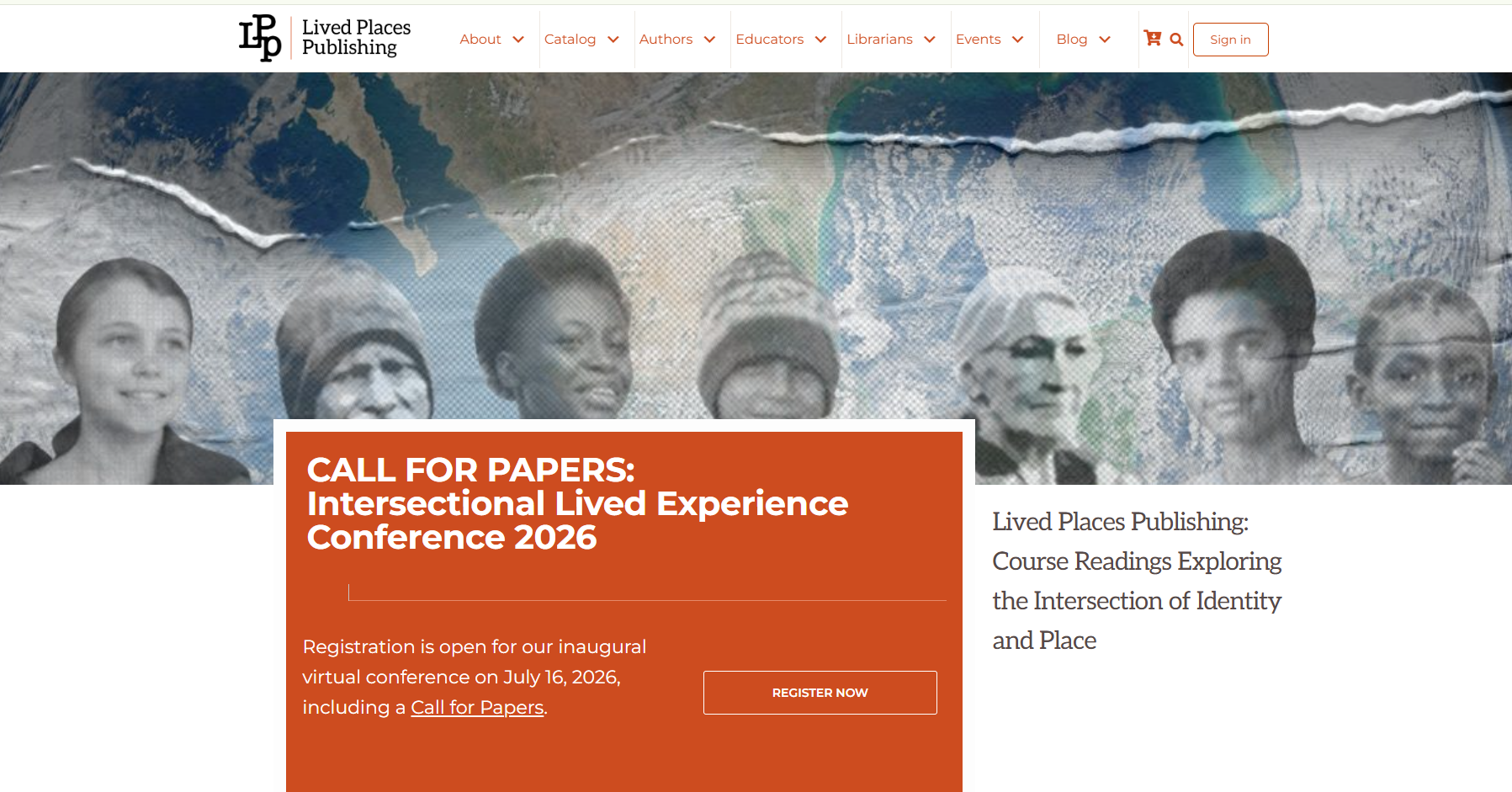
I am delighted to announce that I have a book in development with Lived Places Publishing in the Pacific Islander Studies series, due out probably in 2027. This is my first contracted book!
This work will be based on my lived experience of the Pasifika Diaspora in Australia and includes a consideration of poetry, pedagogy, community and identity. I am absolutely thrilled to be developing a book so dear to my heart!
This is not a children’s book, but it is for anyone searching for belonging, healing, and connection through their writing/storytelling and families, and who has directly suffered the heart breaks of systemic prejudice on themselves, family and community members. It will be written in a highly accessible work reflecting my love of storytelling, poetry, community, research and empowerment.
I hope Mum, Dad and all my ancestors, whatever their cultural background will be proud.
My blog spaces, essays unpublished, the Doctorate (2004), my education innovation project during my master of teaching (secondary) (2021-25), public speeches, workshops and projects and life experiences have contributed to developing this concise and accessible book.
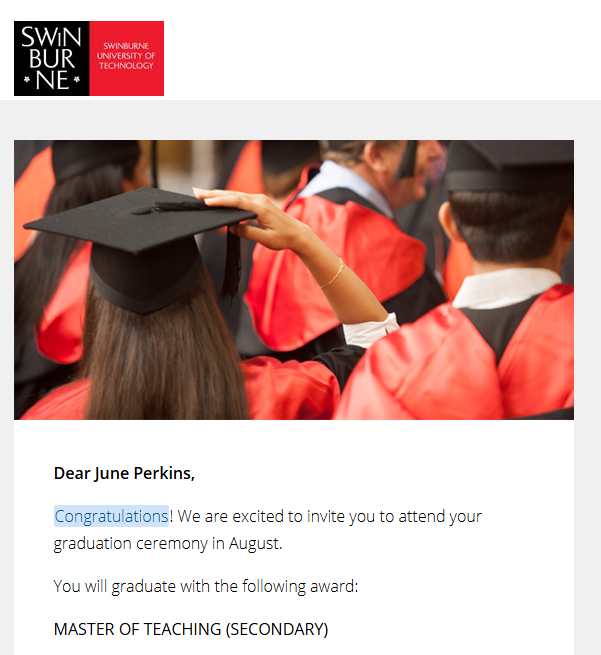
I have also completed my Master of Teaching (Secondary). Whilst I will not attend graduation in person I was delighted to receive this email, and will celebrate somehow with family and friends!
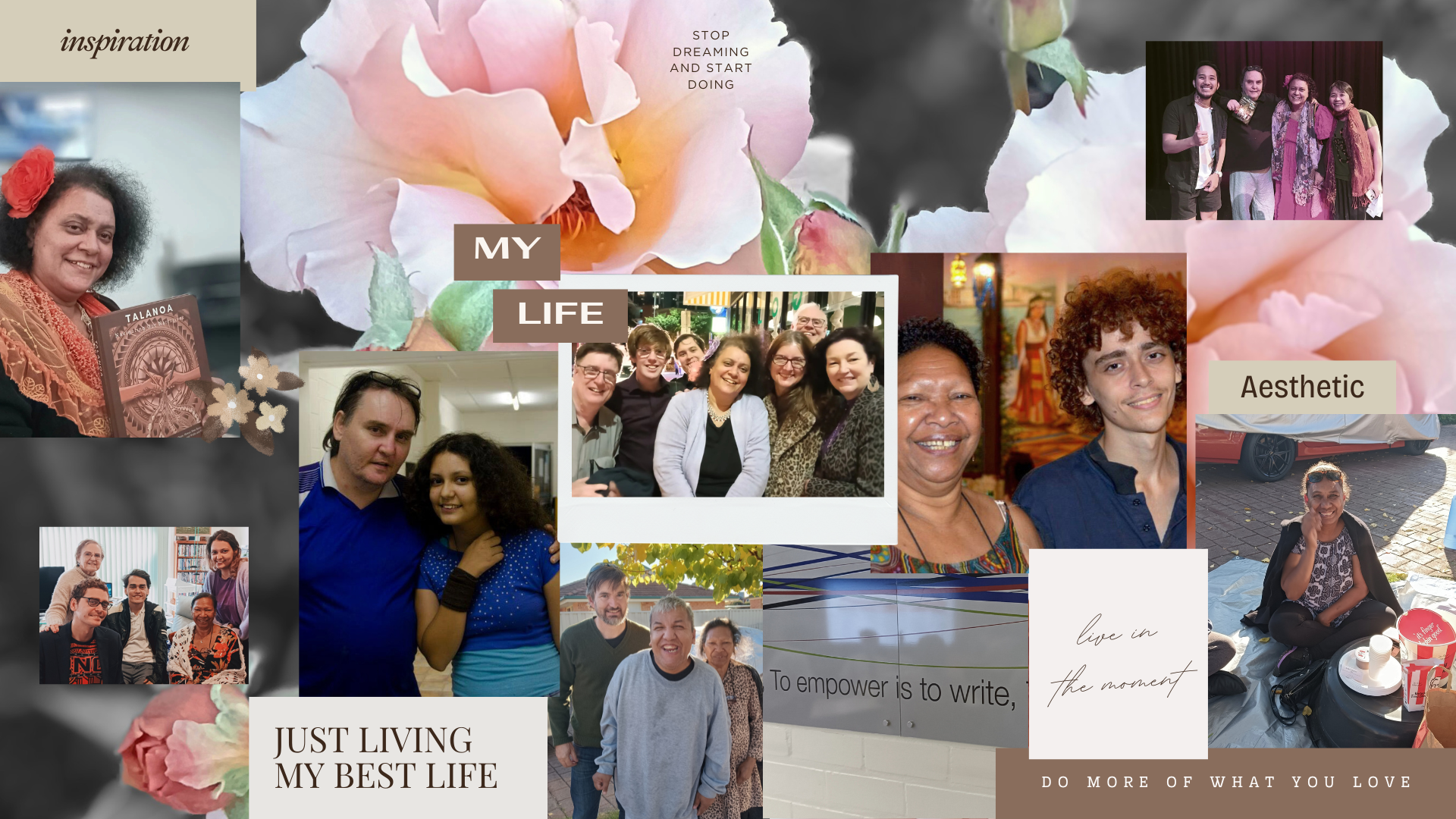
Some recent life inspirations – including publication with Talanoa, finishing my time on the Queensland Writers Centre Management Committee, meeting my Cousin Maddie, attending Roselle’s play!
QPoetry was a wonderful couple of days of panels, pop up performances by all kinds of poets, including youth poets, the relaunch of Various Poetry Awards (due in September if you are interested), workshops, a poet in residence you could chat with in the foyer, reading Salons, and most of all conversations with new and old friends about – poetry.
In the opening panel we learnt more about the progress on the Poet Laureate, for Australia. There was conversation about what kind of poet this needs to be: which included a strong sentiment that it should be a successful poet, who now has time to give back to future and emerging poets and can strongly advocate for poetry and connect more of the population to it. A bonus would be that they initiate innovative projects to appeal to a diversity of people who may not currently connect with it as an inclusive and excellent art form.
Some felt the position should be a few years rather than one, so that the Poet Laureate could do something substantial. There was discussion concerning whether a poet should self nominate or strictly have to be nominated. The different kinds of poet laureate roles across England,New Zealand and America were discussed. All but 5 American States also have poet laureates!
Panelists were Martin Dolan, Vuong Pham, Mindy Gill and Ella Jeffery. Chaired by Yvette Holt.
(Thanks to FNAWN and The Queensland Writers Centre, Australian Poetry and all panelists).
Image by Phoenix Senhenn, Queensland Writers Centre. June Perkins with Yvette Holt, David Malouf and Lori-Jay Ellis in conversation in background.
Participating in the pop up was lots of fun. Poetry really has a place and provides a voice for everyone. Well done to all those brave souls who shared their work. Some were reading their work in public for the first time, others had done it many times before.
Image: June Perkins
I read my Poetry chapbook, 29/49 Bubu/Grandparents (which I was rapt to have accepted to a special collective project with 48 other poets) and ‘Diaspora’s Daughter.’ And then I enjoyed listening to poems from the rest of the reading team. There were, from my estimate 75 + poets who had opportunities to share their work.
Here are some other highlights from the weekend – which included Writers after Dark, A Horror Salon (Cross over with Genrecon) Electric Words. There were some powerful words, poetry that protested, unsettling stories, poems to make you laugh, and cry.
Thanks to all those who took time to have a yarn! I look forward to seeing you all next year. There was a beautiful welcoming vibe to QPoetry and a message from Sarah Holland-Batt read by CEO of the Writer’s Centre, Lori-Jay Ellis.
Featuring photographs from Phoenix Senhenn, Jemma Polari and June Perkins
A massive thank you to the Queensland Writers Centre, all the partners for QPoetry, and to the staff, volunteers and Board.
It was so enriching to see, hear, and exchange ideas about poetry and how to connect to more potential poets and the wider community. A widening of the circle of interest, an inclusive embrace of our world was apparent in the atmosphere.
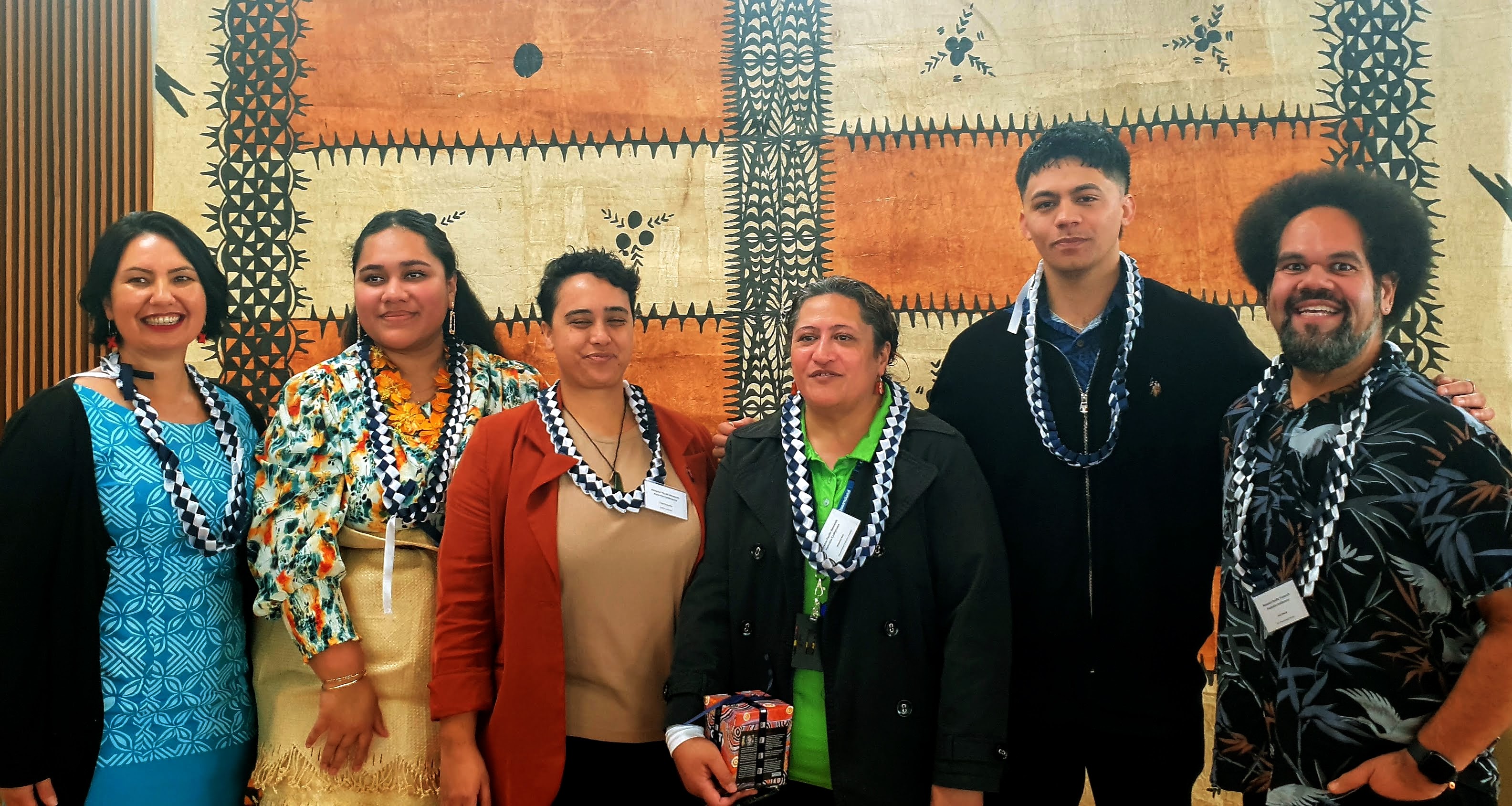
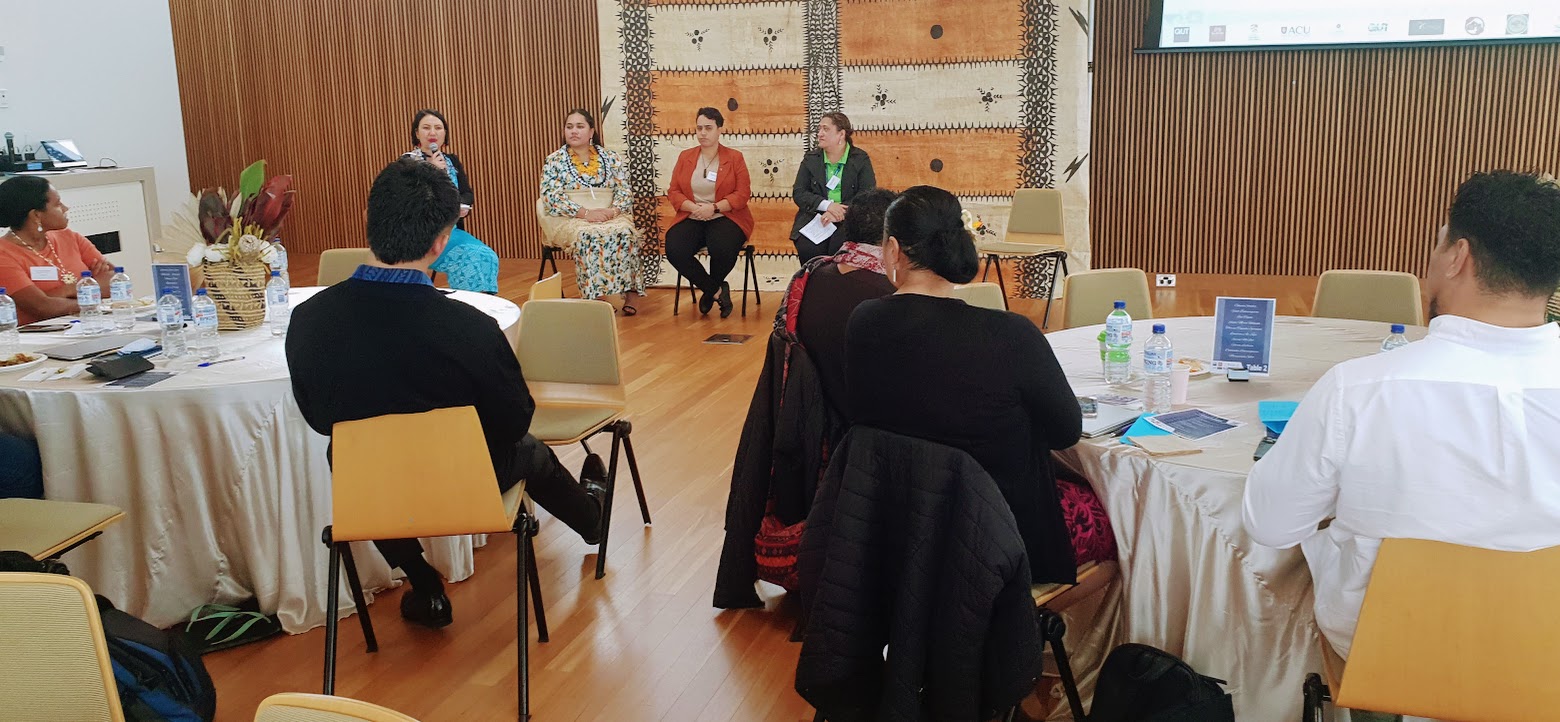
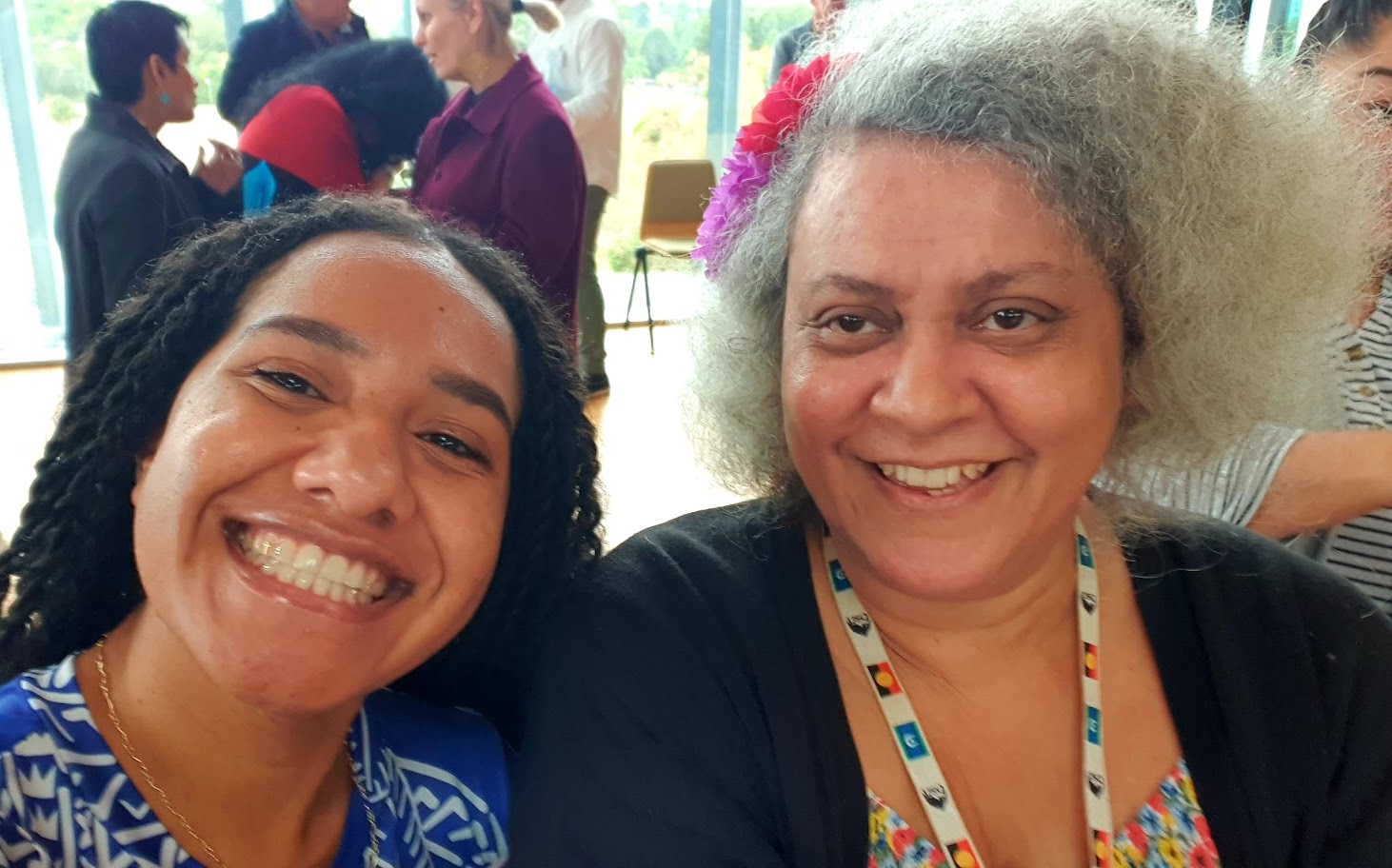
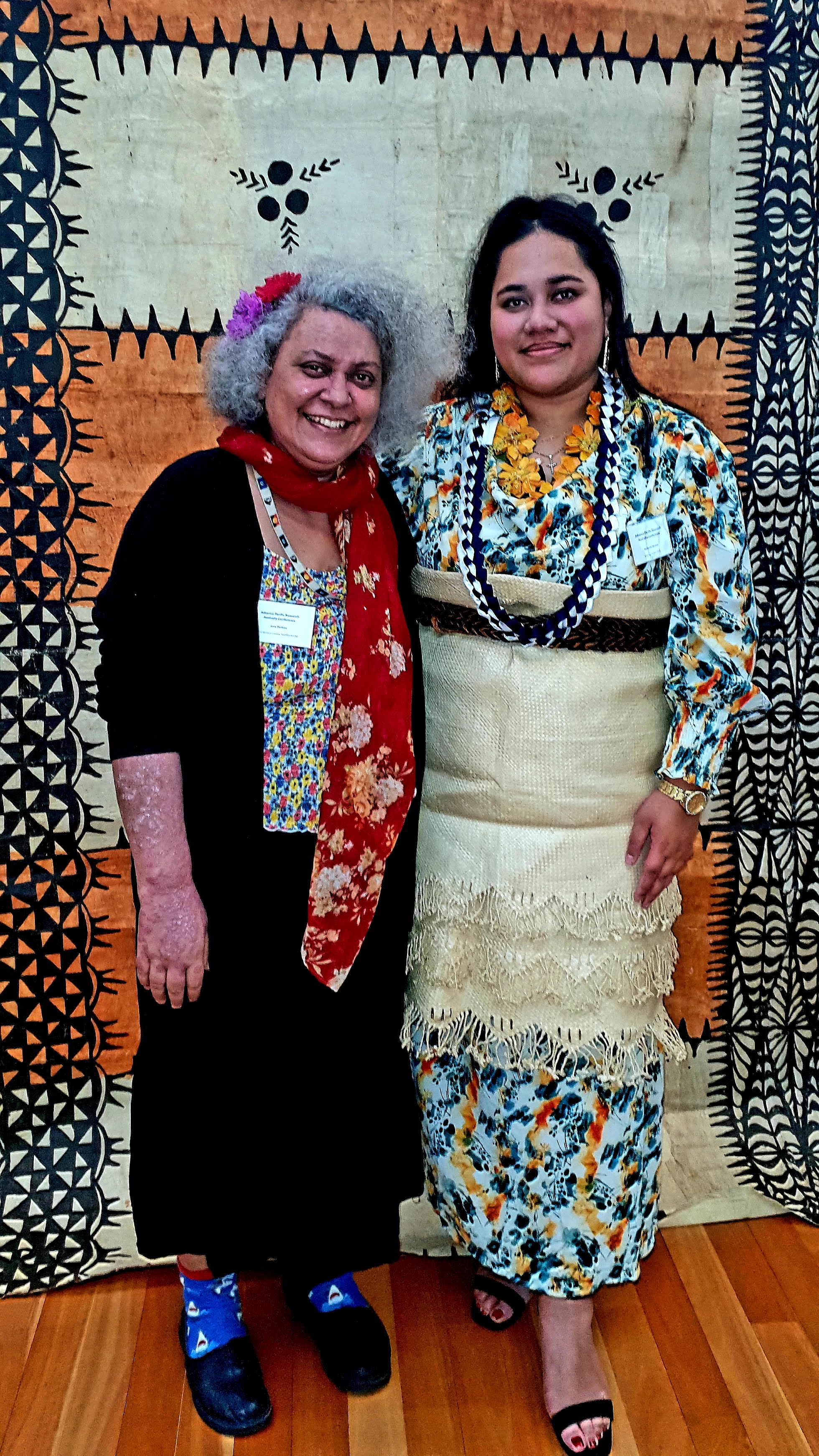
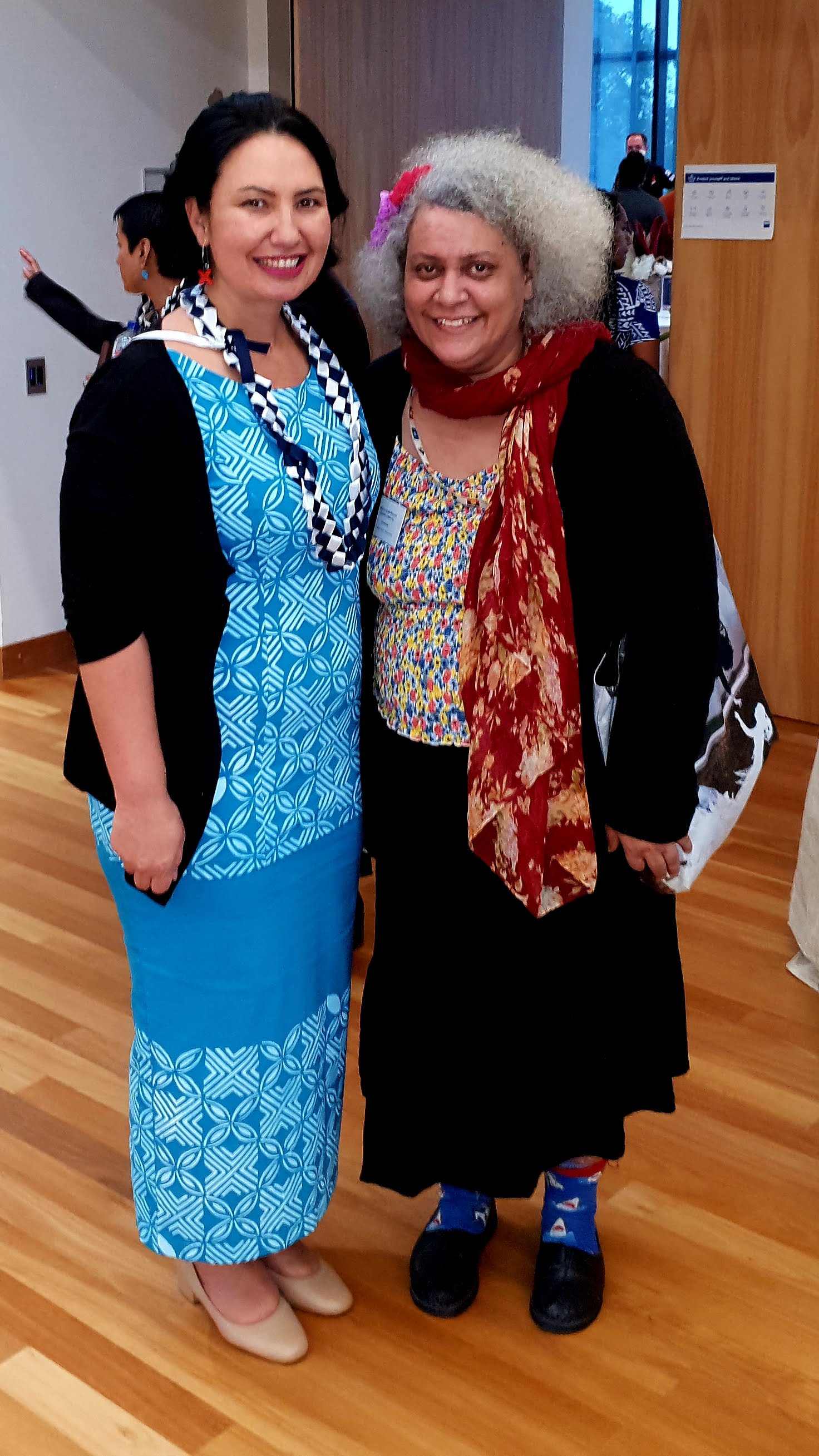
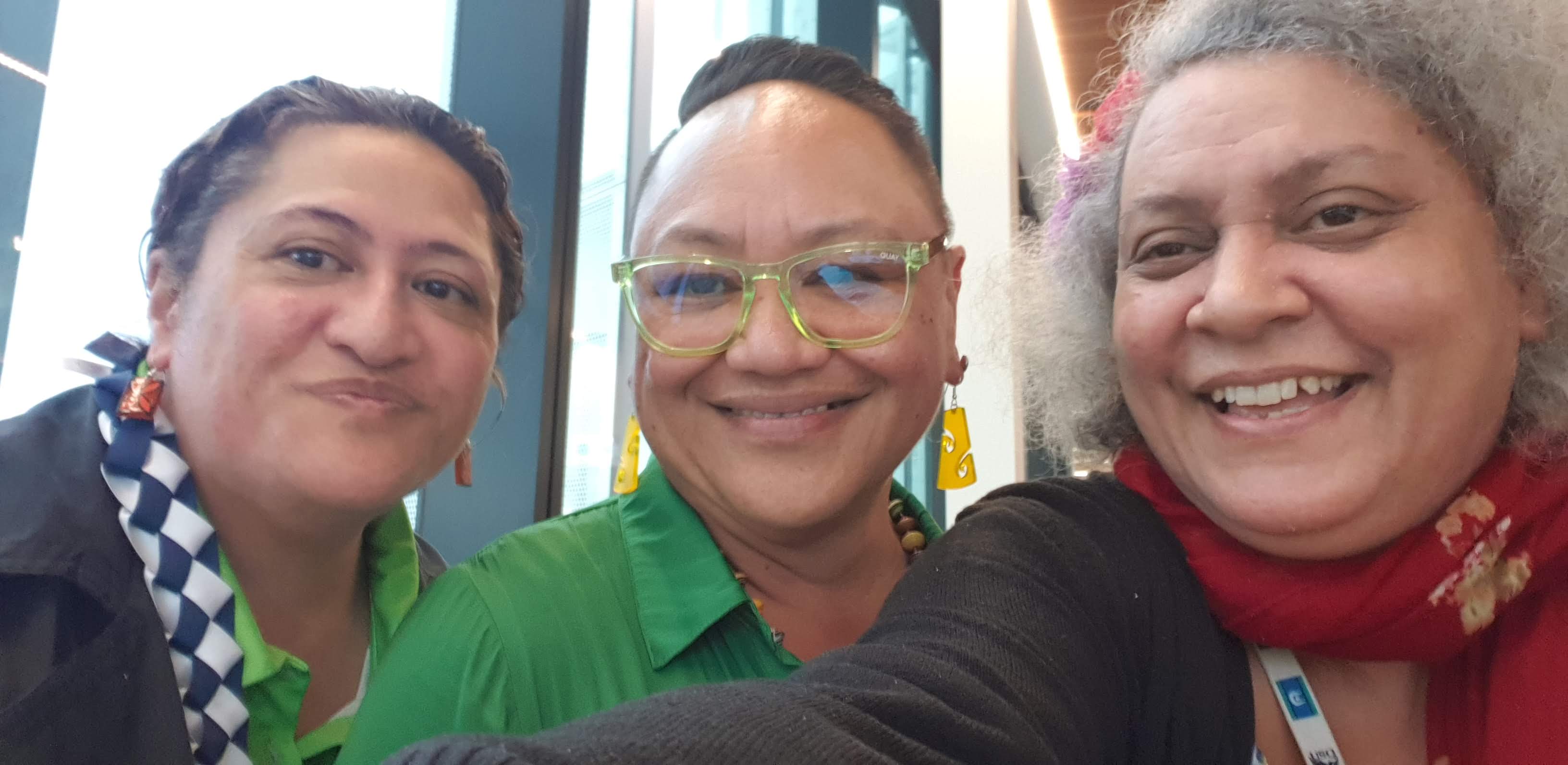
Pictured: Glenda, Melesiale, Tiana, Katarina, Chris and Jioji
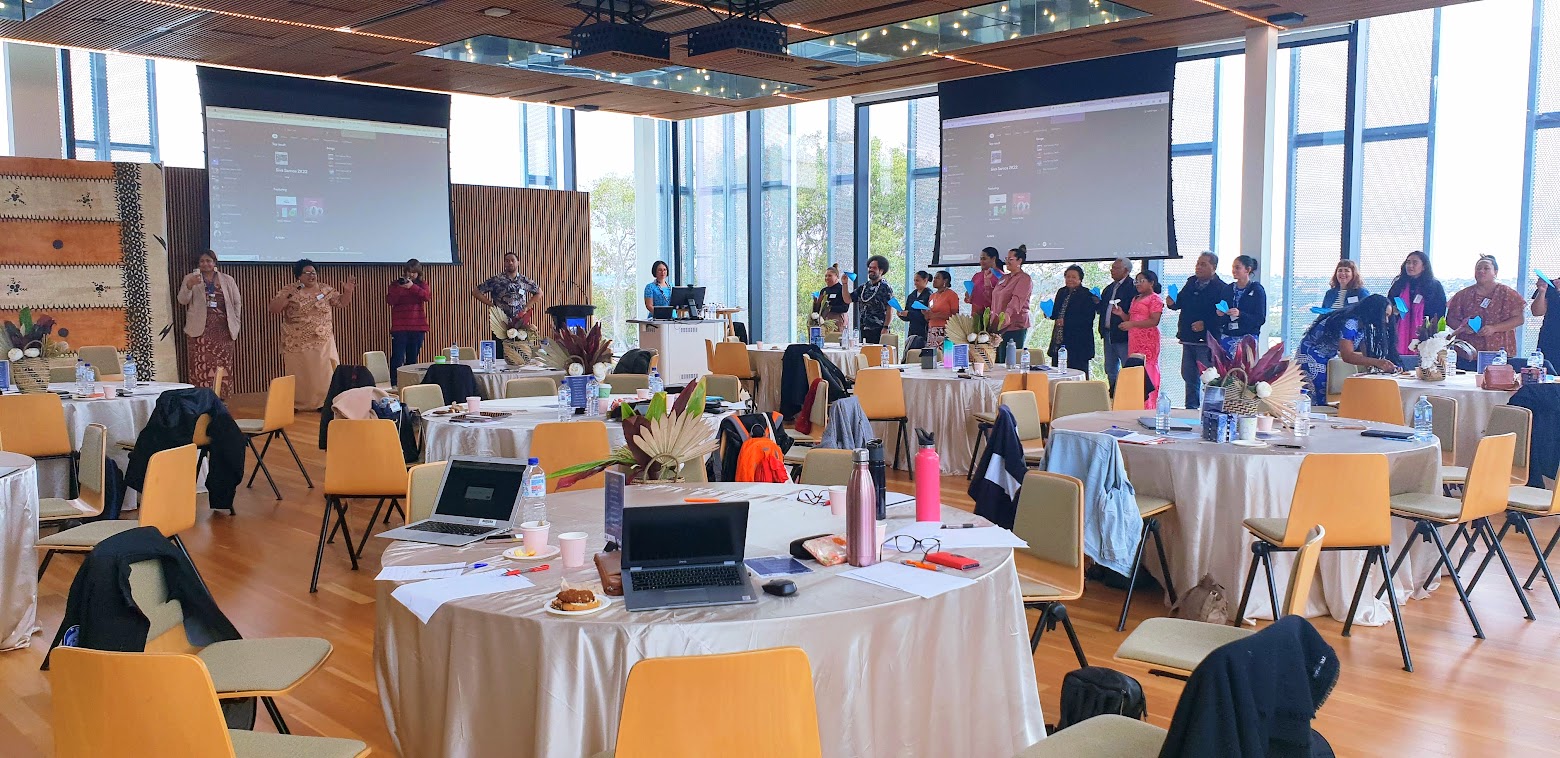
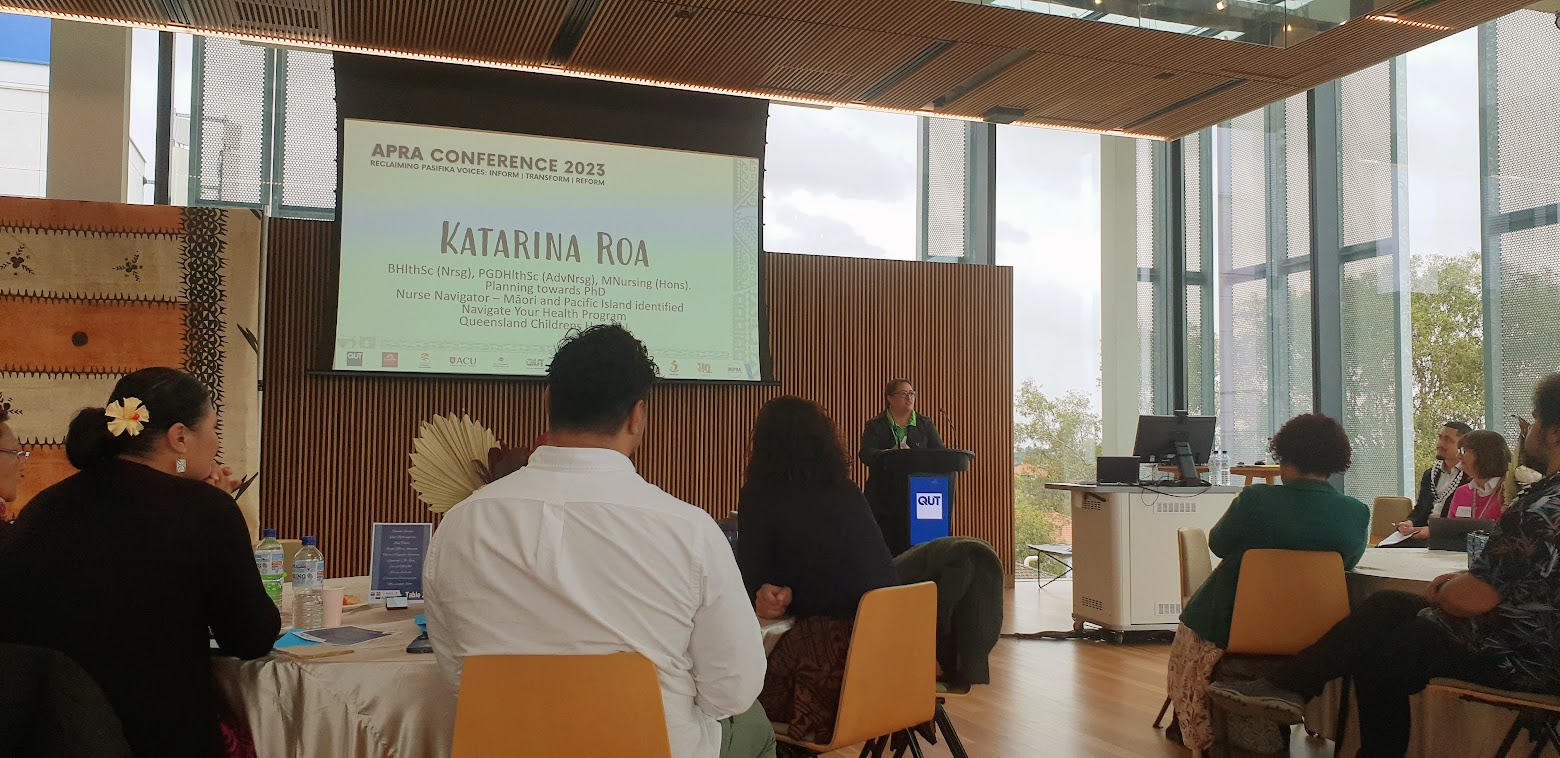
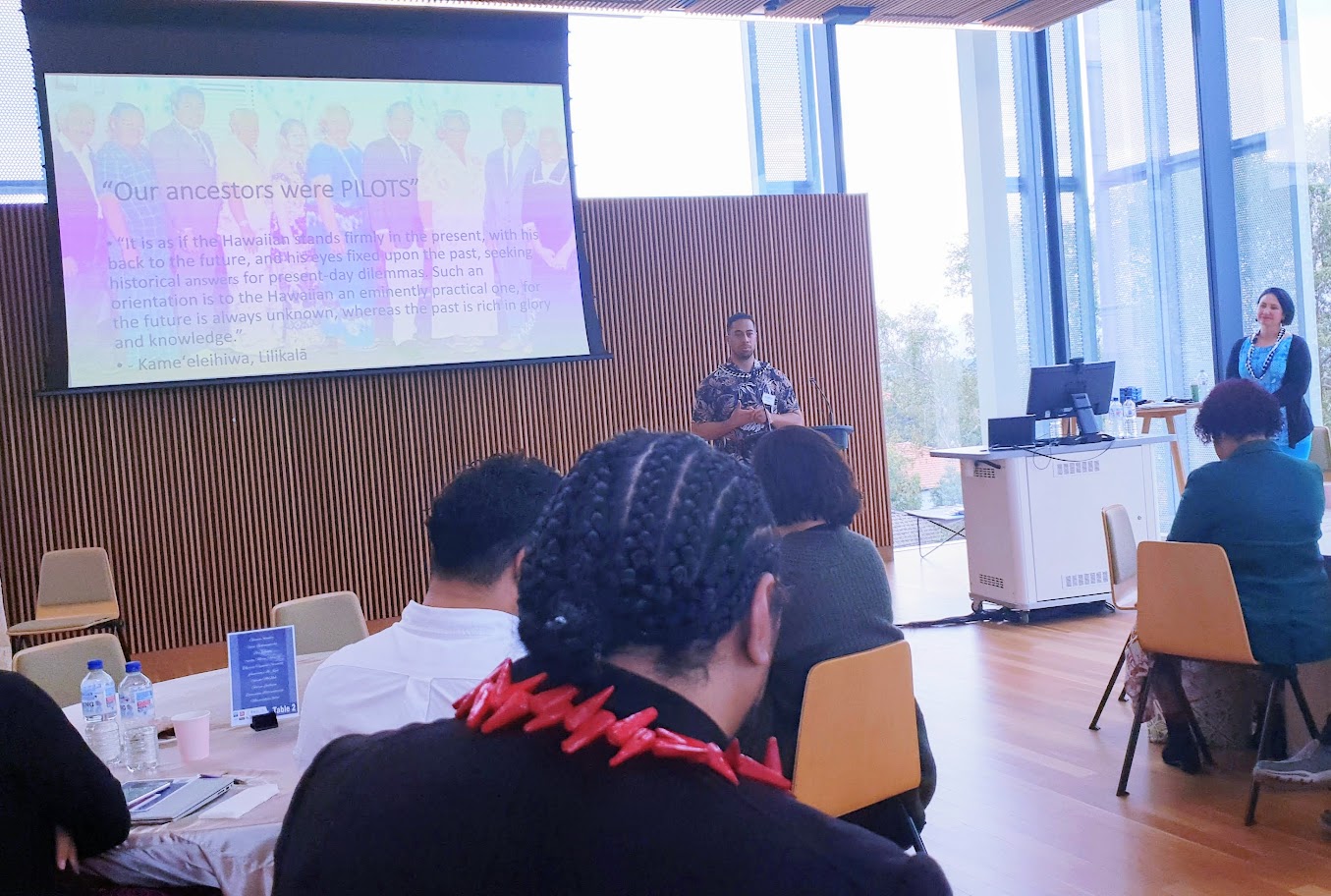
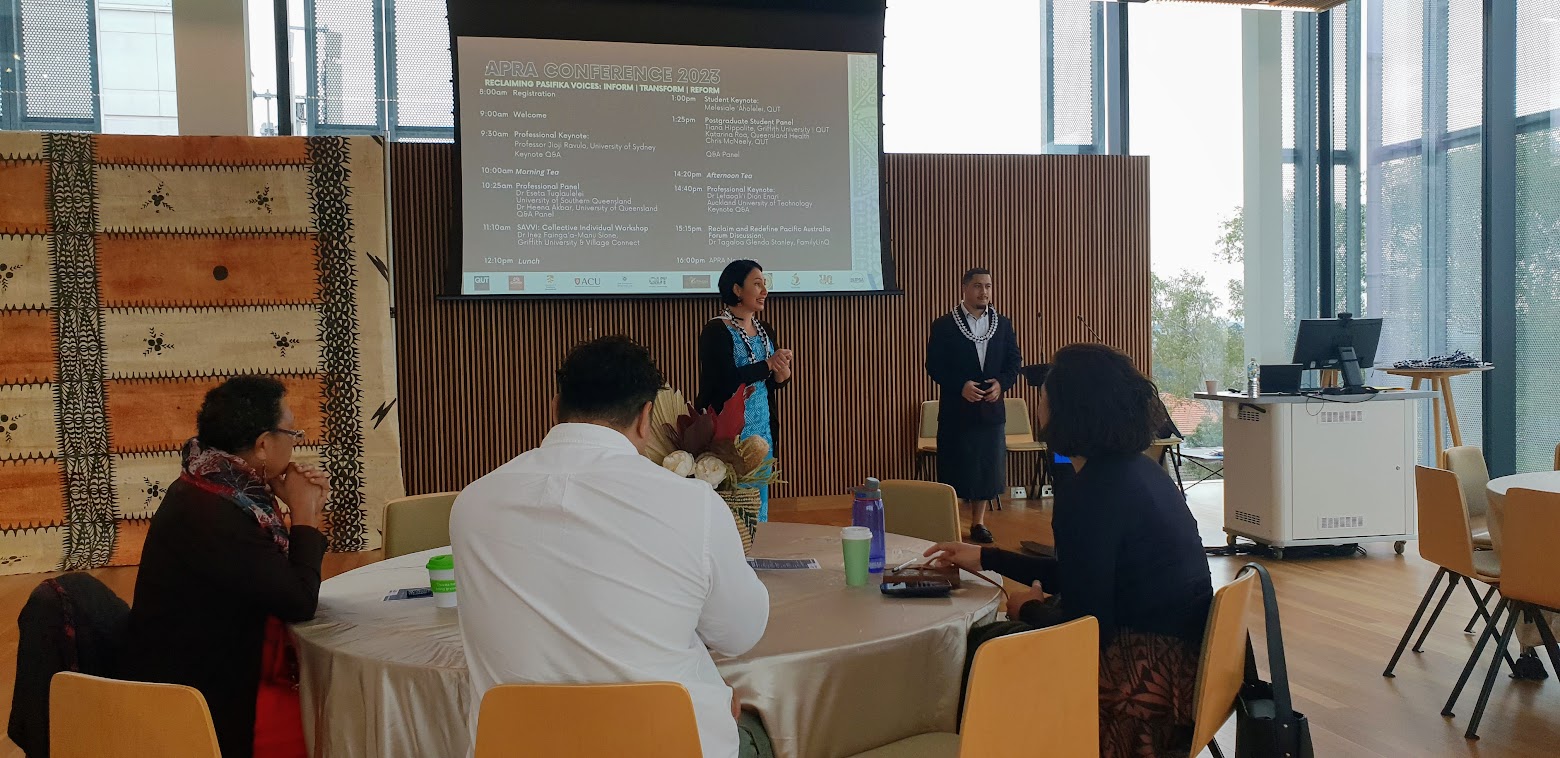
Advance Pacific Research Australia: Reclaiming Pasifika Voices: Inform, reform, transform, a conference for Pasifika researchers, students, and postgraduates, and community was held at QUT, July 3 2023 with around 70 participants.
The conference utilised the strengths of Pasifika cultural expressions and protocols to engage undergraduates, community and Pasifika attendees. It also demonstrated the SSAVI principles of spirituality, service, agency, vision, and innovation later shared in detail in a participatory workshop.
The Vision of the Conference, was to encourage all participants to think deeply about why we do research, and how important our motivation, and methodology are to bring about lasting positive outcomes for the communities we serve and originate from as well as those we now live in as part of the diaspora.
This Pasifikaness was woven dynamically throughout the day in the presentation stylings of the presenters and the overall weave of the program. Participants came from Kiribati, Maori, Samoan, Papua New Guinean, Solomon Islanders, Tongan, Fijian and more in cultural backgrounds, some second or more generation in Australia, with some also pointing to their mixed cultural backgrounds, such as Nepalese.
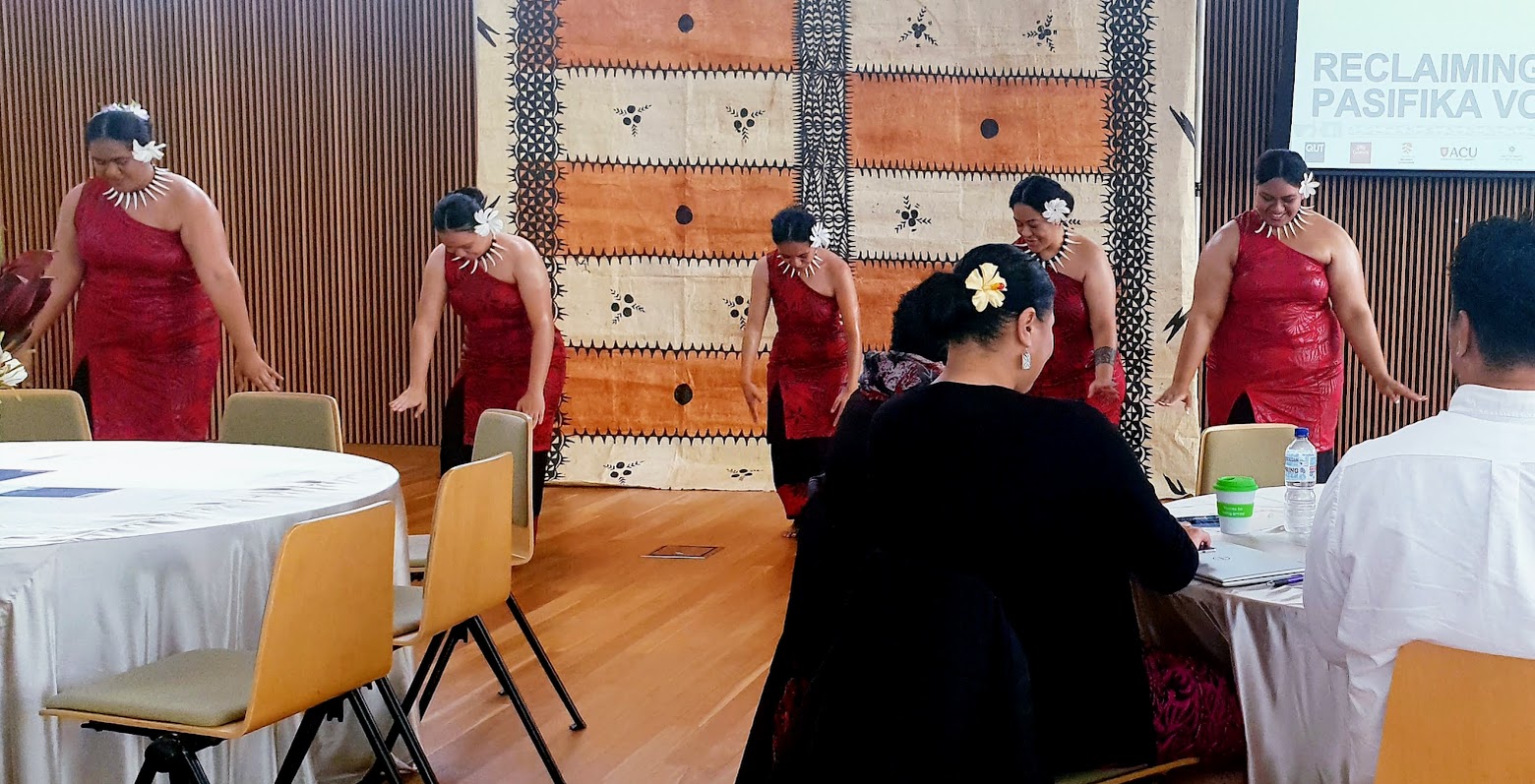
The program began with dance, prayer and acknowledgement of country, ended with dance and prayer, and included songs and participatory dance, as well as traditional power pointed key notes and panels throughout. There were so many moments, of emotional and heartfelt presentations which paid homage to family, community and cultures.
Embracing early career researchers and long term career researchers, the conference provided a supportive and inclusive sharing environment with family and community who are not researching currently, welcome to participate.
All presenters honoured and showed respect for First Nations peoples of Australia and shared their diverse and similar experiences. They shared personal and moving stories of the challenges and positive impacts of family, further education and mentors.
Covering fields of social justice, health, biomedical science, social work, youth work, IT, education, and cultural safety a unifying theme was a diversity of answers of how we can introduce Pasifikaness into our work and study spaces and feeling confident and empowered to do so.
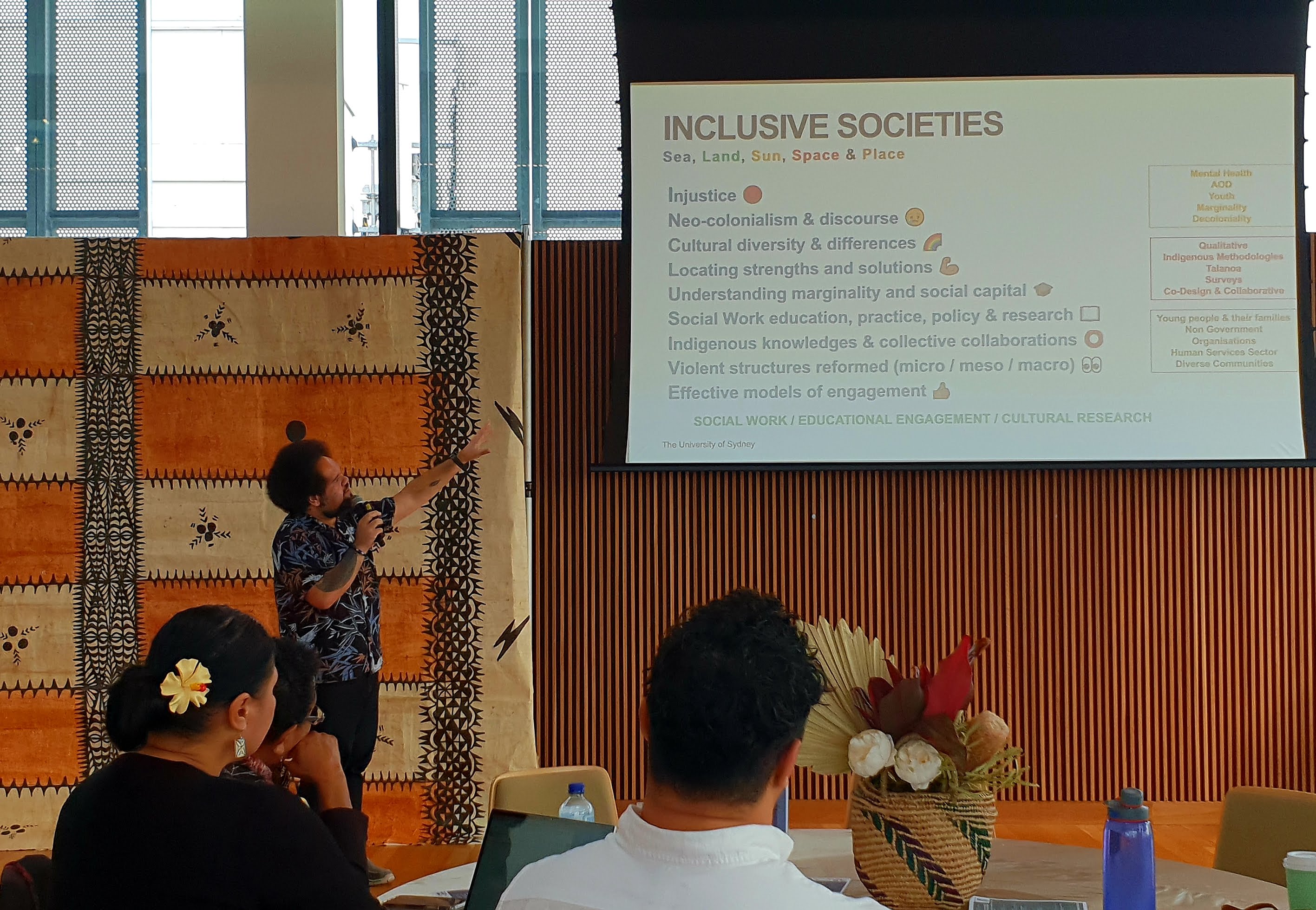
Jioji Ravulo, Professor and Chair of Social Work and Policy Studies in the Sydney School of Education and Social Work at The University of Sydney, began his presentation with singing A rousing Chorus from How Far I’ll Go
“See the line where the sky meets the sea? It calls me And no one knows How far it goes If the wind in my sail on the sea stays behind me One day I’ll know If I go, there’s just no telling how far I’ll go”
He then looked at the relationship between the Individual, Researcher and Community and how each of these interacts with and informs the approach of researchers. (Glenda shared with us the Jioji came from a stand up comedian and youth worker background as well).
In the social justice area he highlighted the importance of not being overwhelmed by the dominant discourses through acknowledgement of intersectional identity, and the deconstruction of ‘whiteness’. ‘Informing ‘then is to recognise dominant discourses, and part of reforming and transforming is deconstructing and questioning these discourses across all disciplines and their structural outcomes such as inequity in education, and individual and collective well-being.
Part of the reforming processes are the deconstruction of colonialism, neo colonialism and whiteness so as to build spaces for collaborative research, which draws upon the strengths of Pacific ways of gaining understanding and knowledge such as through ‘talanoa’.
Reforms, and transformations for Pacific health and well being, are enhanced by building strategies and lexicons, which understand, engage with, and apply the strengths of Pacific cultures.
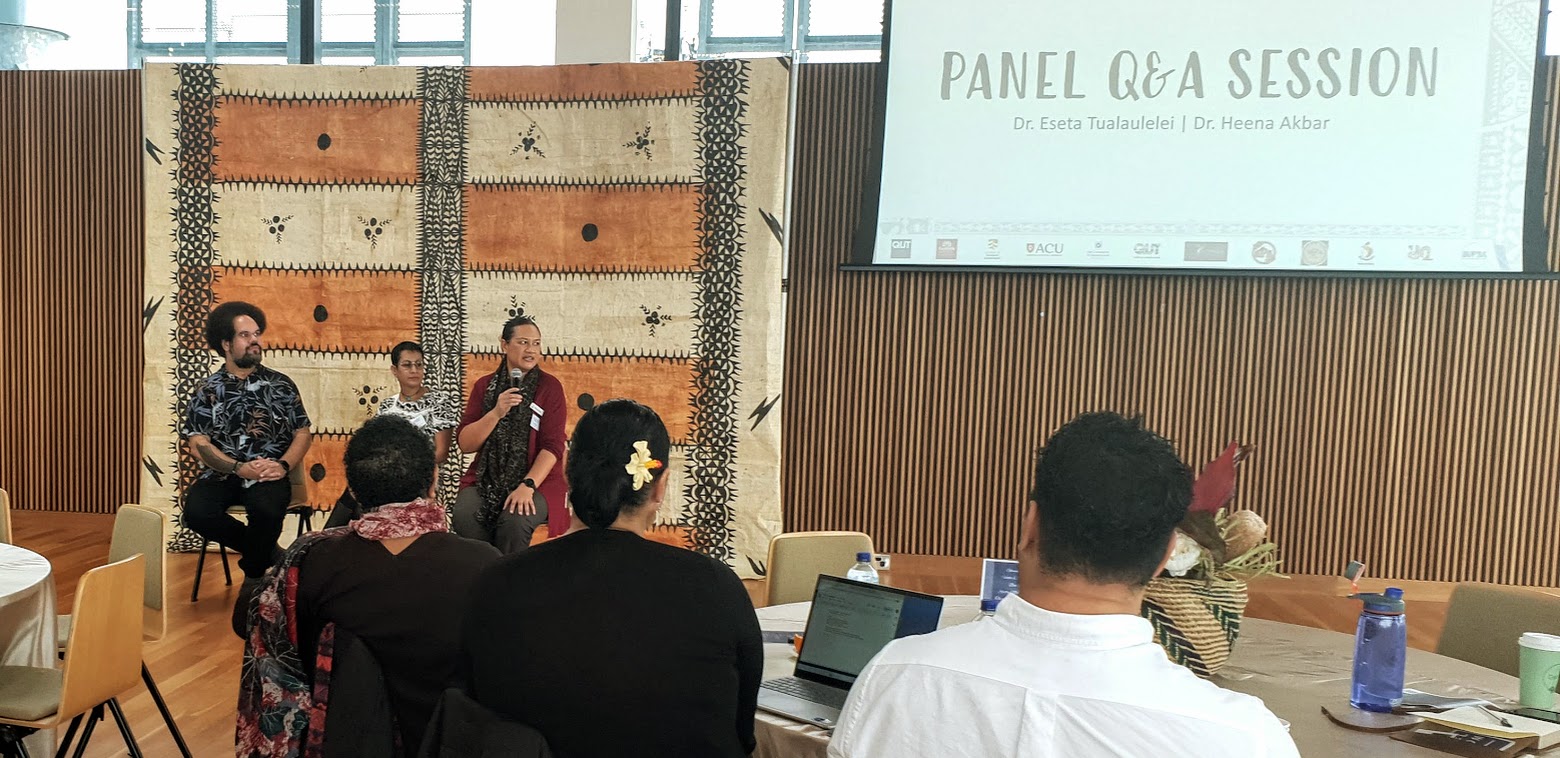
Dr Eseta Tualaulelei (Early childhood and intercultural teaching and mentoring, research, University of Southern Queensland), shared how she viewed the connection between teaching, research and service. She is highly motivated to improve educational outcomes for Pacific students by challenging often negative- DOXA – commonly held beliefs.
One of these was that speaking more than one language, led to lower educational outcomes, when actually bilingualism can greatly enhance one’s learning. Samoan language nests then become part of early childhood experiences of Samoans. The process of publishing research is powerful because it transforms the attitudes of both learners and facilitators of learning. You can find a listing of Dr Tualaulelei’s work here.
The transformative power of research such as Dr Tualaulelei’s, is through publishing and sharing to teachers, but also through engaging in methodologies that value Pasifika cultures, and collaborating and communicating to grass roots of community to recognise and work alongside them. She informed us of her paper with Judy McFall-McCaffery on for our further elucidation The Pacific Research paradigm: Opportunities and challenges
Dr Heena Akbar (Queensland, Pasifika Woman’s Alliance), shared the story of her very mixed cultural background, Nepalese, Fijian and Afghani, and as Professor Ravulo’s and Dr Tualaulelei before her pointed to the power of methodology that embraces Pasifika ways of knowing and being in the world. Frameworks for improving Pasifika health, are enhanced through co-designed participatory action where Elders and community educators and researchers, and Elders and Young people working together as researchers, educators, collaborators to improve their health outcomes. Dr Akbar, also works as an educator of medical students, and is thus also able to impact a future generation of doctors.
A highly enjoyable and dynamic workshop, was facilitated by Dr Inez Fainga’a-Manu Sione, Glenda Tagaloa Stanley (also our CO MC for the day), and Dr Dion Enari, sharing the concept of ‘Collective or Individual: Why Not Both’ and unpacking a useful acronym – SSAVI .
Embracing the ideas of Spirituality, Service, Agency, Vision and Innovation – conference participants where then taken on an interactive journey to engage with and assist with creating our own vision, connecting with other visions in the room. We did both individual reflections, and connecting with the community of researchers and community members in the room.
One fun and highly memorable highlight of the workshop was when participants flew a paper aeroplane of our vision (which was written onto it) as part of a think, pair share. They then chose someone to share that vision with once they found their landed plane.
Several case studies of this model in action were also presented, interspersed with ensuring participants were alert, listening, and engaged.
Later sessions, were presentations of researchers, Melesiale Aholelei, Tiana Hippolite, Chris McNealy and Katarina Roa, working across fields of impacts of enforced deportation of Australian raised Tongans, nursing, IT, understanding cancer. There was a keen interest shown for the application of this work into policy making, and as with other participants an engagement with Pasifika methodologies. There were moving personal stories of the motivation for researchers, sharing a contexts of learning in historical circumstances of New Zealand, Aotearoa and a challenge to consider how we can take our ‘Pasifikaness’ ‘into our research, work and community spaces, where we are surrounded by dominant discourses.
Researchers, aware that there were many fields, and community members in the room, made sure to make their topics as understandable and as engaging as possible. Focusing on motivations, methodologies, and impacts, and engaging strongly with the conference themes. They also outlined and made explicit the value of more Pacific people entering research and academia and impacts of that.
Elders reminded of the critical and crucial role of research that empowers community and contributes to the well-being of their communities, especially with some distressing statistics in health and incarceration and mortality rates, whilst researchers also deconstructed the concepts of individual and collectivism arguing that both service a role. There was an interesting discussion of some of the norms within the Pasifika communities which we need to challenge, not just ones external to the community.
Models of community research that include and embrace community researchers, and participatory action approaches and partnerships were shared, as well as the need for an increase in Pacific Phds to lead teams and use Pasifika methodologies, with several examples of the impacts where this has occurred. One presenter pointed out how important it is for Pasifika people to have the social capital of academic qualifications so they can lead teams and be paid better (equity) but still retain their identity/ies.
Dr Lefaoali’i Dion Anari, gave the professional key note, again, proudly expressing culture, in both language and oratory, to open, and integrated this throughout his presentation. He spoke of the supportive collectives that more and more Pasifika people being at universities create for the generations follow them there. He shared his personal and academic journey, and linked it to his motivation, and outcomes. The way is not always clear but dialogue and experience can shape an academic journey and lead to unforeseen opportunities. He also shared the importance of connecting with original home countries and how a return to live and do service in Samoa, gave him further insights invaluable to research.
Dr Anari recalled how important Pasifika student associations were to him, at university and culture groups at high school. Empowering and motivating, and ensuring he made it through his studies. Many students in undergraduate studies were also in attendance to assist in doing service to the conference as well as to be encouraged into research careers if they should wish, and to understand the pathways they could follow to achieve that.
The spirit of the conference was incredibly warm, dynamic, creative, innovative, and vibrant. At every opportunity, naturally culture, in language, song, dance, humour cultural safety was apparent throughout the day each of the presenters and panellist was given a gift.
Some attendees went knowing nobody and by the end of it, had contacts, potential mentors or connections, to follow up. I did my best to speak with and listen to as many participants and presenters as I could, and especially appreciated the table arrangement to the conference where we sat in round tables. Special thanks to Reo and Heidi! Interestingly for me, I left and arrived at the same time as a delegate from Auckland, Ben, and chatting to him on the way and out gave the day symmetry.
The day ended with Dr Stanley, encouraging, people from the floor of the conference to reflect on what the narrative of Pasifika, Pacific, Pacifica might look like going forward in an Australian context. Does Pasifika still have a strategic meaning, and strength, that is useful? Contributions from the floor were interesting, thoughtful and often quite emotional.
One of the Elders, spoke of the need to always remember those who do not make it to University, or into a long and healthy life, and to ensure we will all remember to consider that importance and obligation of the opportunity of education and the urgency of having the impact of research truly benefit community.
Other ideas expressed were that:
We are each other’s keepers
part of collectives, a collective but also individuals. It is a holistic approach that will move community forward. We can be unified in all our Pasifika diversities, and that in the diaspora there is much to be gained by inclusiveness and connection.
We were encouraged to think about what we bring to the table of Pacific research, and the service and agency of our communities and ourselves.
What do you bring to the table?
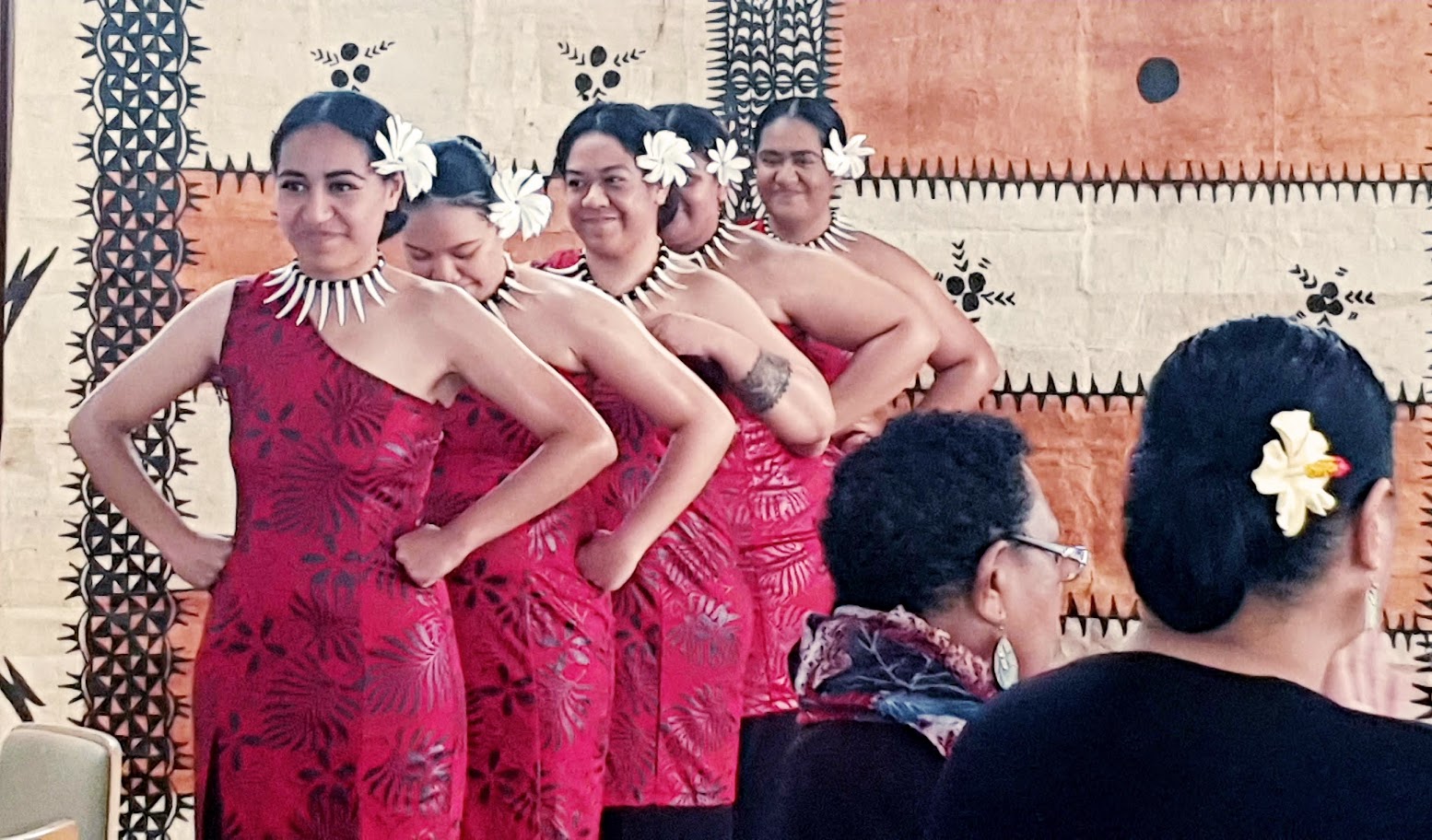
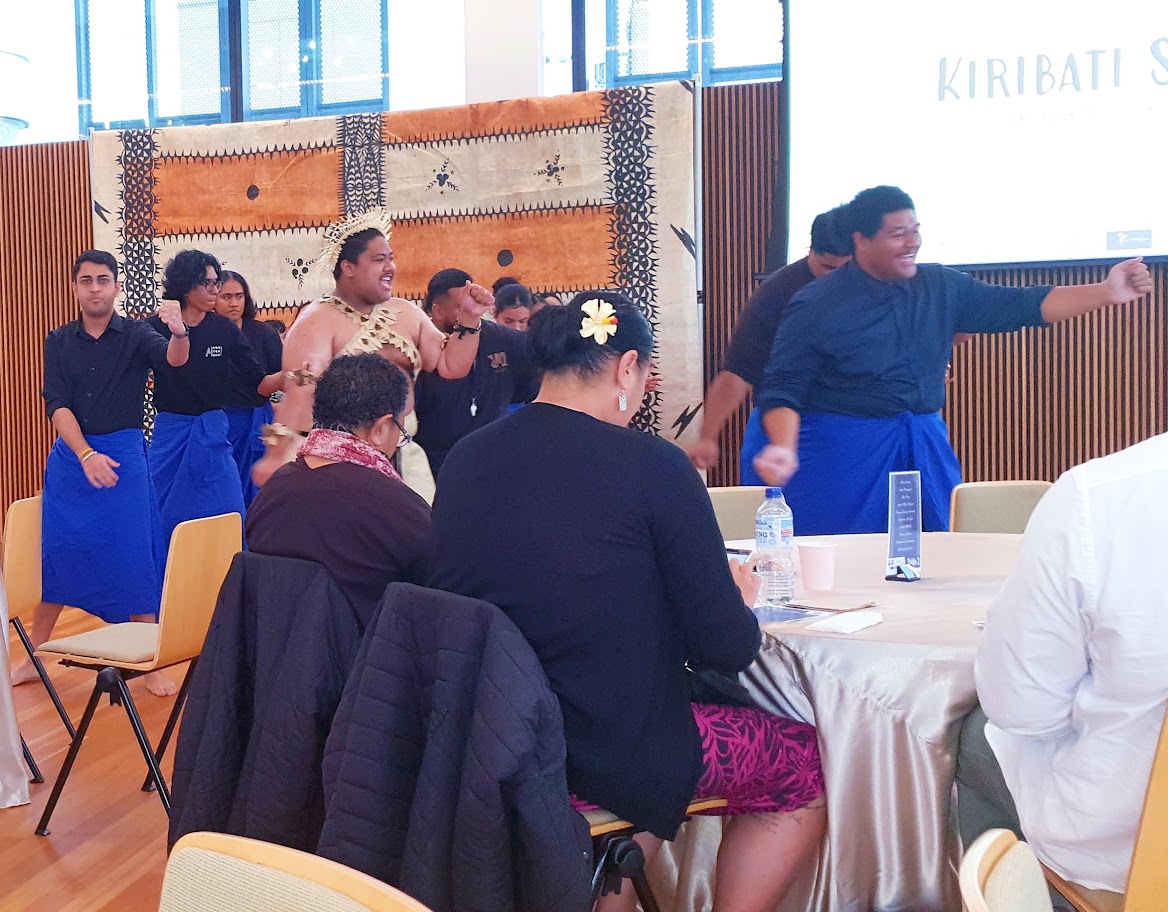
The day ended with a dance from Kiribati, done by students of several Pasifika background, as well as Kiribati, a group photo, and a heartfelt, prayer and blessing, by the only high school attendee.
I encourage anyone reading this article to follow the hyperlinks and read the presenters representations of their work. Some research is still in process and we will no doubt hear about this in the future and hopefully see its impacts in policy and other fields.
Many thanks to all the organisers, participants, attendees and those who supported the event through service.
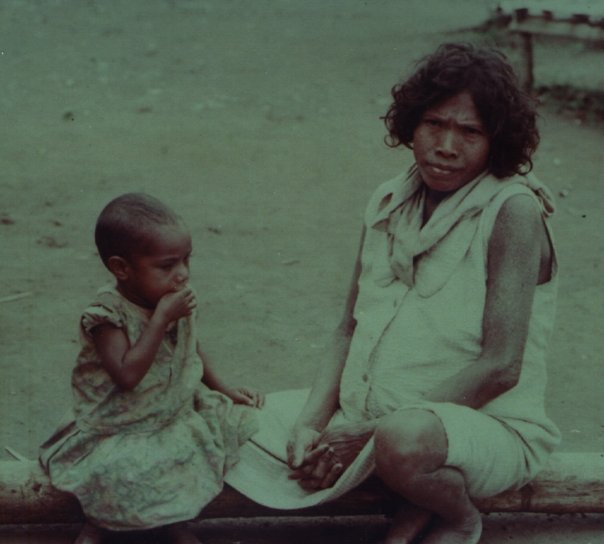
One of my Aunties – in her face I see my mother so clearly!
Rotorua, in Aoteroa/ New Zealand, has one of those aromas that you can never forget and which is hard to escape. For me the strong smell of the sulphur is overtaken by an experience that has represented a watershed in the process of doing my thesis. Something I could never have foreseen.
The program in front of me has the words- “Beauty is in the Eye of the Beholder,” and the speaker is described as an American born Anthropologist whose major study has been in the Mekeo of Papua New Guinea. The theme of the conference is “Arts and Spirituality” and I am presenting some creative writing and story telling workshops on the theme of personal and cultural identity.
I want to meet the speaker before he find out whether he knows much about the village…
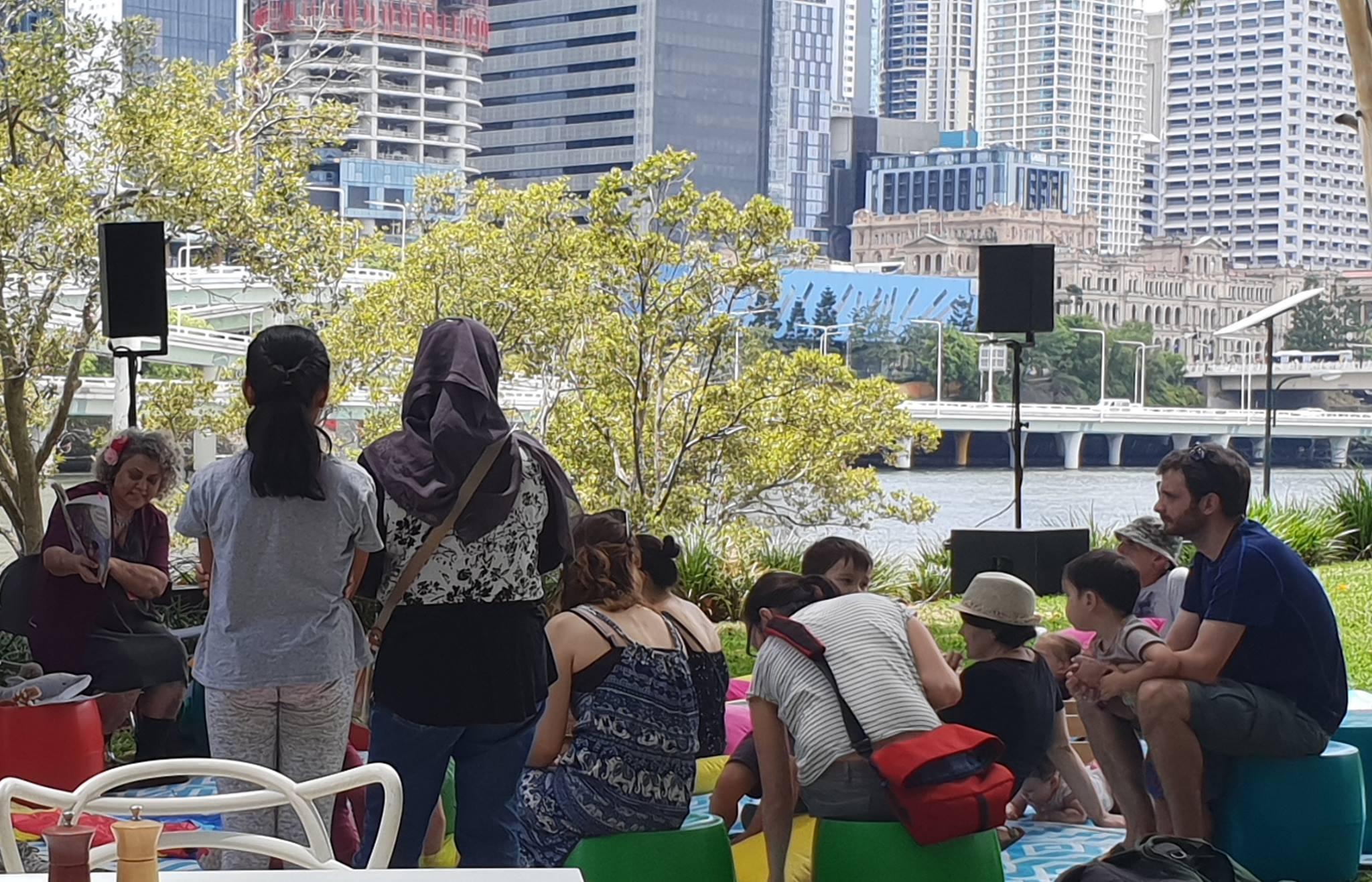
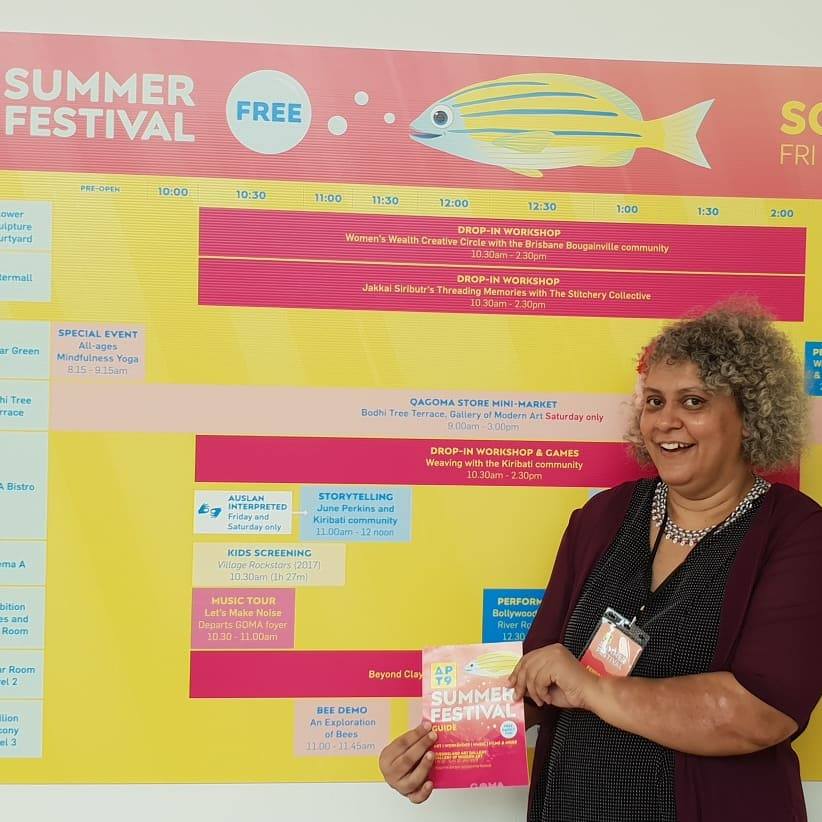
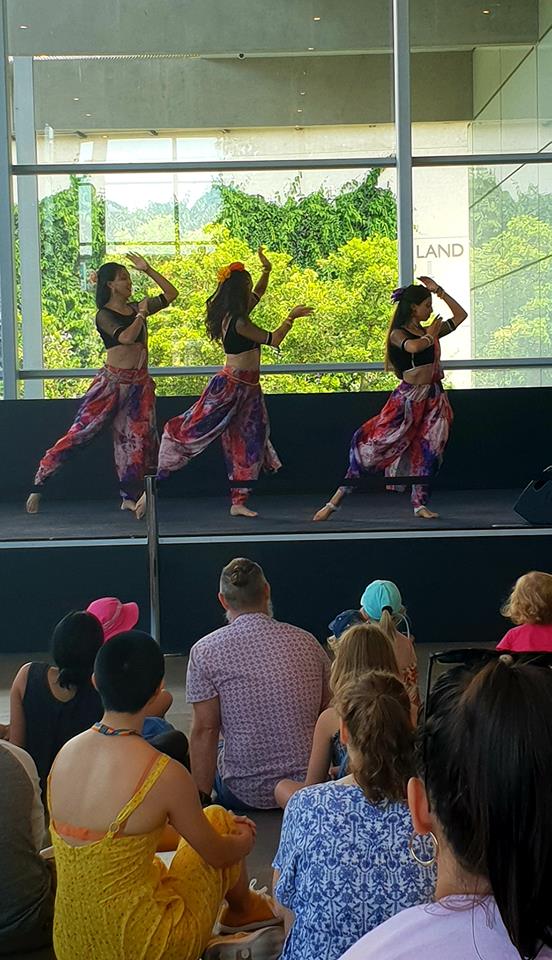
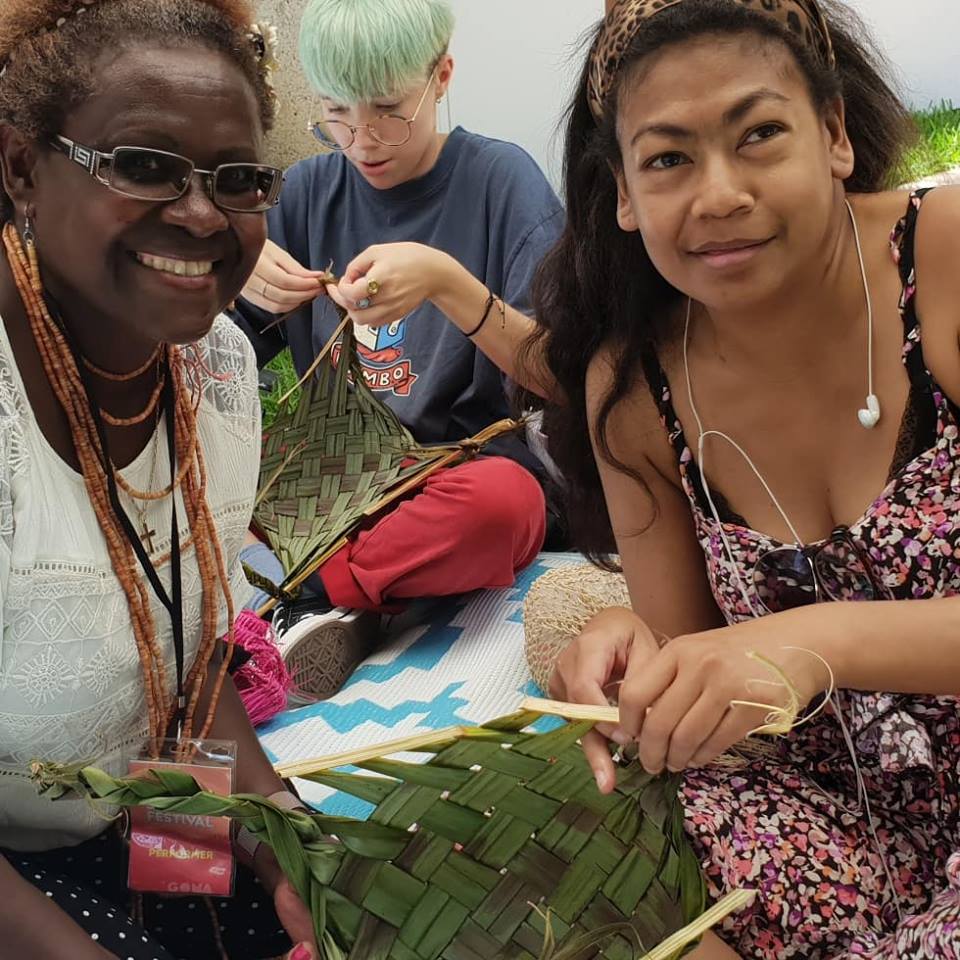
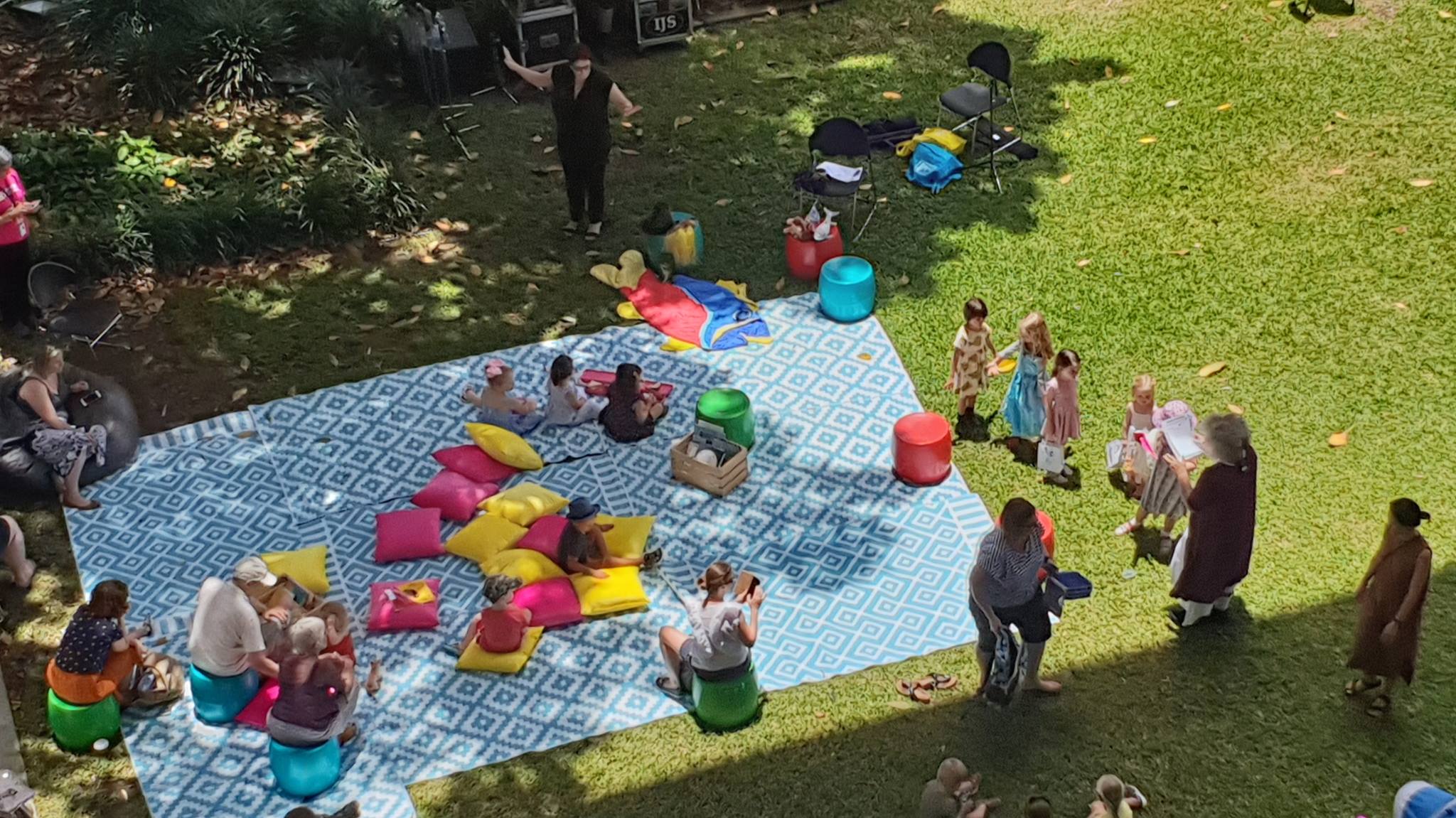
This is me reading at APT9 Summer Festival on the GOMA LawnA special moment in front of sign with my name on it! Also meeting the Kiribati community. I travelled to Kiribati when I was twenty so it was lovely to see them storytelling at the festival as well.Checking out the Bollywood dancing. Fantastic fun. All families especially into it.Meeting two Papua New Guinea ladies, Veronica from the Bouganville Brisbane community and a Papua New Guinea lady resident in Brisbane learning PNG weaving. This reminded me of my days in Tully with my Vanuatu and Aboriginal friend, crafting and chatting. Although today I just watched.Debut of the Brolga poem. It went so well this day. Here we are being brolgas.The two hand puppets. Must do a post on them all on their own. Thanks so much to David Perkins for making these. So happy with how they came out.Very special to have my poetry auslan translated for two of the performances by Maree from Deaf Services, Queensland.
I read some Magic Fish Dreaming poems as well as a poem inspired by Sydney Long’s painting Spirit of the Plains daily over the three days of the festival.
It was so much fun to share these poems and the story behind their inspirations.
I loved performing my new ‘Brolga’ poem and ‘Cassowary Chat’ with the help of the children and two home made puppets.
Some other poems performed were ‘Giggle Poems’, ‘Curtain Fig Tree’, ‘River Song’,’Brahminy Kite’, ‘Discovering Magic’, and ‘Magic Fish Dreaming.’ I varied it a little each day, but performed the participatory puppet poems every day!
The setting by the river under the shade of a tree was just perfect, and cool and comfortable for families.
Thank you so much to all those families who stopped to listen and participate in the storytelling.
A big thanks to Laura, Roshni, David and my family for their supports on the day and Hannah for support in the lead up. As well as to Maree from Deaf Services Queensland, for her Auslan of the poems.
Working hard towards some new poems, and especially keen to include the Brolga poem in a new collection for children.
Whilst the festival is over, the exhibition continues and you can find out more here. APT9 DETAILS



 June Paisa Perkins