The Ownership of the Yam Hole – My Oral History

Enjoy a visit to Joycelin’s blog where she is sharing some special stories about oral history.

Tribalmystic Stories

The Yam Hole – JK.Leahy memoir series

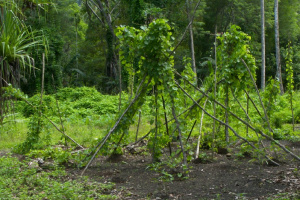
5567559375_8ec7b4d105_b A yam garden in PNG. Public Domain image.

Currently, the case of the Yam Hole (Ambisi) is an ongoing dispute amongst our people in Wagang Village, Lae, Papua New Guinea. The national government is negotiating with the villagers to build a large fisheries wharf on my village. Wagang is a small coastal village less than 20 minutes drive to the heart of Lae City. This is the story about the site of the proposed development which is referred to as Ambisi, or the Yam Hole. The Yam Hole is my family’s inheritance, but due to foul play, the authorities have been negotiating with other people who have claimed to own the land referred to as the Yam Hole. With the permission of my Uncle Ahe Max Mambu, I am proud to tell you this oral history and a story about the Yam…

View original post 621 more words

PNG Literary Competition Achieves Record Entries.

Sharing an article from Joceylin’s blog, which I visit regularly.

Tribalmystic Stories

The Papua New Guinea Literary Competition The Crocodile Prize received the highest number of entries ever, this year.  On closing last night the Crocodile Prize fetched a total 826 entries from 132 writers & illustrators.

Poetry 355; Essay 196; Story 129; Children 52; Heritage 48; Illustration 21; Tourism Arts Culture 15; Book of the Year 10.

These numbers may not sound very much for writers in other countries, but for any Papua New Guinean writer, it is a very heart-warming news, especially coming from a literary culture that almost became extinct. In the early 70s, leading up to the country’s independence, passion for art, culture and heritage including the literary pursuits and publishing of works written by PNG writers were at their peak. It is not quite clear why the interests have fallen so much after independence. That culture may have been used because we were proud of our identity and…

View original post 976 more words

Walking the past in the present

Time is a culturally bound construct. We may, based on what culture we are born into, think we move chronologically, but in many cultures we carry the memory and ancestors with us in stories, songs and myths and a belief in the presence of spirits.

The past walks with present and the present with the future.

We can use our memory, past, wisdom to assist the present if only we pay attention to it.

In writing of lands I have lived and traveled through in an organic and intuitive process I find connections that make a spiral, even a circle, rather than a straight line.

Whilst we physically can’t change the past our understanding of it can dramatically change based on the patterns we find there.

I like the idea of spirals more than circles because in a spiral you can progress even as you seem to circle back to where you once were, but you are still moving forward.

**

My Papua New Guinea is not a physical memory of a landscape or extended family members, but is carried in the life and story of my mother and precious photographs from an anthropologist.

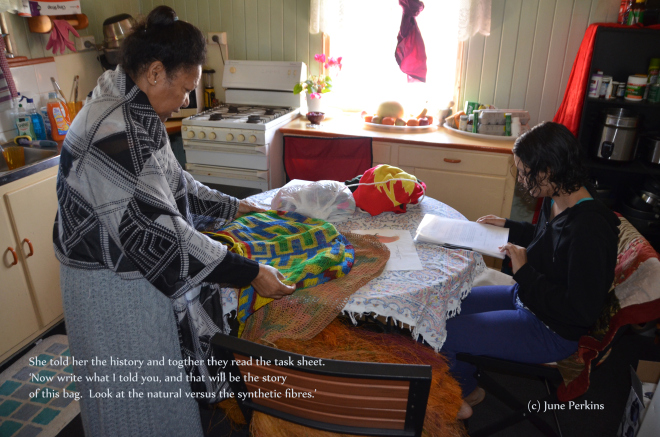
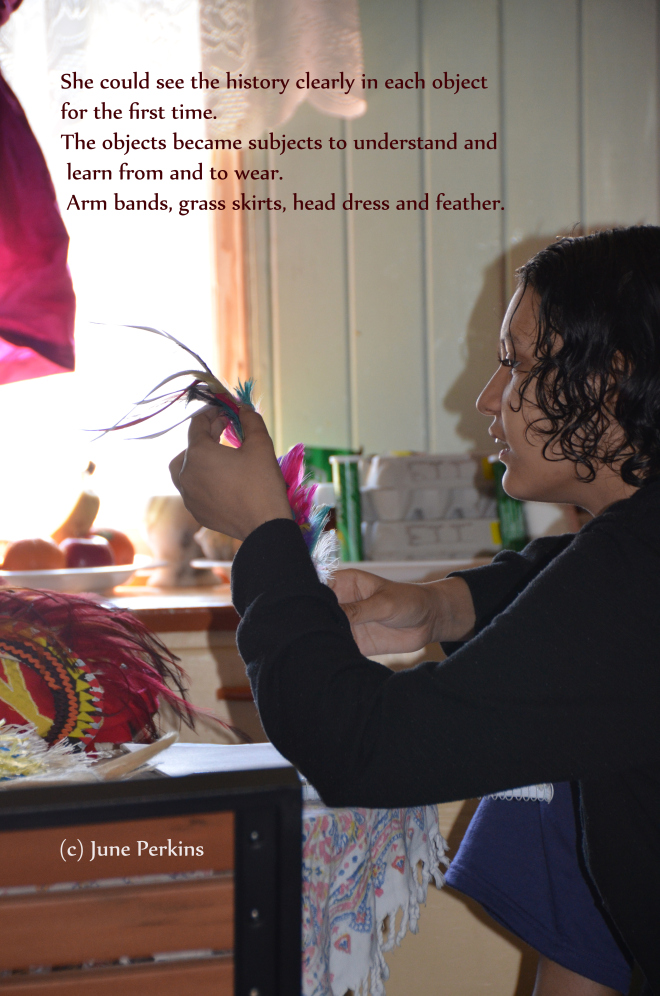
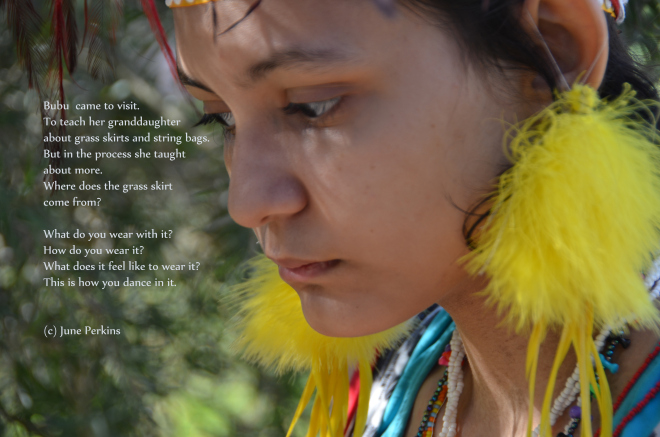
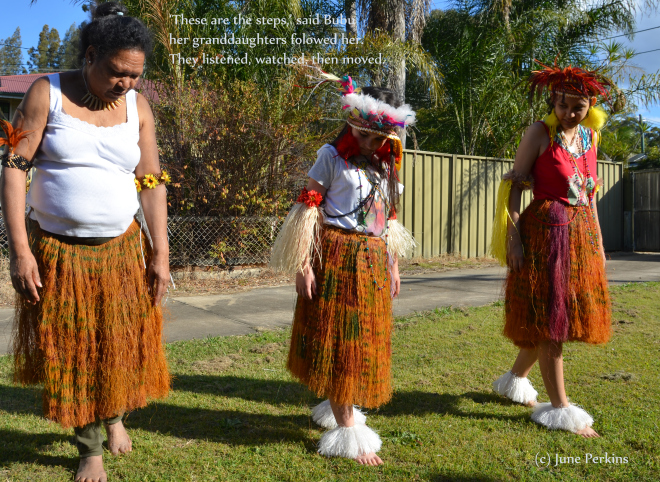
It is walking beside my brother in a grass skirt with a shell necklace; it is in the culture dance groups my mother starts for her nearby grandchildren and other Pacific friends.  They combine forces as there are not many from any of their cultures living in Tasmania.

I think of my mother listening to the songs of Papua New Guinea, of the Maipa Fakai, and Maipa Angapu, whilst learning the new songs of Tasmania.  I wonder if she has PNG soul bones or Tasmanian ones now and would she only discover how she truly felt if she left Tasmania to live in another space.

**

What is it to be Tasmanian raised? What is it to have her soul bones? I am proud that my generation is the one that saved her wild rivers and saw her become more than the apple (orchard) isle.

She has come to embrace herself as a tourist destination and yet still struggles with the highest unemployment in the country and is still making peace with her Indigenous inhabitants.

She is a place of beauty, but which many young people leave for opportunity, but which others feel they can never leave.  She reminds me of the Cassowary Coast.  She reminds me of the struggles of people on the Sunshine and Gold Coast, who are also trying to stop development that affects the natural beauty of their areas.

Why can’t we have opportunity and soulful nature’s  beauty in one package – is it at all possible to have the package together?

(c) June Perkins, word and images
Yarning with Bubu

Youngest son’s continuing interviews with grandparents.

Following the Crow Song

This is my youngest son’s interview with his Bubu (grandparent)

Hello Bubu.  I am doing a project about my family history.
Can you help?

What do you want to know about your project?

I am studying my family tree for school
And we have your father and mother’s name.

I can only go back as far as my grandmother.  I am doing some research on this.

Ok then what is her name?

My grandfather on my mother’s side name was Ako Gope I think, and my father’s side was Oake Apepe.
My grandmother was Fala Ekelakoa but my
Father’s side I don’t remember.
But I think it was Wagua.

Do you have photos that you could send me?

No dear sorry
I don’t have any photos at all of my grand parents
Oh wait, we do have one of my Dad.

I am looking through photos that Mark  Mosco and…

View original post 347 more words