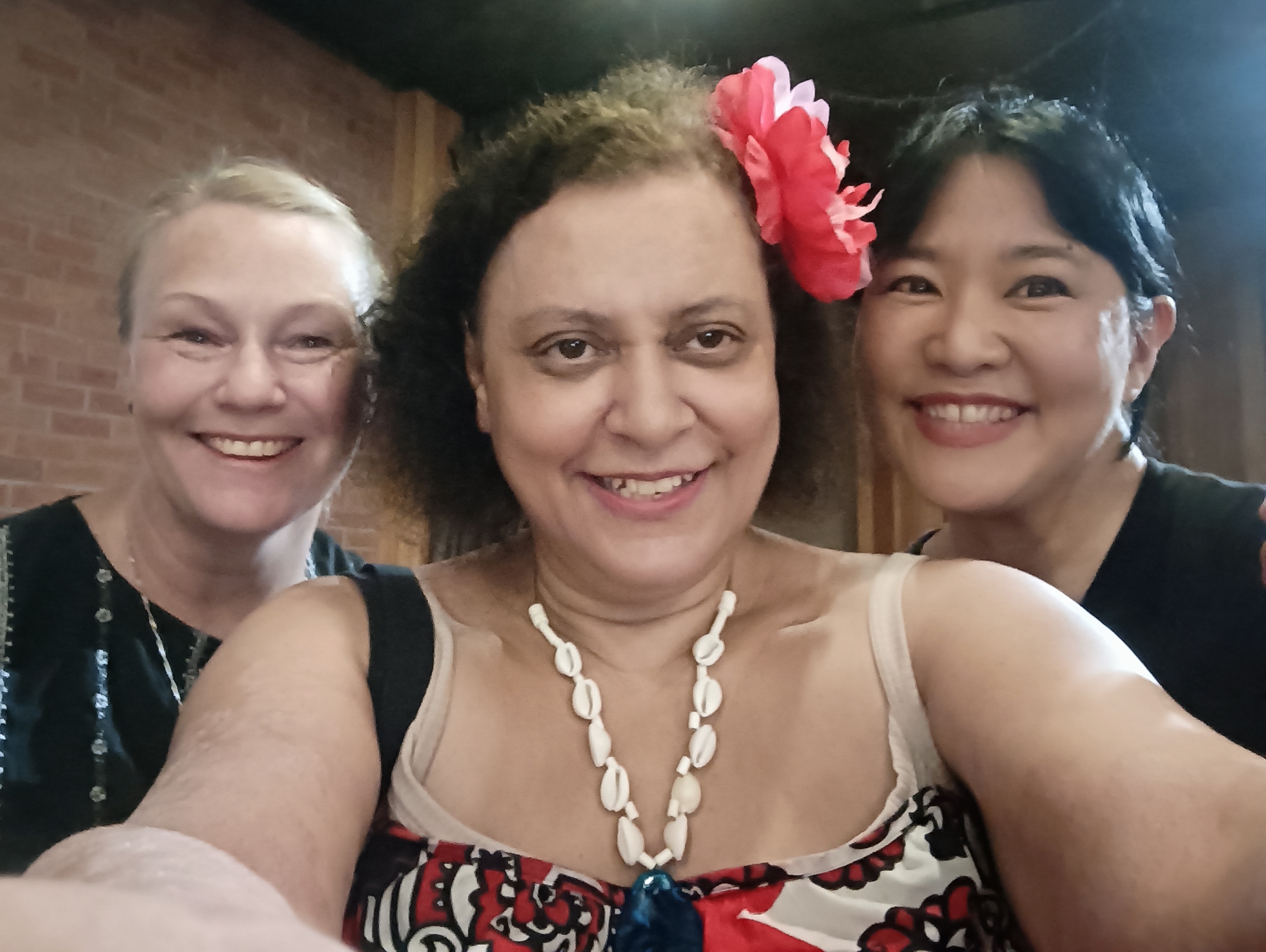
Melanie Hill, June Perkins, Geneve Flynn The Loft West End, Genre Con Launch Event
This years’ Genre-Con, was a weekend of panels, special events, and workshops – beginning on Friday 23rd of February and finishing on Sunday the 25th. Amongst the presenters were Julie Janson, Patrick Ness, Kate Cuthbert, Jake Corvus, Paul Mason, CS Pascat, Rachel Amphlett, David Shield, Kathy George, Gary Lonesborough, Ben Hobson, Kim Wilkins, Siang Lu, Vanessa Len, Sandra Markaresz and Lori-Jay Ellis.
The theme was Brave, Bold, Genre.
The first event I attended was the launch night at The Loft in West End. Attendees were greeted by a string quartet as they wove their way up the stairs and past the candles into the meeting area.
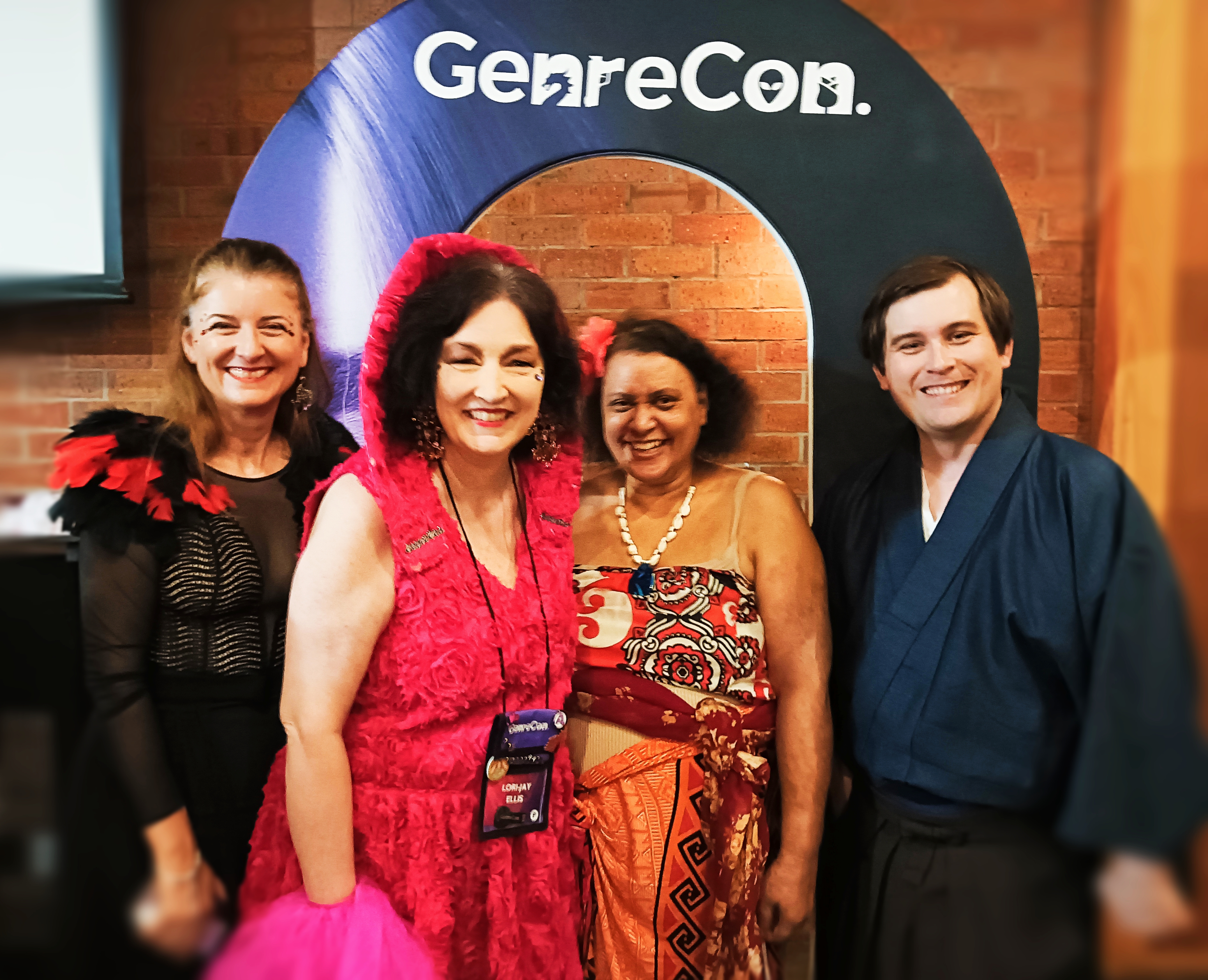
Sandra Makaresz, Lori-Jay-Ellis, June Perkins, David Shield – The Loft West End, Genre Con Launch Event
Many participants took the opportunity to take up the conference organisers invitation to cos-play, with Wonder Woman, Peter Pan, Tank Girl, Emily Pankhurt, Moana, just some of the characters people chose to attend as. The staff came as Effie Trinket in a variety of costumes.with one in a butterfly dress and Lori-Jay as promised in Effie’s queenly dress.
Patrick Ness, joked that he did not get the memo about the “fancy dress” but it would have probably made him too stressed to find a suitable costume. He also read a winning work from one of the Queensland Writers Centre monthly competitions, Smooth by Laree Chapman.
Genre con was sold out! And this made for a packed auditorium for the opening address and throughout the weekend. YA was a central theme over the weekend, as YA goes across all genres.
The Opening Session
The opening session was introduced by Lori-Jay and included a short speech by Julie Janson, before Patrick Ness delivered the keynote.
Lori-Jay, CEO of the Queensland Writers’ Centre, after a brief acknowledgement, began with the metaphor of the conjurer, quoting from Terry Pratchett.
He’s not a wizard, in other words, but a conjurer.
Wizards don’t have to work. They wave their hands, and the magic happens. But conjurors, now . . . conjurers work very hard. They spend a lot of time in their youth watching, very carefully, the best conjurers of their day. They seek out old books of trickery and, being natural conjurers, read everything else as well, because history itself is just a magic show. They observe the way people think, and the many ways in which they don’t. They learn the subtle use of springs, how to open mighty temple doors at a touch, and how to make the trumpets sound.
And they take Centre Stage and amaze you with flags of all nations and smoke and mirrors, and you cry: “Amazing! How does he do it? Where’s the rabbit? Did he really smash my watch?”
And in the back row we, the other conjurers, say quietly: “Well done. Isn’t that a variant of the Prague Levitating Sock? Wasn’t that Pasqual’s Spirit Mirror, where the girl isn’t really there? But where the hell did that flaming sword come from?”
And we wonder if there may be such a thing as wizardry, after all . . .
Terry Pratchett
She invited us to find at least three golden nuggets, to take home from the conference, to apply to our writing craft and encouraged attendees to find their writing tribe and to take the opportunity to enter the Writers Centre micro fiction writing competitions.
Julie, after acknowledging the First Nations and a small joke about, she had thought whether she should do an interpretative dance instead of a talk, but thought better of it: addressed the theme Brave and Bold.
Julie’s writing is a search for truth, looking at the crime of colonisation and its ripples into contemporary experience. This takes the form of crime fiction with First Nations characters centre stage.
She shared her love of the library which lit her love for literature. She mentioned Oodgeroo Noonuccal and Roger Merrit playwright (The Cake Man) as bold and brave inspirations to her writing. Other inspirations for Julie are writers like Alice Walker who look at the complexities of the past.
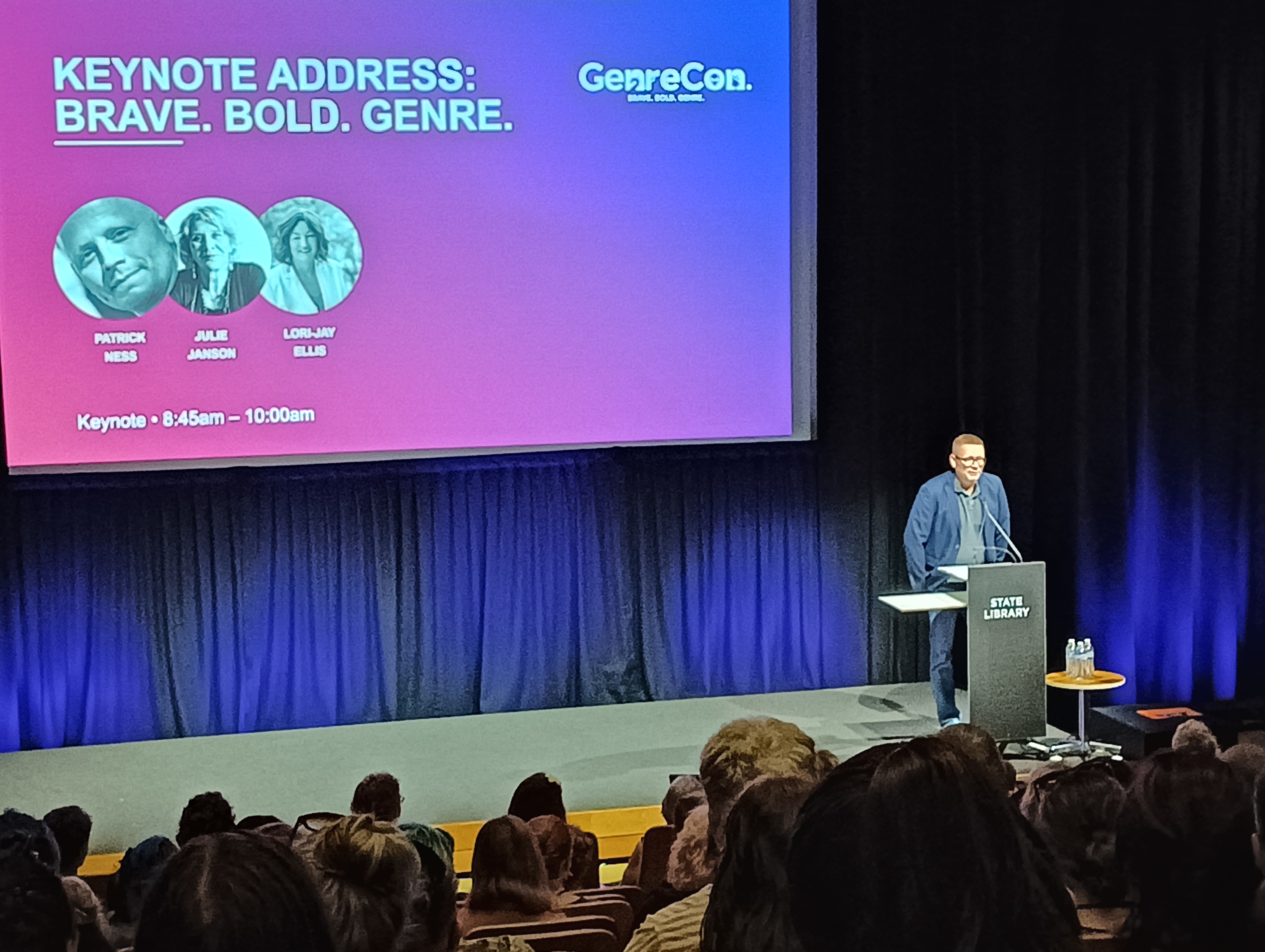
Genre Con, held at State Library: Patrick Ness, Opening Key Note, Queensland Writers Centre: photography June Perkins
Patrick Ness’s keynote was an honest and vulnerable speech of the role of love and spite in his writing process with an overall message of Whatever is happening in your life, Write anyway. Unpacking these three ideas as core philosophies, Patrick then shared with us aspects of his life story and the wisdom it led to, which he left totally up to us to accept or reject.
In his speech he acknowledged the First Nations, and commented that this is something he does not see happen in America.
He used the metaphor of his life being like a warehouse, where every age is there to draw upon for inspiration. But in doing so, the selections need to be used in a way that is worth it for the writer. He told us some of his life story, like thinking a lot about death, and that at eight he thought the world was going to end because of the religion his family followed.
Patrick shared that he made 72 queries, with 5 answers and 2 replies, and one of these then became his agent and is still his agent today. He noted that whilst he had won the Carnegie prize with his first novel, he then struggled with his next draft novels to find his voice. He ended up being inspired by the narrative voice of the novel Riddley Walkerwhich he discovered whilst living at Oxford and then kept going forward.
Patrick Ness Personal Writing Strategies
He does not use outlines.
He sets for himself rules like show love, without anyone saying it, and without hugs. Try to portray love in a ‘real way’.
He often has a Song or music for books as a background in mind
He might have 3-4 scenes images that will be in the book to write towards
He has an emotional touchstone
After the opening plenary, there were several simultaneous sessions. These included panels, a speakeasy, workshops covering Romance, Crime, Speculative Fiction, YA, Science Fiction and Graphic novels as well as self publishing, audio books and the Queensland Writers suite of competitions. I will detail some of these in the next blog.
However, it is not just the knowledge and skills covered in the sessions but the friendships and connections at these events that make them a joy for Genre Conjurers. At the end of the first day many of us gathered to have dinners or after conference drinks.
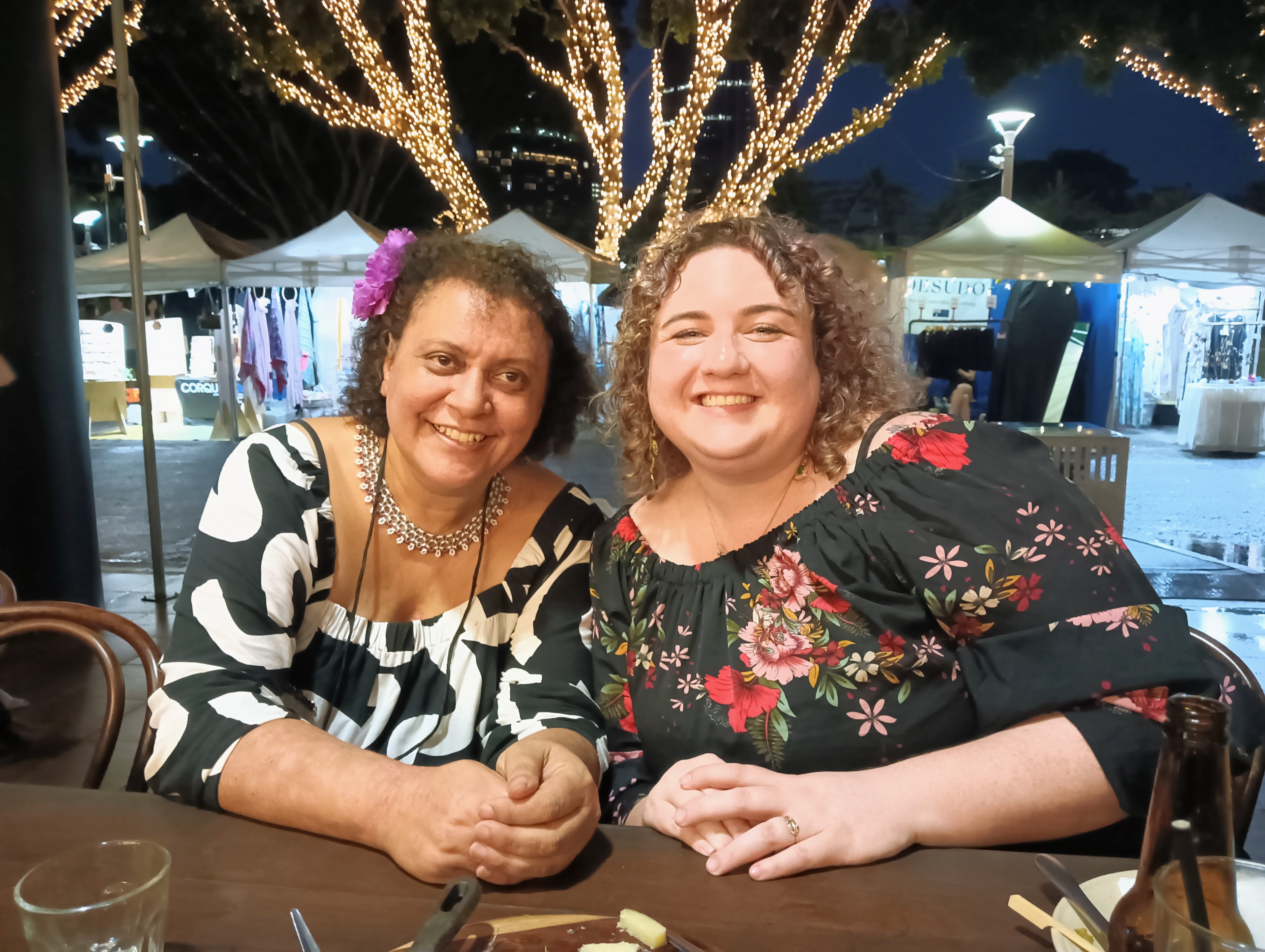
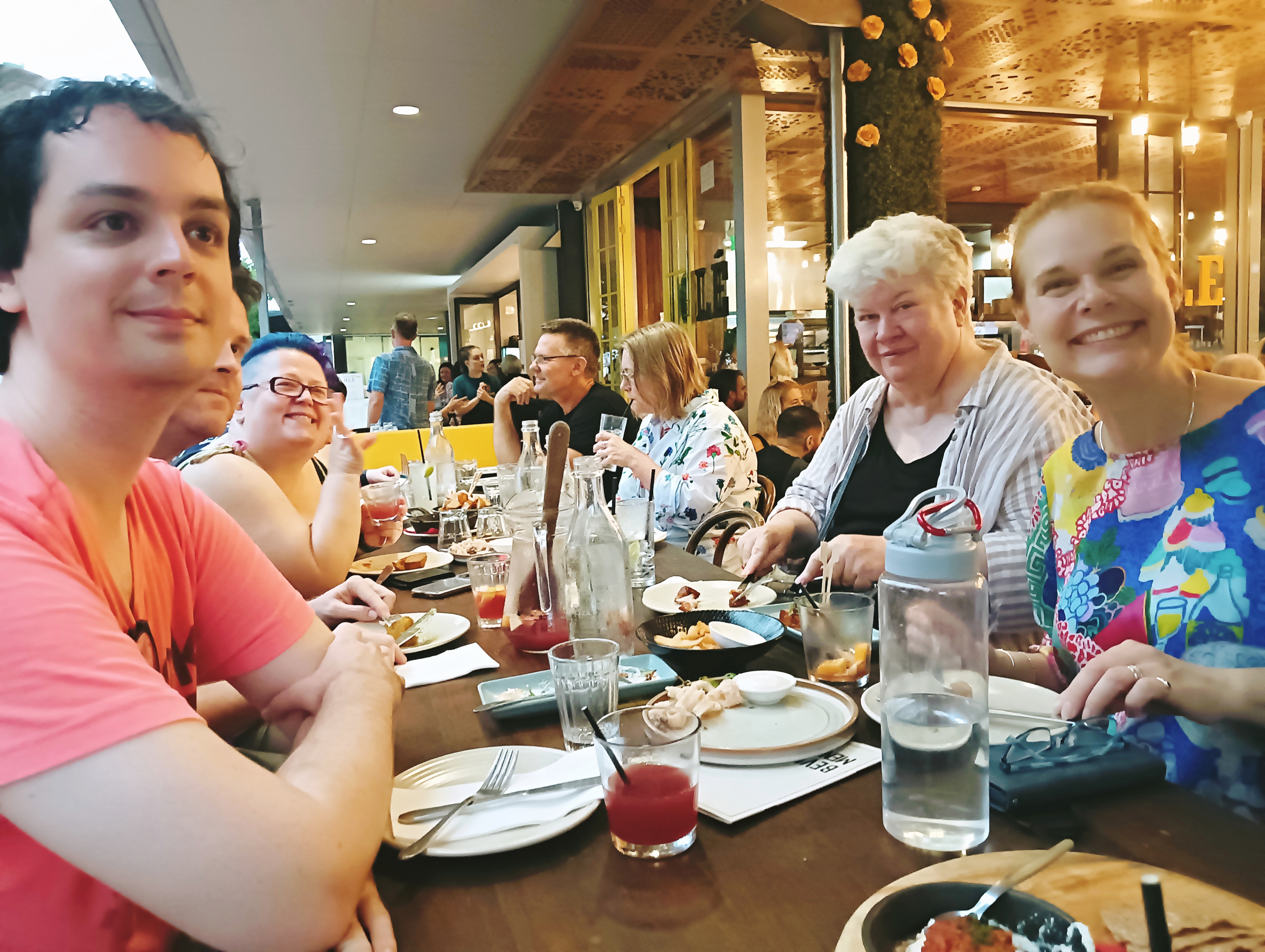
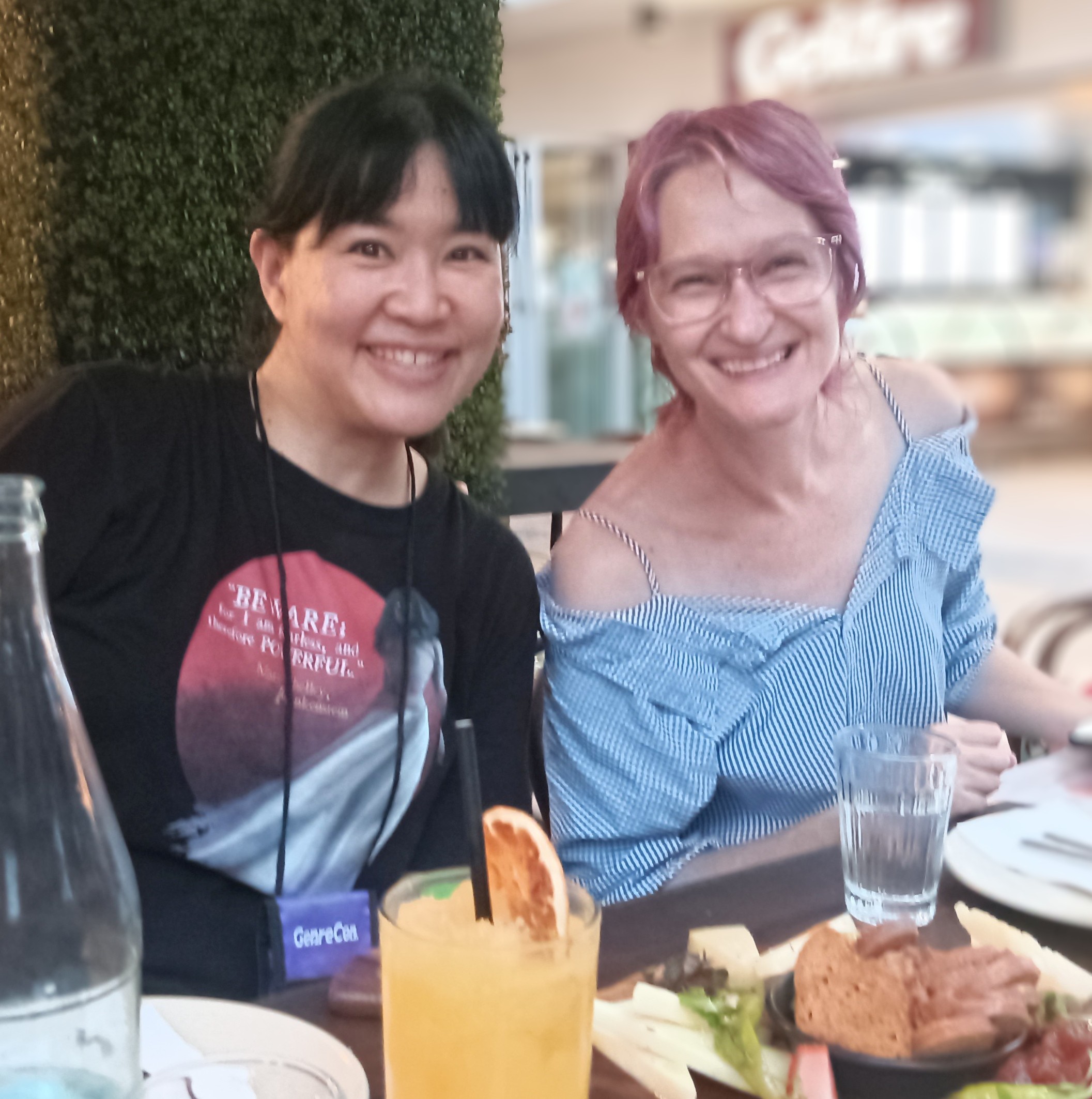
After first day participants in the conference gather to have dinner, and find their writing tribesAfter the first day, Genre Con get-togethers
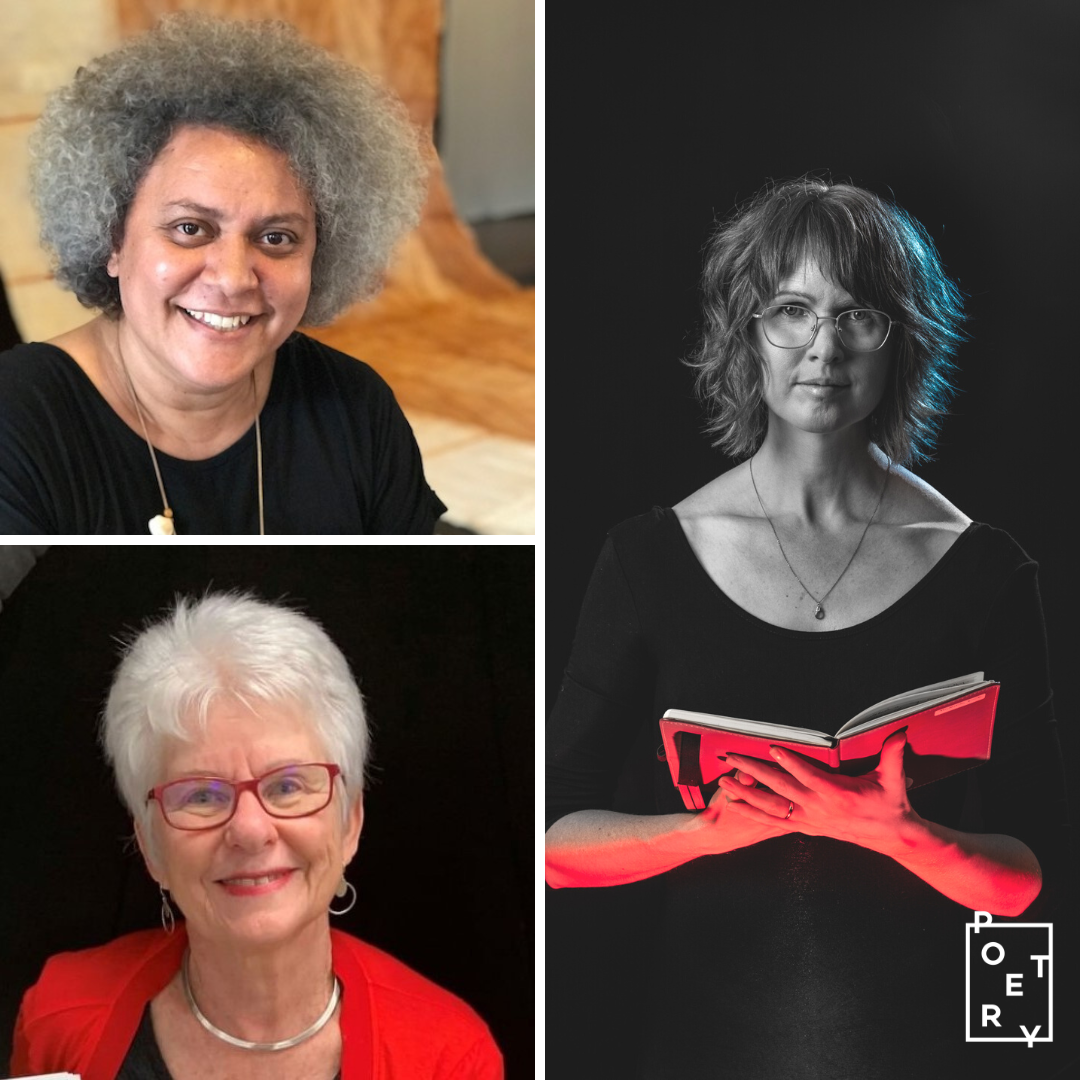
I look forward to reading at October’s Volta, with Lesley Synge and Sarah Temporal.
This will be at the Brisbane Square Library, October 6th 6pm.
PERFORMERS/POETS
Dr June Perkins aka gumbootspearlz was born to a Mekeo mother and Australian father. Her work has been featured at Baha’i International Community, Story Factory, Red Room Poetry & several Anthologies for adults and children. Her two books are Illuminations and Magic Fish Dreaming. She is currently chair of QLD Writers MC team.
Lesley Synge was born under the Tropic of Capricorn. Her poetry collections are Mountains Belong to the People Who Love Them; Organic Sister; Signora Bella’s Grand Tour. A new collection is pending. She holds an MA in Creative Writing from University of Queensland. Also an awarded novelist and non-fiction writer, she works on Turrbal and Jagera land.
Sarah Temporal lives and works on Bundjalung lands: a poet, educator, and producer. She explores embodiment and storytelling in her debut collection ‘Tight Bindings’, forthcoming from Puncher and Wattmann. Sarah is a three-times finalist of the XYZ Prize for Excellence in Spoken-Word, with works published in Best of Australian Poems, Cordite, APJ and more.
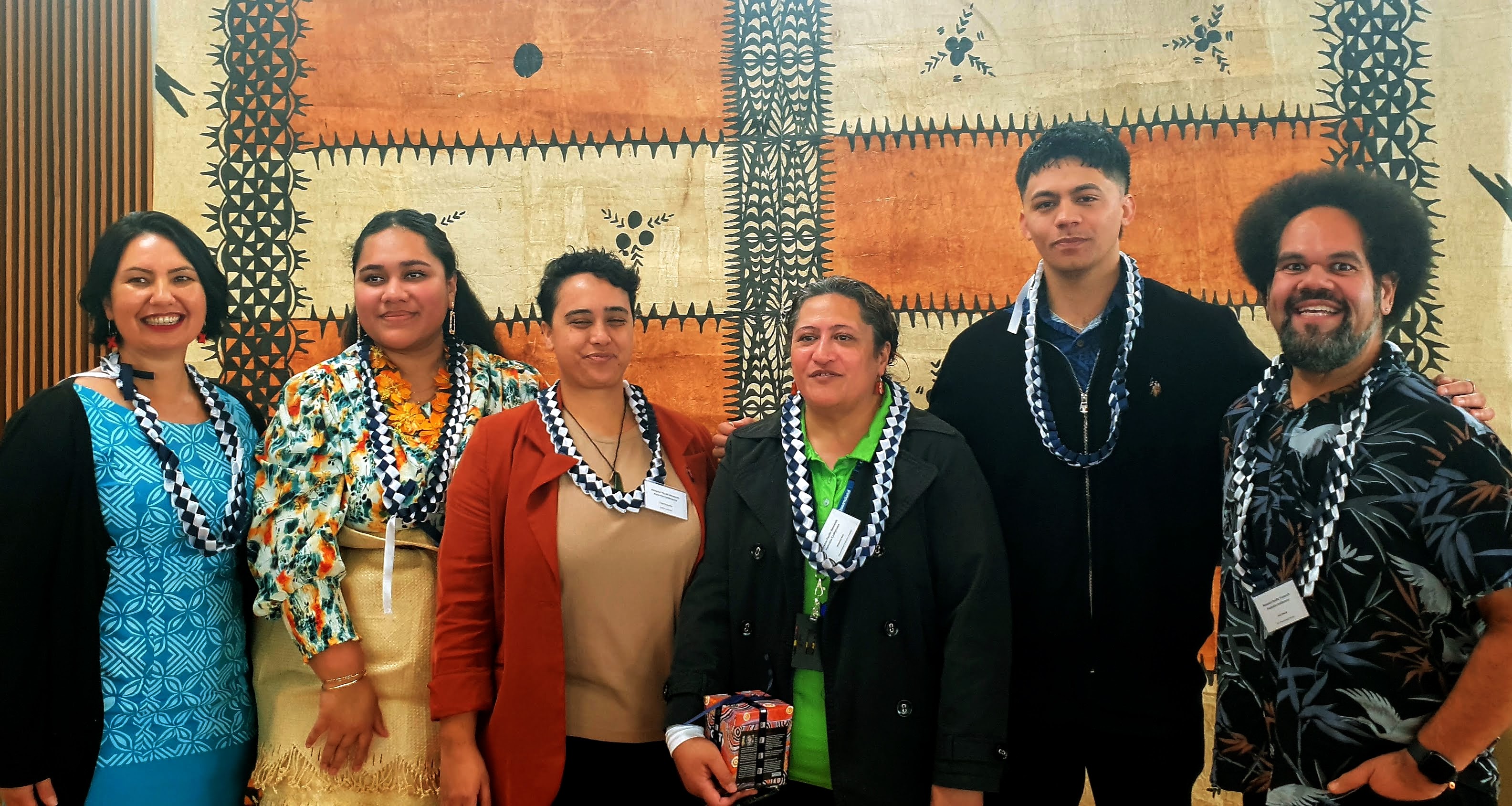
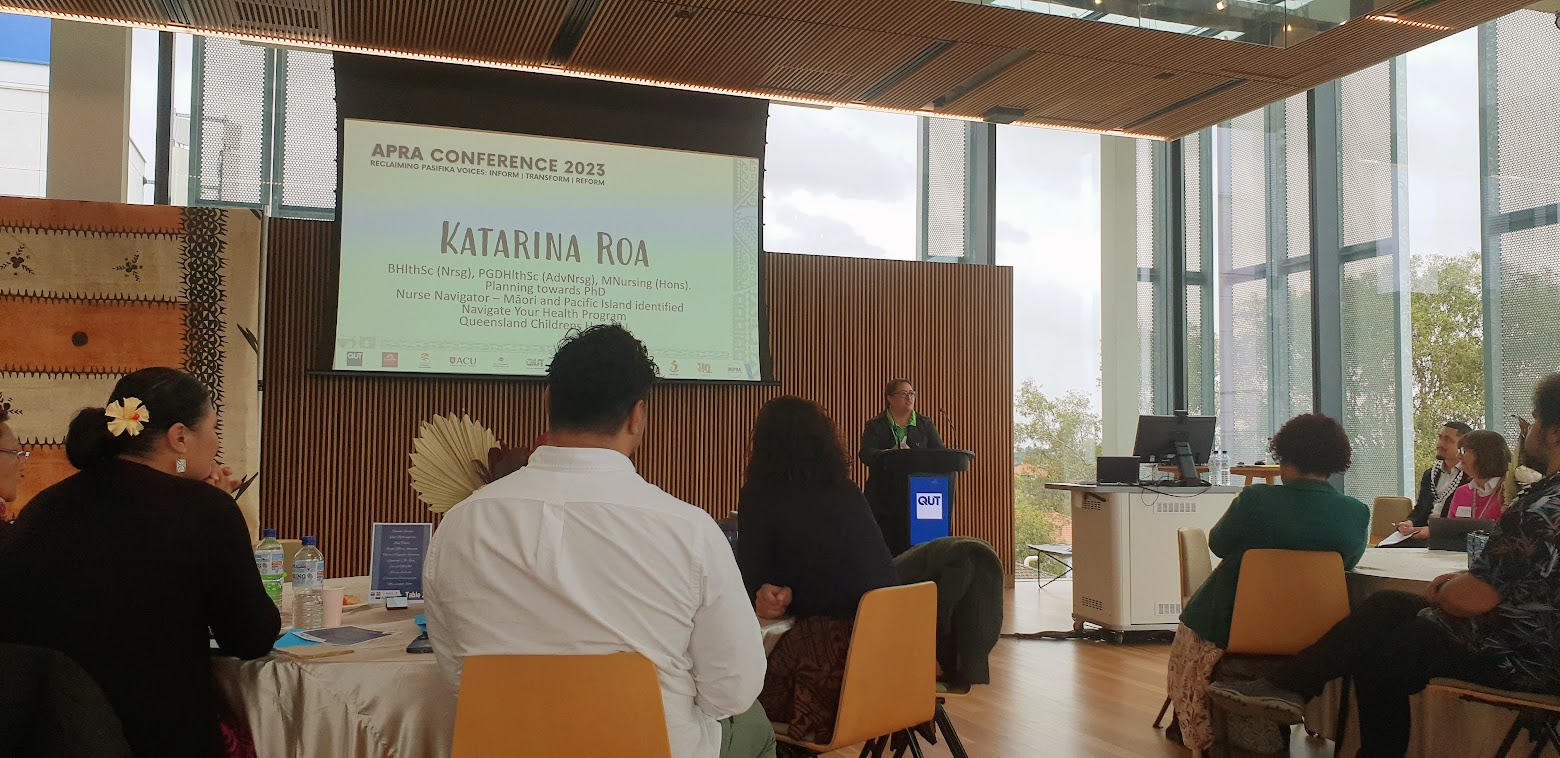
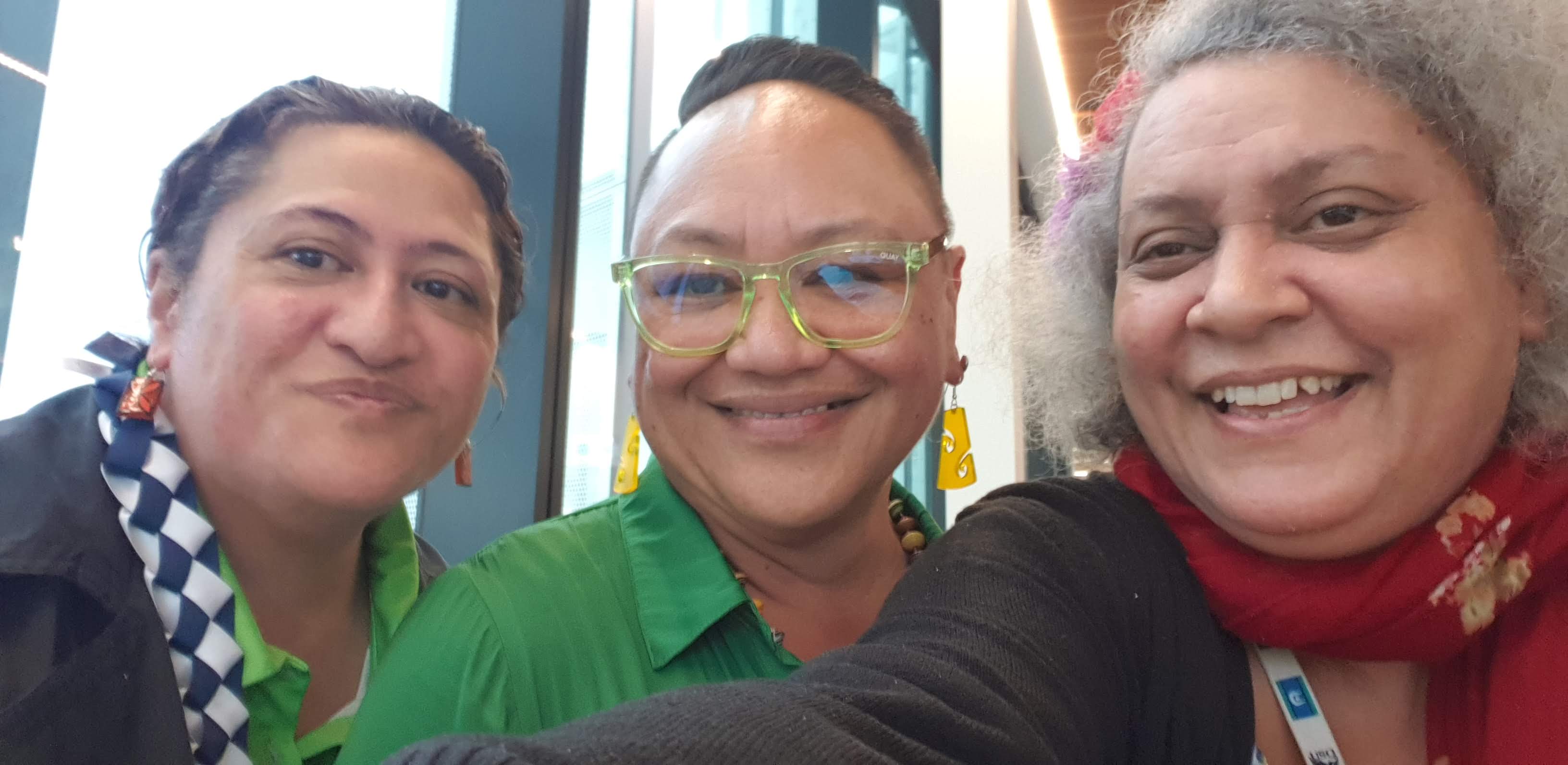
Pictured: Glenda, Melesiale, Tiana, Katarina, Chris and Jioji
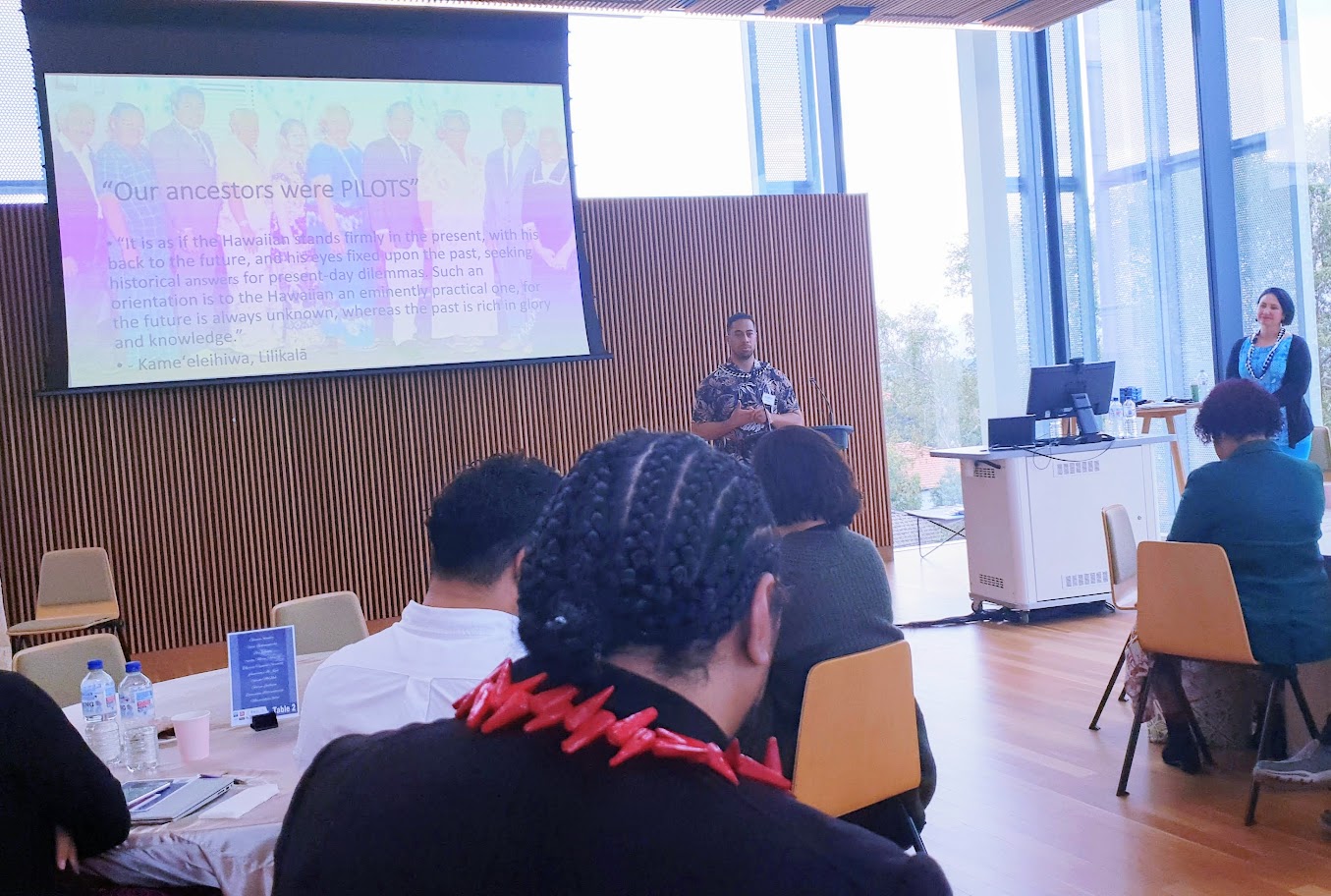
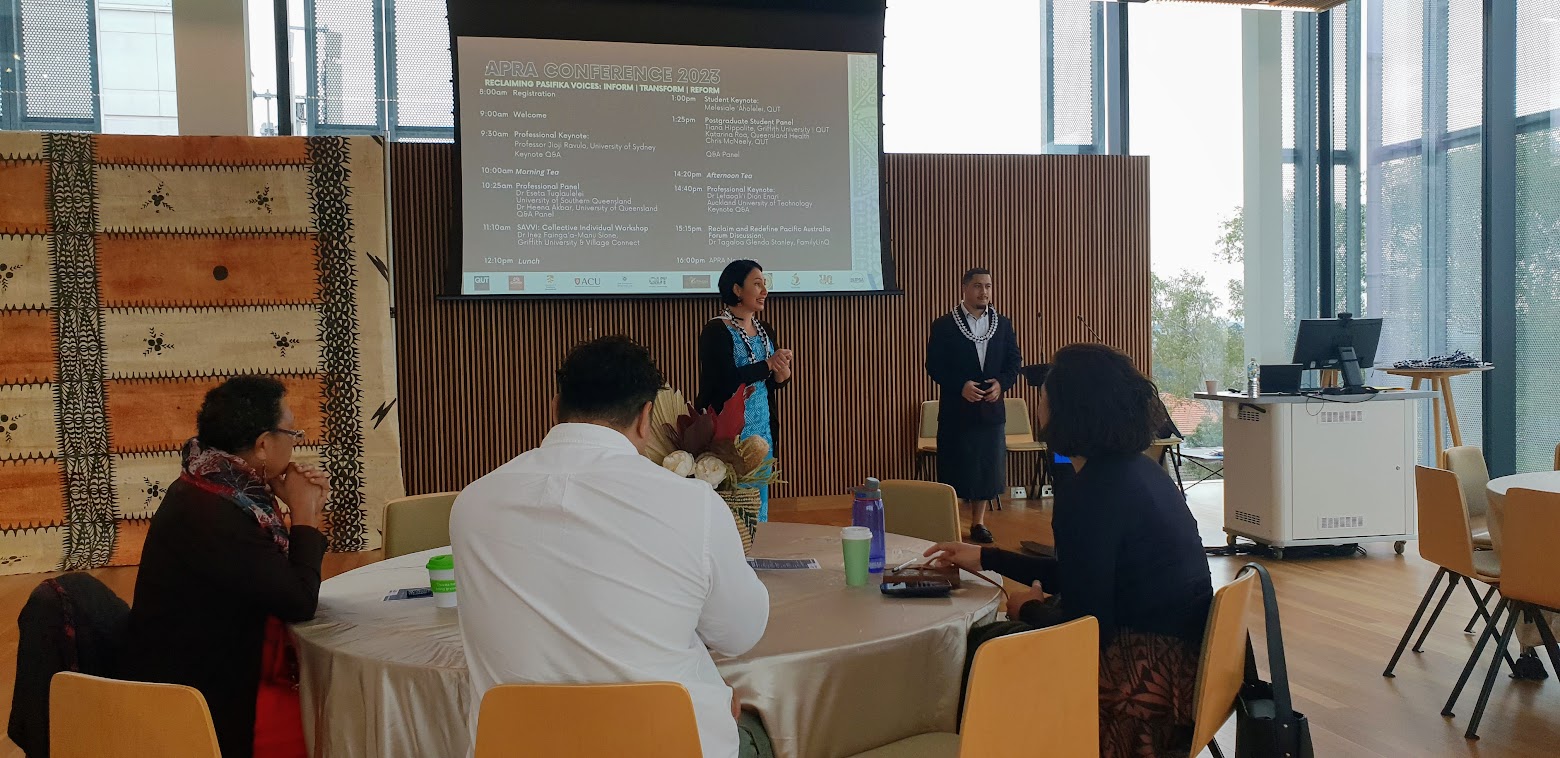
Advance Pacific Research Australia: Reclaiming Pasifika Voices: Inform, reform, transform, a conference for Pasifika researchers, students, and postgraduates, and community was held at QUT, July 3 2023 with around 70 participants.
The conference utilised the strengths of Pasifika cultural expressions and protocols to engage undergraduates, community and Pasifika attendees. It also demonstrated the SSAVI principles of spirituality, service, agency, vision, and innovation later shared in detail in a participatory workshop.
The Vision of the Conference, was to encourage all participants to think deeply about why we do research, and how important our motivation, and methodology are to bring about lasting positive outcomes for the communities we serve and originate from as well as those we now live in as part of the diaspora.
This Pasifikaness was woven dynamically throughout the day in the presentation stylings of the presenters and the overall weave of the program. Participants came from Kiribati, Maori, Samoan, Papua New Guinean, Solomon Islanders, Tongan, Fijian and more in cultural backgrounds, some second or more generation in Australia, with some also pointing to their mixed cultural backgrounds, such as Nepalese.
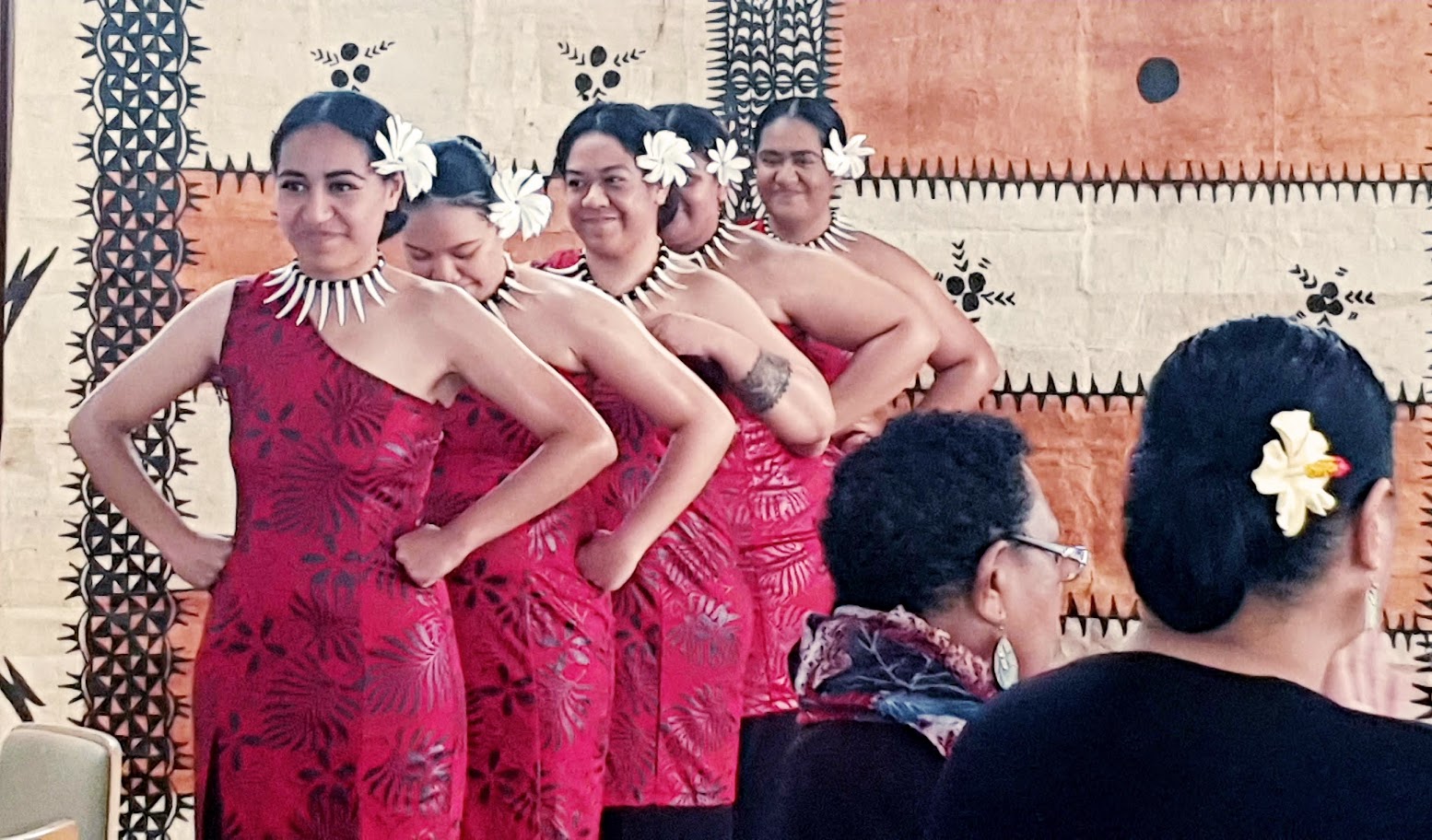
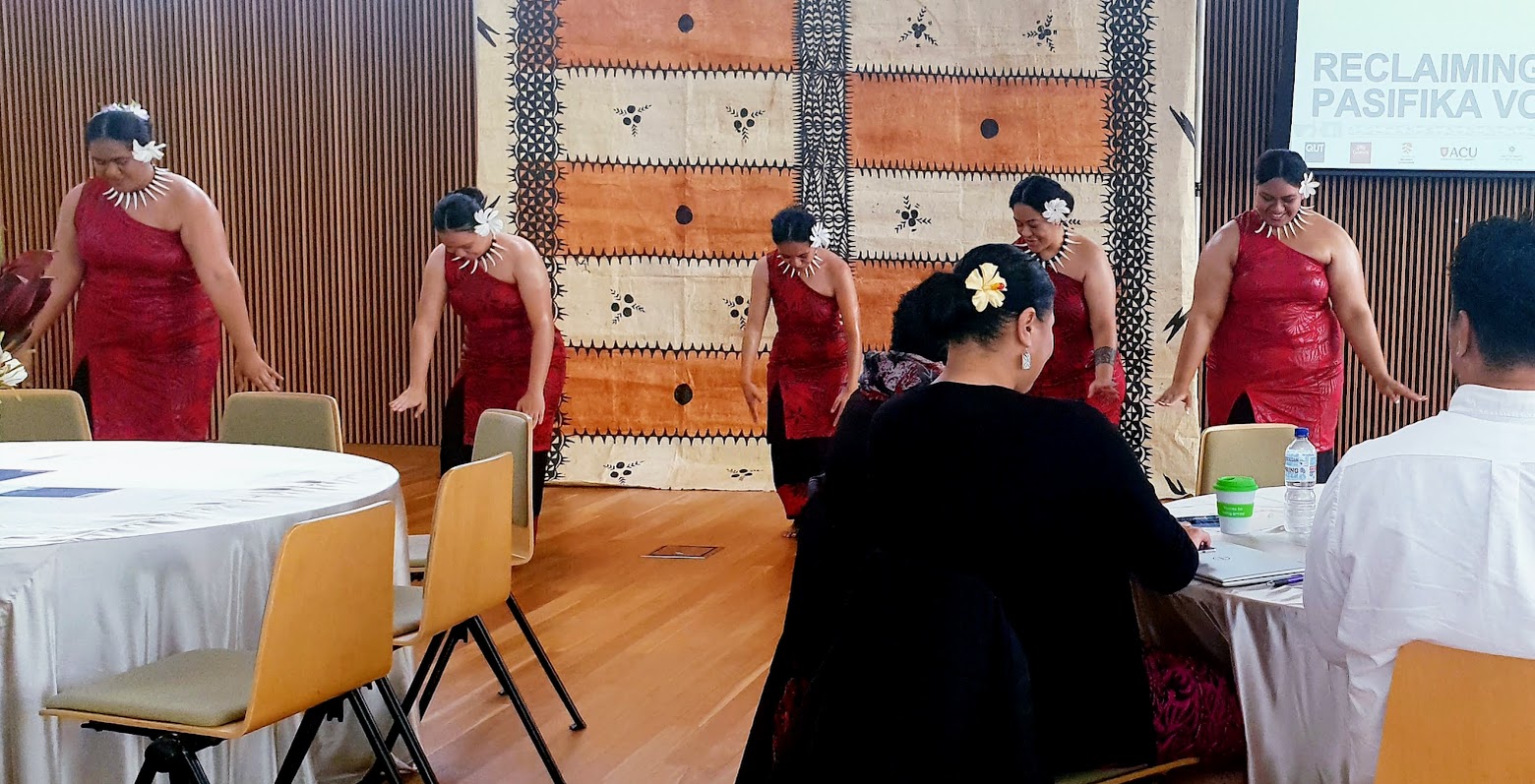
The program began with dance, prayer and acknowledgement of country, ended with dance and prayer, and included songs and participatory dance, as well as traditional power pointed key notes and panels throughout. There were so many moments, of emotional and heartfelt presentations which paid homage to family, community and cultures.
Embracing early career researchers and long term career researchers, the conference provided a supportive and inclusive sharing environment with family and community who are not researching currently, welcome to participate.
All presenters honoured and showed respect for First Nations peoples of Australia and shared their diverse and similar experiences. They shared personal and moving stories of the challenges and positive impacts of family, further education and mentors.
Covering fields of social justice, health, biomedical science, social work, youth work, IT, education, and cultural safety a unifying theme was a diversity of answers of how we can introduce Pasifikaness into our work and study spaces and feeling confident and empowered to do so.
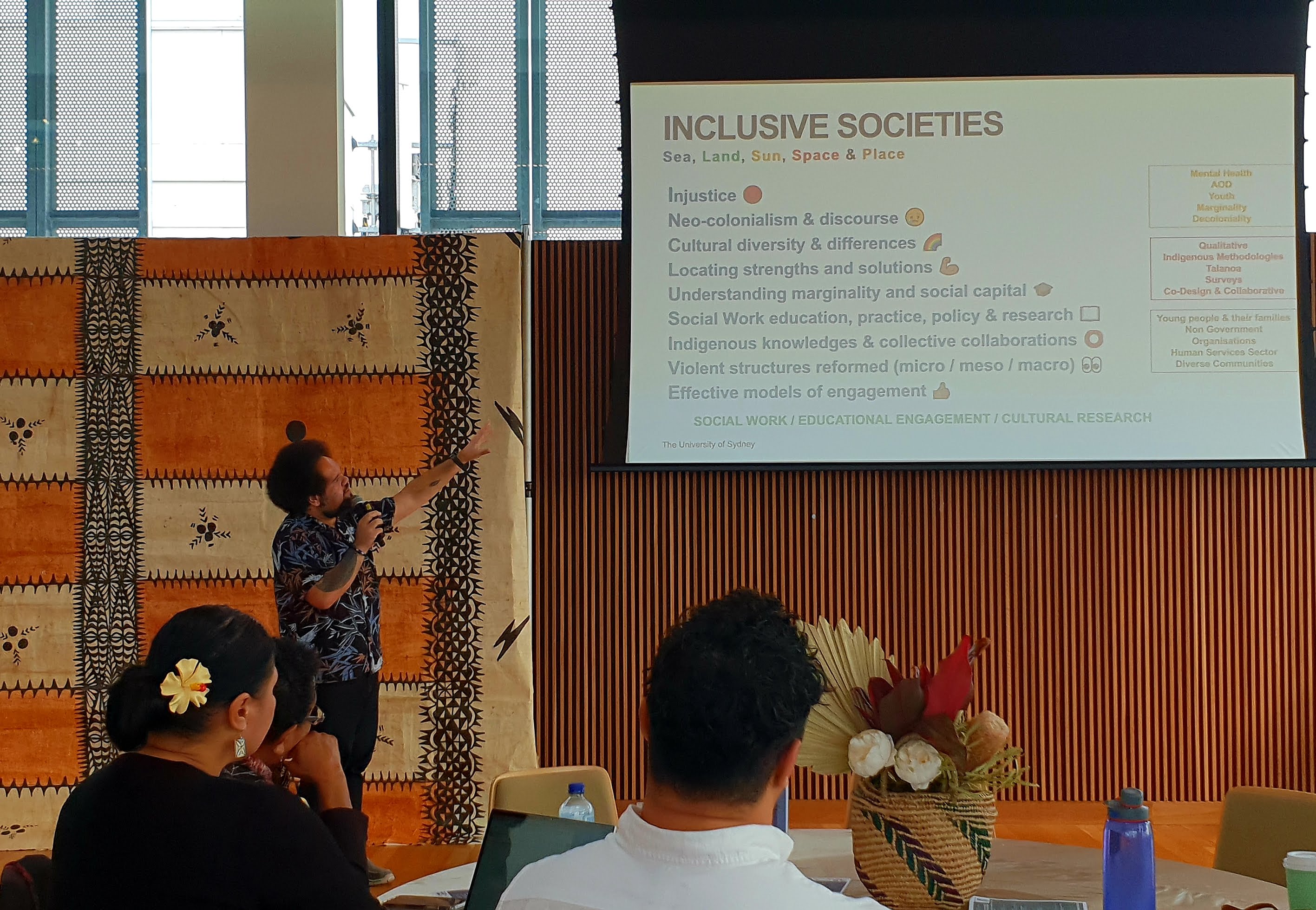
Jioji Ravulo, Professor and Chair of Social Work and Policy Studies in the Sydney School of Education and Social Work at The University of Sydney, began his presentation with singing A rousing Chorus from How Far I’ll Go
“See the line where the sky meets the sea? It calls me And no one knows How far it goes If the wind in my sail on the sea stays behind me One day I’ll know If I go, there’s just no telling how far I’ll go”
He then looked at the relationship between the Individual, Researcher and Community and how each of these interacts with and informs the approach of researchers. (Glenda shared with us the Jioji came from a stand up comedian and youth worker background as well).
In the social justice area he highlighted the importance of not being overwhelmed by the dominant discourses through acknowledgement of intersectional identity, and the deconstruction of ‘whiteness’. ‘Informing ‘then is to recognise dominant discourses, and part of reforming and transforming is deconstructing and questioning these discourses across all disciplines and their structural outcomes such as inequity in education, and individual and collective well-being.
Part of the reforming processes are the deconstruction of colonialism, neo colonialism and whiteness so as to build spaces for collaborative research, which draws upon the strengths of Pacific ways of gaining understanding and knowledge such as through ‘talanoa’.
Reforms, and transformations for Pacific health and well being, are enhanced by building strategies and lexicons, which understand, engage with, and apply the strengths of Pacific cultures.
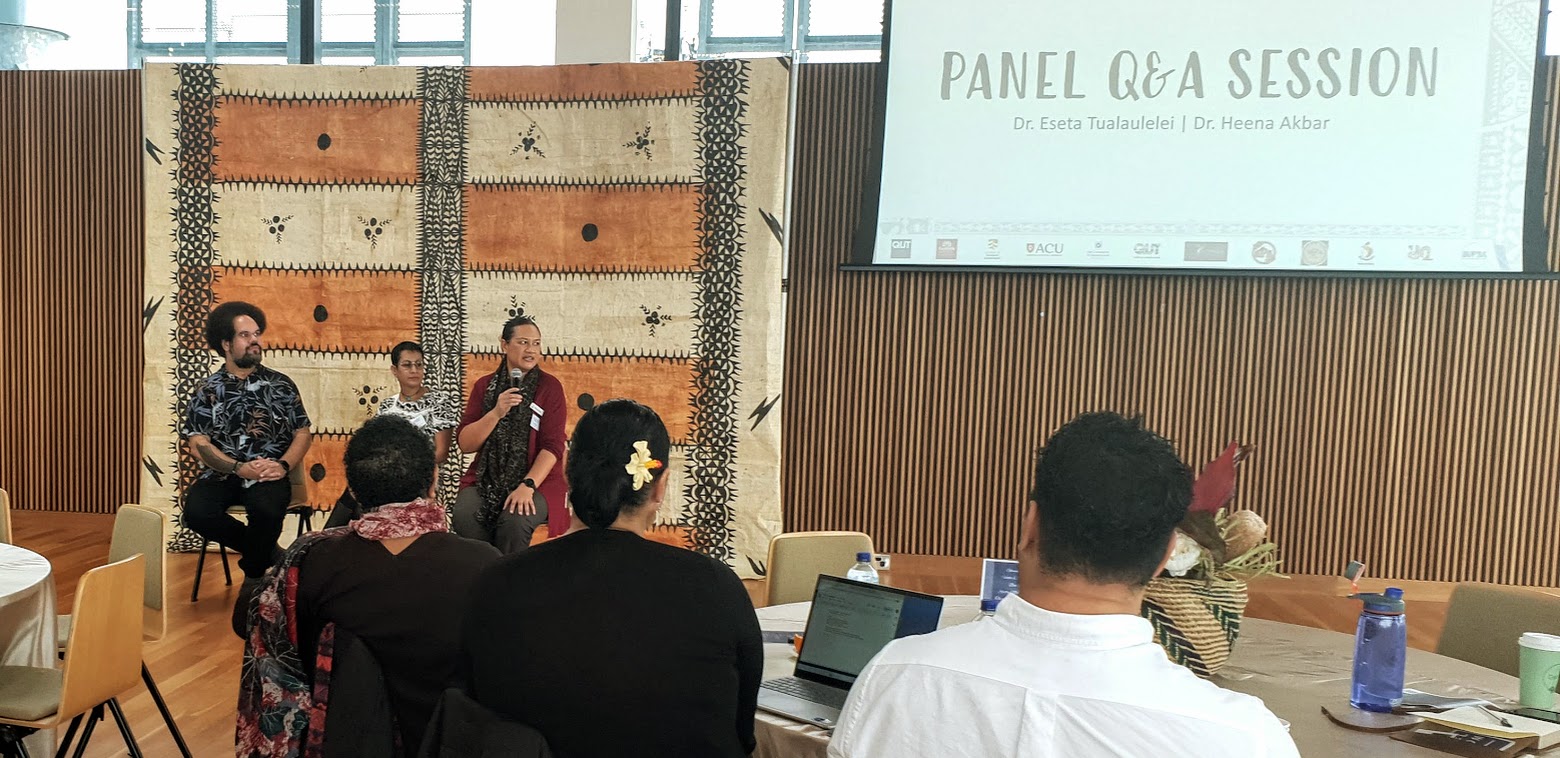
Dr Eseta Tualaulelei (Early childhood and intercultural teaching and mentoring, research, University of Southern Queensland), shared how she viewed the connection between teaching, research and service. She is highly motivated to improve educational outcomes for Pacific students by challenging often negative- DOXA – commonly held beliefs.
One of these was that speaking more than one language, led to lower educational outcomes, when actually bilingualism can greatly enhance one’s learning. Samoan language nests then become part of early childhood experiences of Samoans. The process of publishing research is powerful because it transforms the attitudes of both learners and facilitators of learning. You can find a listing of Dr Tualaulelei’s work here.
The transformative power of research such as Dr Tualaulelei’s, is through publishing and sharing to teachers, but also through engaging in methodologies that value Pasifika cultures, and collaborating and communicating to grass roots of community to recognise and work alongside them. She informed us of her paper with Judy McFall-McCaffery on for our further elucidation The Pacific Research paradigm: Opportunities and challenges
Dr Heena Akbar (Queensland, Pasifika Woman’s Alliance), shared the story of her very mixed cultural background, Nepalese, Fijian and Afghani, and as Professor Ravulo’s and Dr Tualaulelei before her pointed to the power of methodology that embraces Pasifika ways of knowing and being in the world. Frameworks for improving Pasifika health, are enhanced through co-designed participatory action where Elders and community educators and researchers, and Elders and Young people working together as researchers, educators, collaborators to improve their health outcomes. Dr Akbar, also works as an educator of medical students, and is thus also able to impact a future generation of doctors.
A highly enjoyable and dynamic workshop, was facilitated by Dr Inez Fainga’a-Manu Sione, Glenda Tagaloa Stanley (also our CO MC for the day), and Dr Dion Enari, sharing the concept of ‘Collective or Individual: Why Not Both’ and unpacking a useful acronym – SSAVI .
Embracing the ideas of Spirituality, Service, Agency, Vision and Innovation – conference participants where then taken on an interactive journey to engage with and assist with creating our own vision, connecting with other visions in the room. We did both individual reflections, and connecting with the community of researchers and community members in the room.
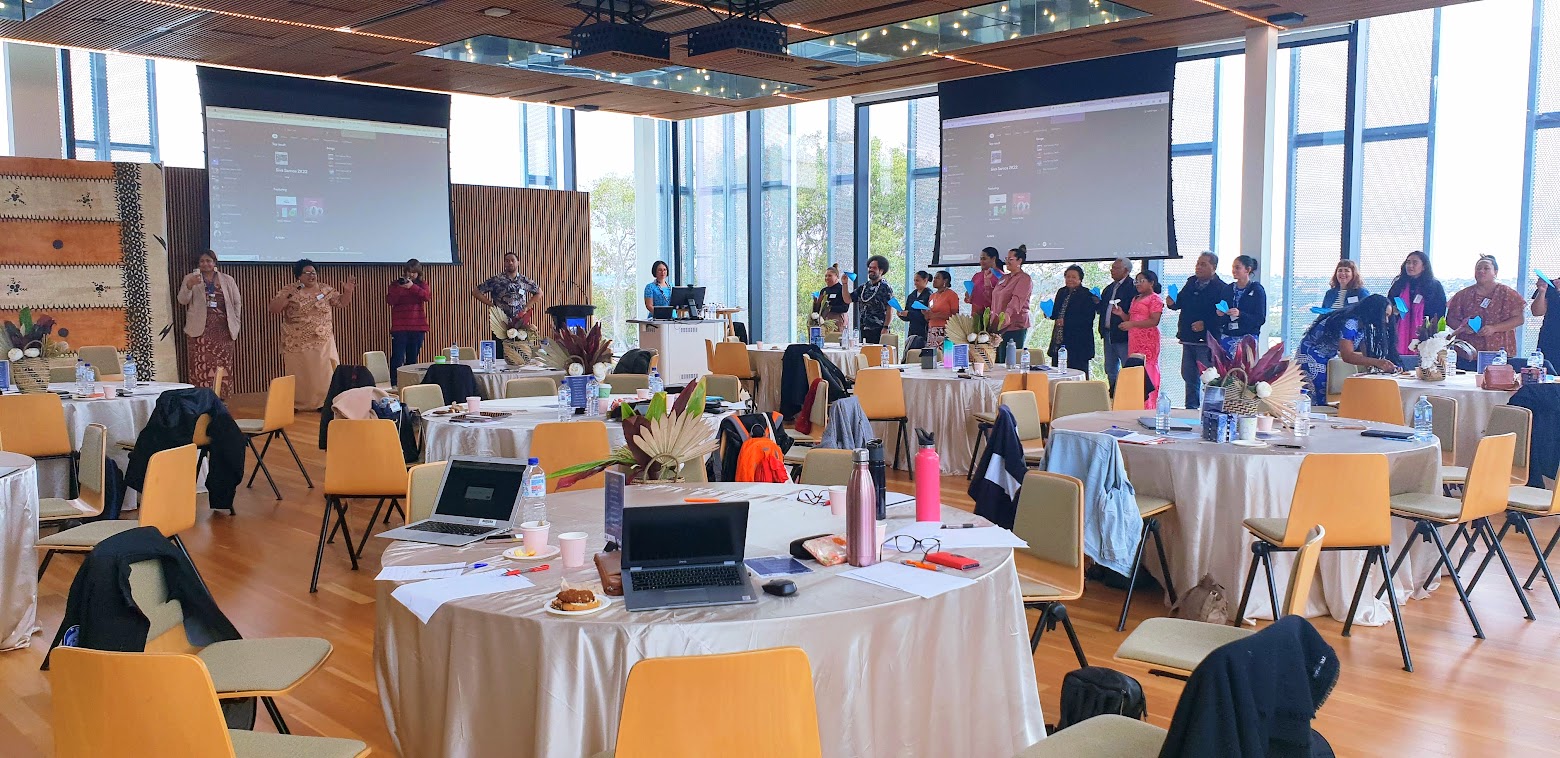
One fun and highly memorable highlight of the workshop was when participants flew a paper aeroplane of our vision (which was written onto it) as part of a think, pair share. They then chose someone to share that vision with once they found their landed plane.
Several case studies of this model in action were also presented, interspersed with ensuring participants were alert, listening, and engaged.
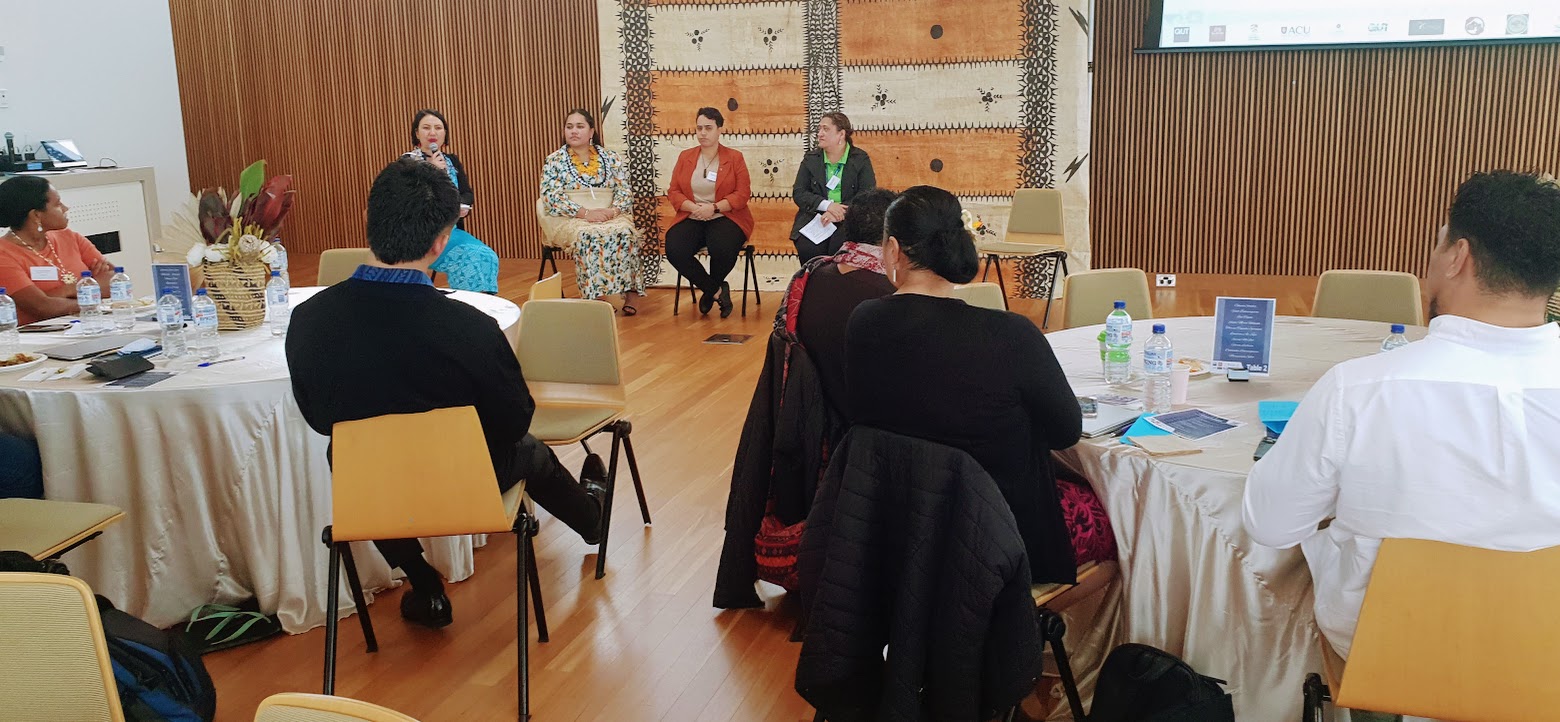
Later sessions, were presentations of researchers, Melesiale Aholelei, Tiana Hippolite, Chris McNealy and Katarina Roa, working across fields of impacts of enforced deportation of Australian raised Tongans, nursing, IT, understanding cancer. There was a keen interest shown for the application of this work into policy making, and as with other participants an engagement with Pasifika methodologies. There were moving personal stories of the motivation for researchers, sharing a contexts of learning in historical circumstances of New Zealand, Aotearoa and a challenge to consider how we can take our ‘Pasifikaness’ ‘into our research, work and community spaces, where we are surrounded by dominant discourses.
Researchers, aware that there were many fields, and community members in the room, made sure to make their topics as understandable and as engaging as possible. Focusing on motivations, methodologies, and impacts, and engaging strongly with the conference themes. They also outlined and made explicit the value of more Pacific people entering research and academia and impacts of that.
Elders reminded of the critical and crucial role of research that empowers community and contributes to the well-being of their communities, especially with some distressing statistics in health and incarceration and mortality rates, whilst researchers also deconstructed the concepts of individual and collectivism arguing that both service a role. There was an interesting discussion of some of the norms within the Pasifika communities which we need to challenge, not just ones external to the community.
Models of community research that include and embrace community researchers, and participatory action approaches and partnerships were shared, as well as the need for an increase in Pacific Phds to lead teams and use Pasifika methodologies, with several examples of the impacts where this has occurred. One presenter pointed out how important it is for Pasifika people to have the social capital of academic qualifications so they can lead teams and be paid better (equity) but still retain their identity/ies.
Dr Lefaoali’i Dion Anari, gave the professional key note, again, proudly expressing culture, in both language and oratory, to open, and integrated this throughout his presentation. He spoke of the supportive collectives that more and more Pasifika people being at universities create for the generations follow them there. He shared his personal and academic journey, and linked it to his motivation, and outcomes. The way is not always clear but dialogue and experience can shape an academic journey and lead to unforeseen opportunities. He also shared the importance of connecting with original home countries and how a return to live and do service in Samoa, gave him further insights invaluable to research.
Dr Anari recalled how important Pasifika student associations were to him, at university and culture groups at high school. Empowering and motivating, and ensuring he made it through his studies. Many students in undergraduate studies were also in attendance to assist in doing service to the conference as well as to be encouraged into research careers if they should wish, and to understand the pathways they could follow to achieve that.
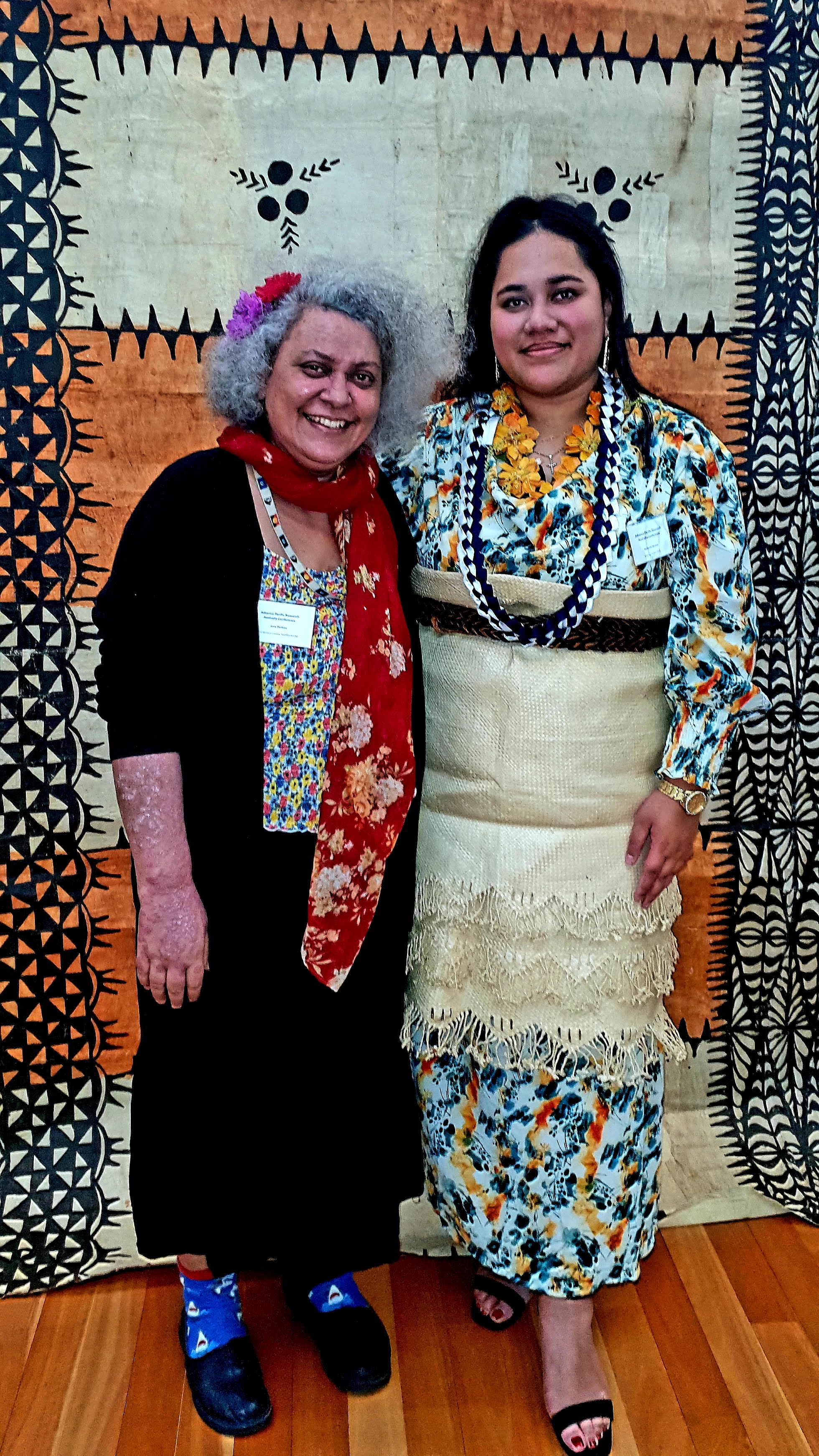
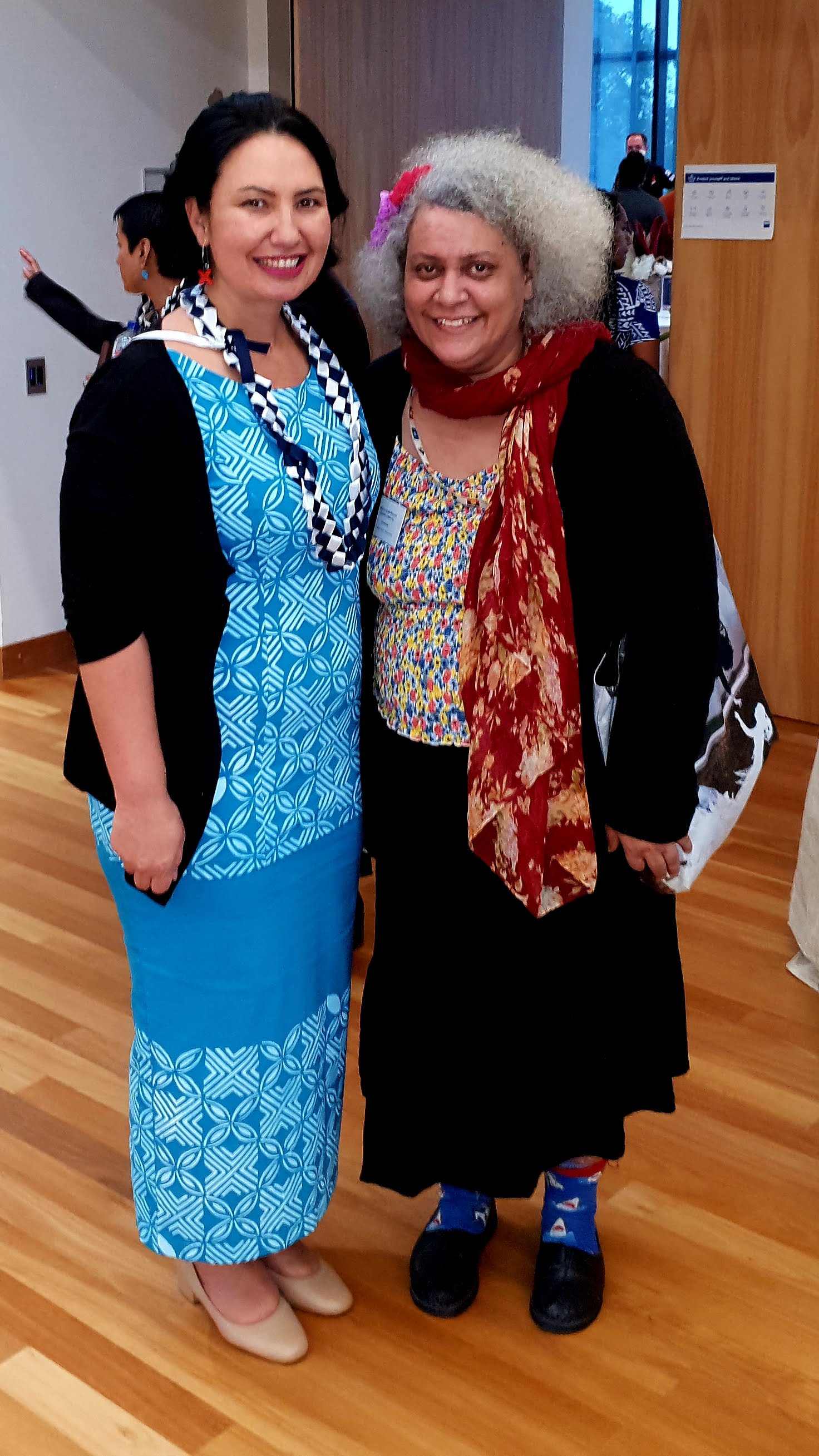
The spirit of the conference was incredibly warm, dynamic, creative, innovative, and vibrant. At every opportunity, naturally culture, in language, song, dance, humour cultural safety was apparent throughout the day each of the presenters and panellist was given a gift.
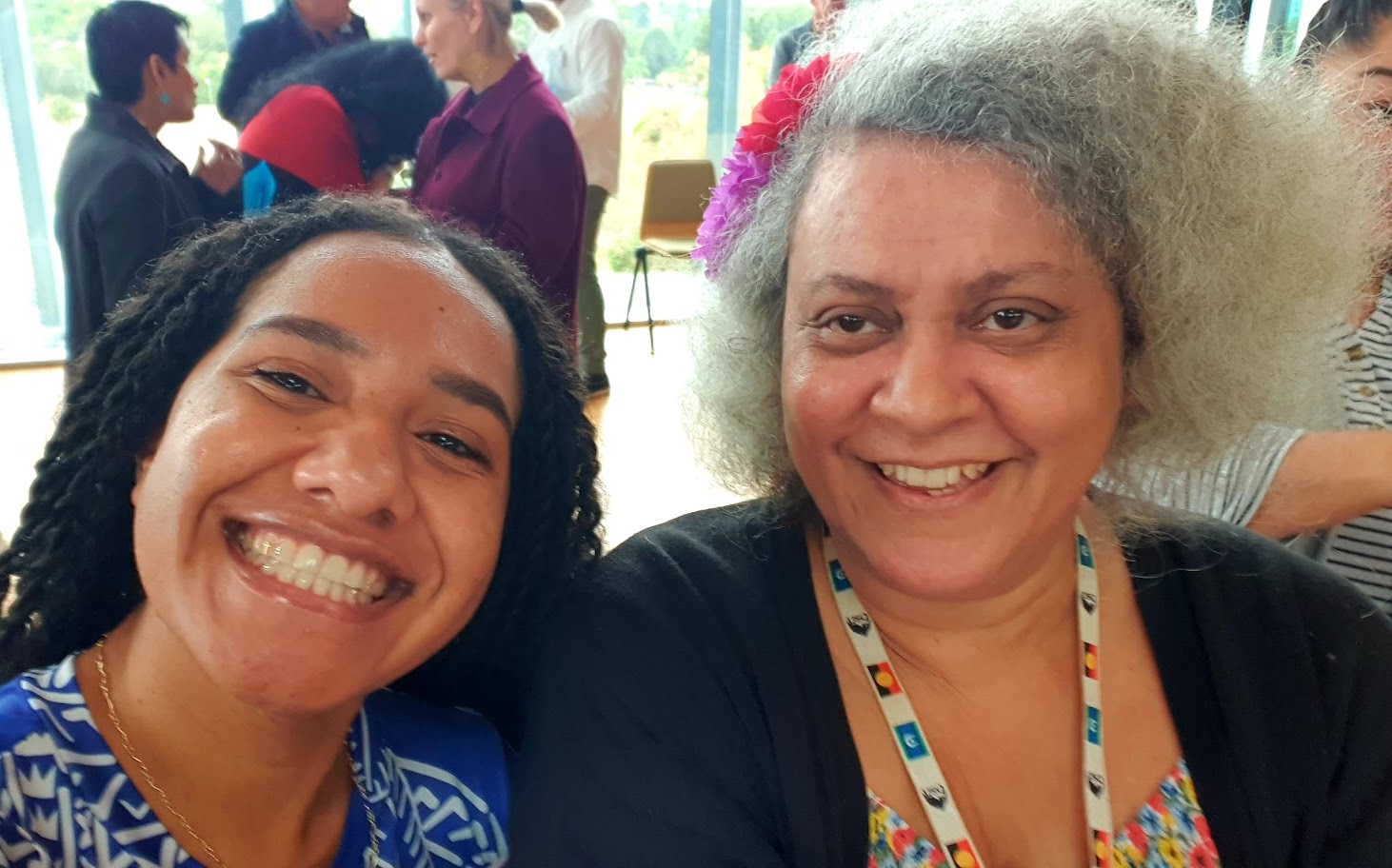
Some attendees went knowing nobody and by the end of it, had contacts, potential mentors or connections, to follow up. I did my best to speak with and listen to as many participants and presenters as I could, and especially appreciated the table arrangement to the conference where we sat in round tables. Special thanks to Reo and Heidi! Interestingly for me, I left and arrived at the same time as a delegate from Auckland, Ben, and chatting to him on the way and out gave the day symmetry.
The day ended with Dr Stanley, encouraging, people from the floor of the conference to reflect on what the narrative of Pasifika, Pacific, Pacifica might look like going forward in an Australian context. Does Pasifika still have a strategic meaning, and strength, that is useful? Contributions from the floor were interesting, thoughtful and often quite emotional.
One of the Elders, spoke of the need to always remember those who do not make it to University, or into a long and healthy life, and to ensure we will all remember to consider that importance and obligation of the opportunity of education and the urgency of having the impact of research truly benefit community.
Other ideas expressed were that:
We are each other’s keepers
part of collectives, a collective but also individuals. It is a holistic approach that will move community forward. We can be unified in all our Pasifika diversities, and that in the diaspora there is much to be gained by inclusiveness and connection.
We were encouraged to think about what we bring to the table of Pacific research, and the service and agency of our communities and ourselves.
What do you bring to the table?
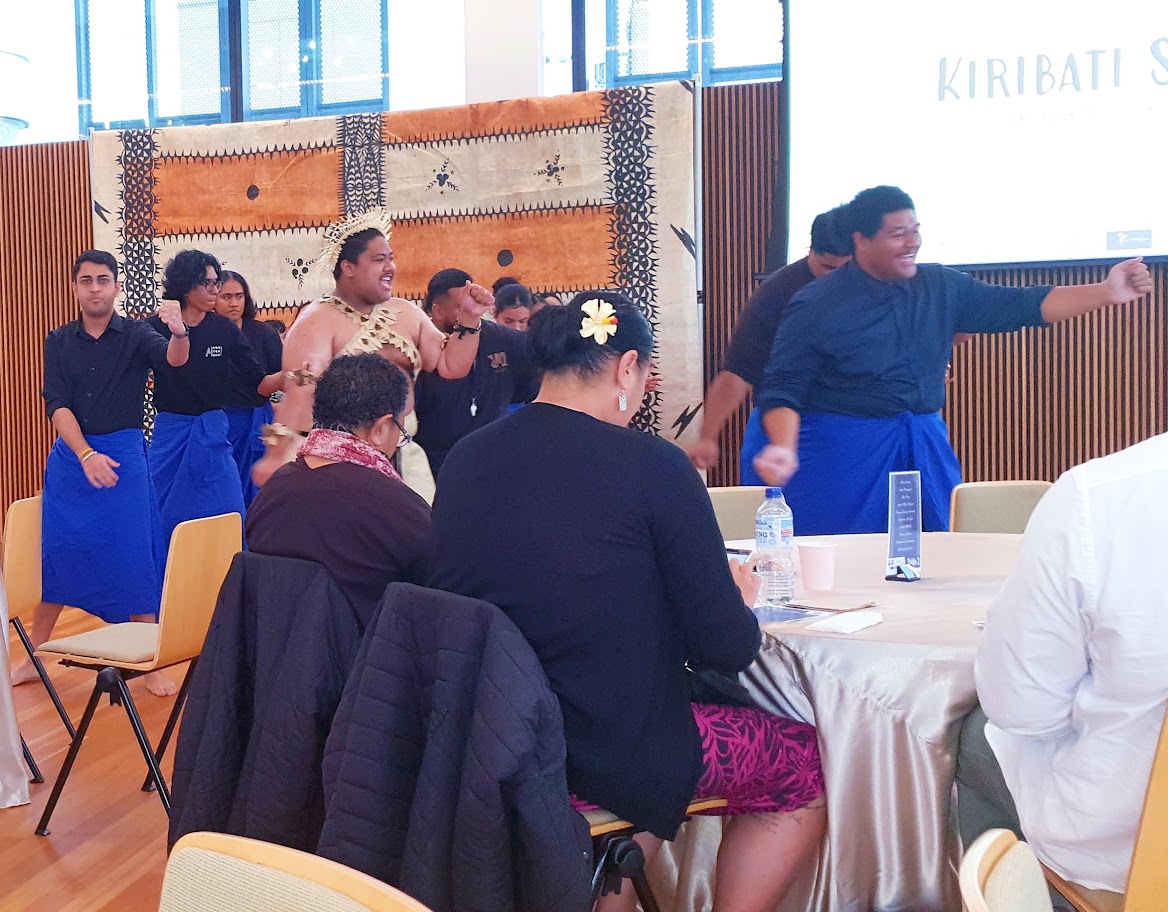
The day ended with a dance from Kiribati, done by students of several Pasifika background, as well as Kiribati, a group photo, and a heartfelt, prayer and blessing, by the only high school attendee.
I encourage anyone reading this article to follow the hyperlinks and read the presenters representations of their work. Some research is still in process and we will no doubt hear about this in the future and hopefully see its impacts in policy and other fields.
Many thanks to all the organisers, participants, attendees and those who supported the event through service.
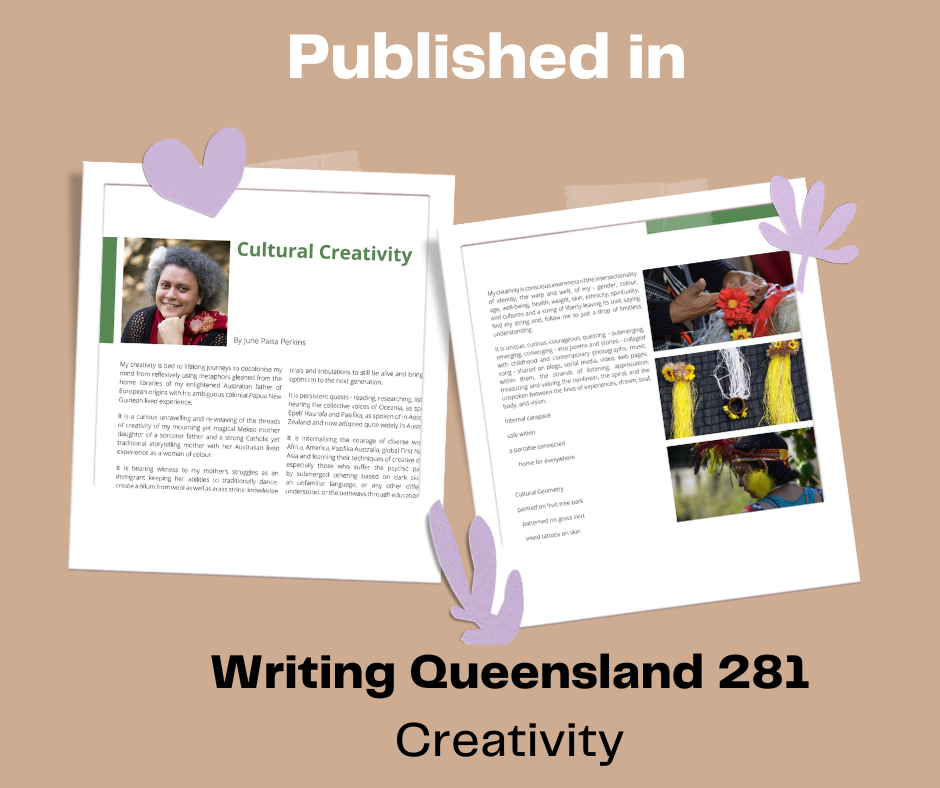
Many thanks to Writing QLD and Queensland Writers Centre for giving me a voice over the years, on topics such as Diaspora, Poetry Advocacy and how to be a community journalist during natural disaster recovery. This time round, I am discussing Cultural Creativity.
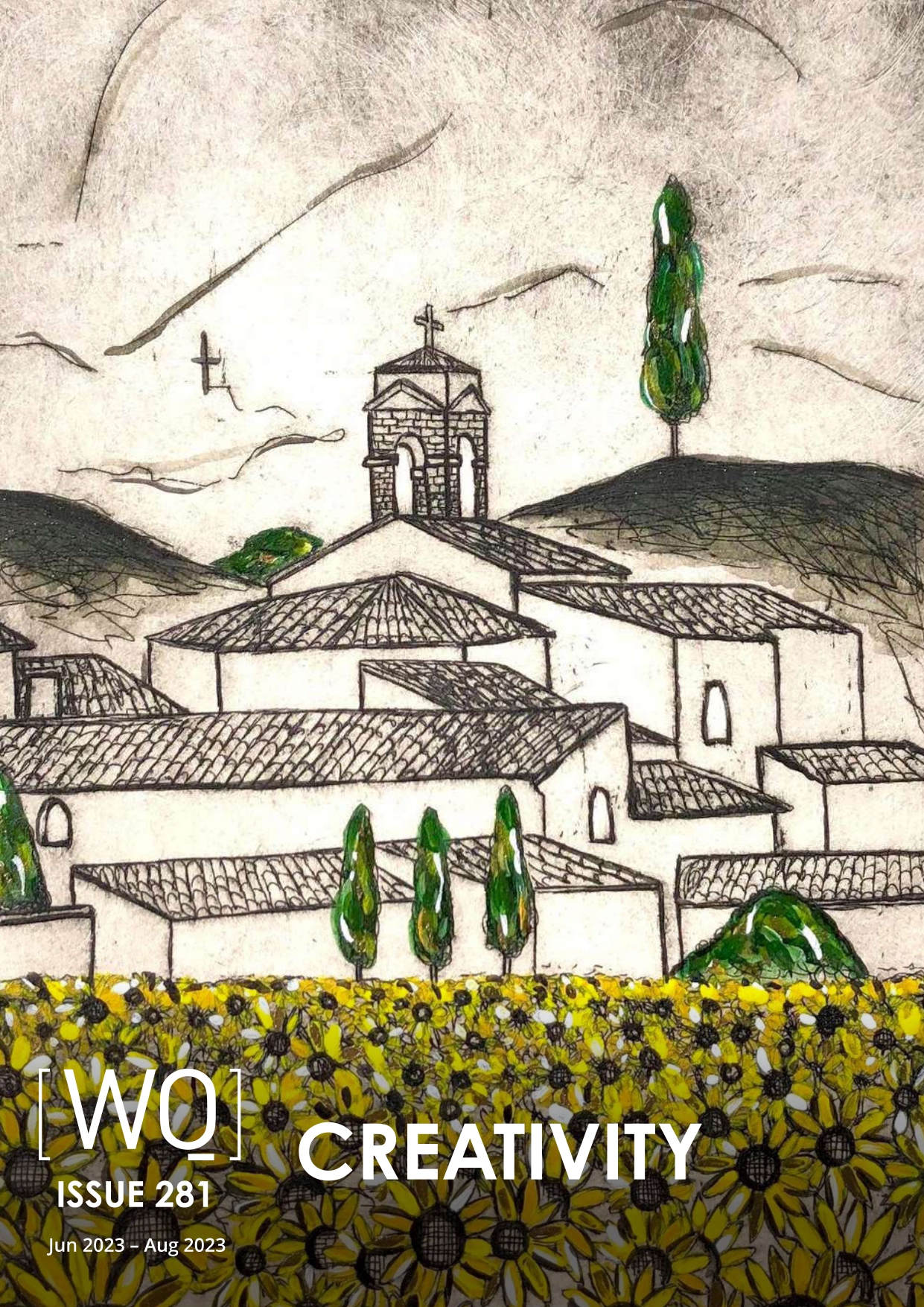
The cover features local contemporary printmaker and textile designer, Katie Piekutowski.
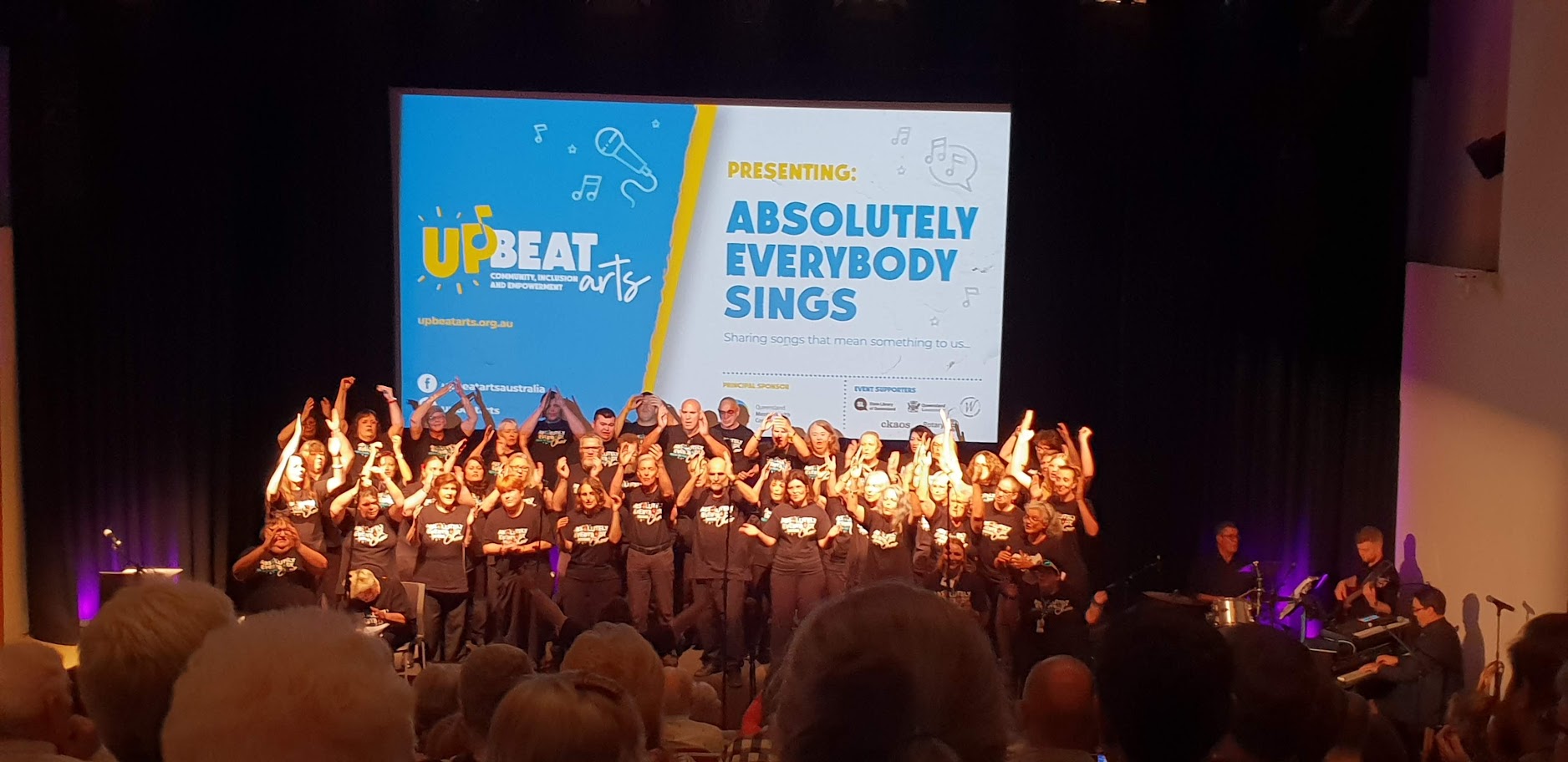
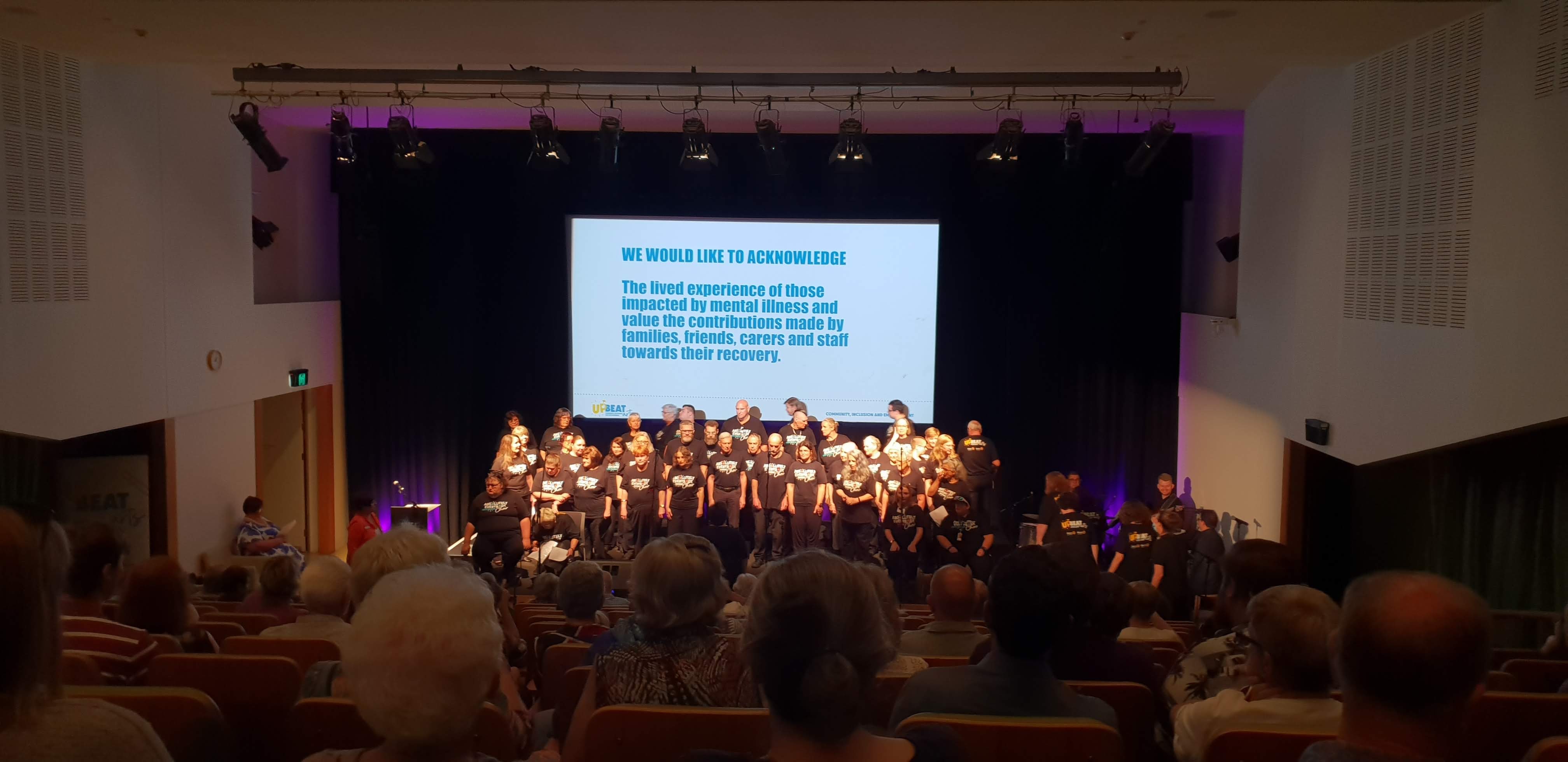
After being stuck at home for weeks due to a few physical health issues that have caused a few tears from the pain, I thoroughly enjoyed the “Absolutely Everybody Sings” concert held at the State Library of Queensland, on Sunday April, 29th.
It featured inspiring performances from two Brisbane “Absolutely Everybody Choirs” whose members selected the songs for their personal significance to inspire their journeys to well being.
Songs, like, ‘It’s Alright’ (The Impressions), ‘The Climb’ (Miley Cyrus), ‘Fragile’ (Sting), ‘Stand’ (Rascal Rats), ‘Across the Universe’ (Beatles), ‘Staring at a Blank Space’ as well as two covers songs from the Guest Artist, Gregory Moore ‘Wings Beneath my Wings’ (Bette Midler) and ‘Bridge over Troubled Waters’ (Simon and Garfunkel).
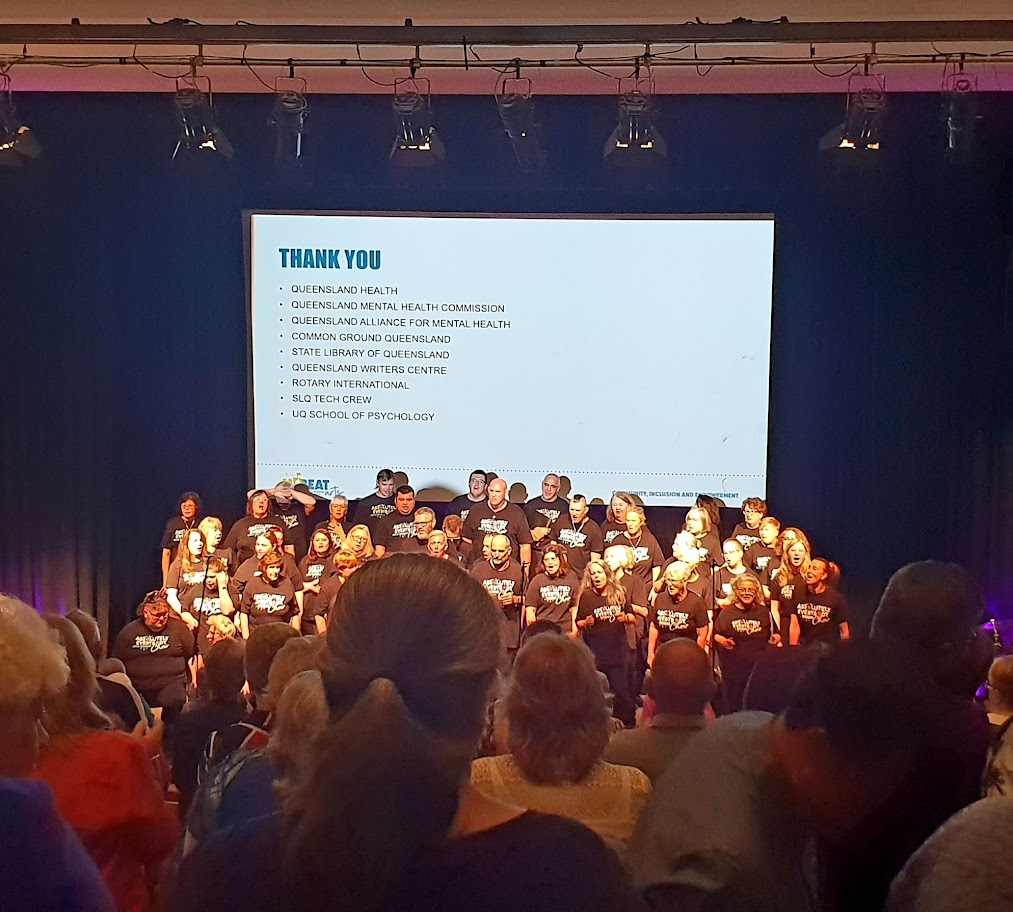
We began the concert with singing ‘It’s Alright’ together and ended the afternoon with a three part harmony of the whole audience plus the choir and a celebration of one year birthday for the North Brisbane, choir. Melissa Gill did a fabulous job of conducting the choir and the audience throughout the afternoon.
The concert was truly uplifting. It was well worth the effort of a short walk of discomfort to be surrounded by people using the power of music and connection.
Choirs, by meeting regularly provide connection, and the concerts for family, friends and the public represent just a small portion of the value of such projects.
The concert was supported by Queensland Mental Health Commission, and Commissioner, Ivan Frkovic, gave a beautiful speech in support of such projects where music is used to enhance well being. Other supporters include the Queensland Writers Centre, QLD Health, UQ School of Psychology, and Queensland Alliance for Mental Health.
The project includes creative writing, and song writing, and has resulted in two anthologies from participants.
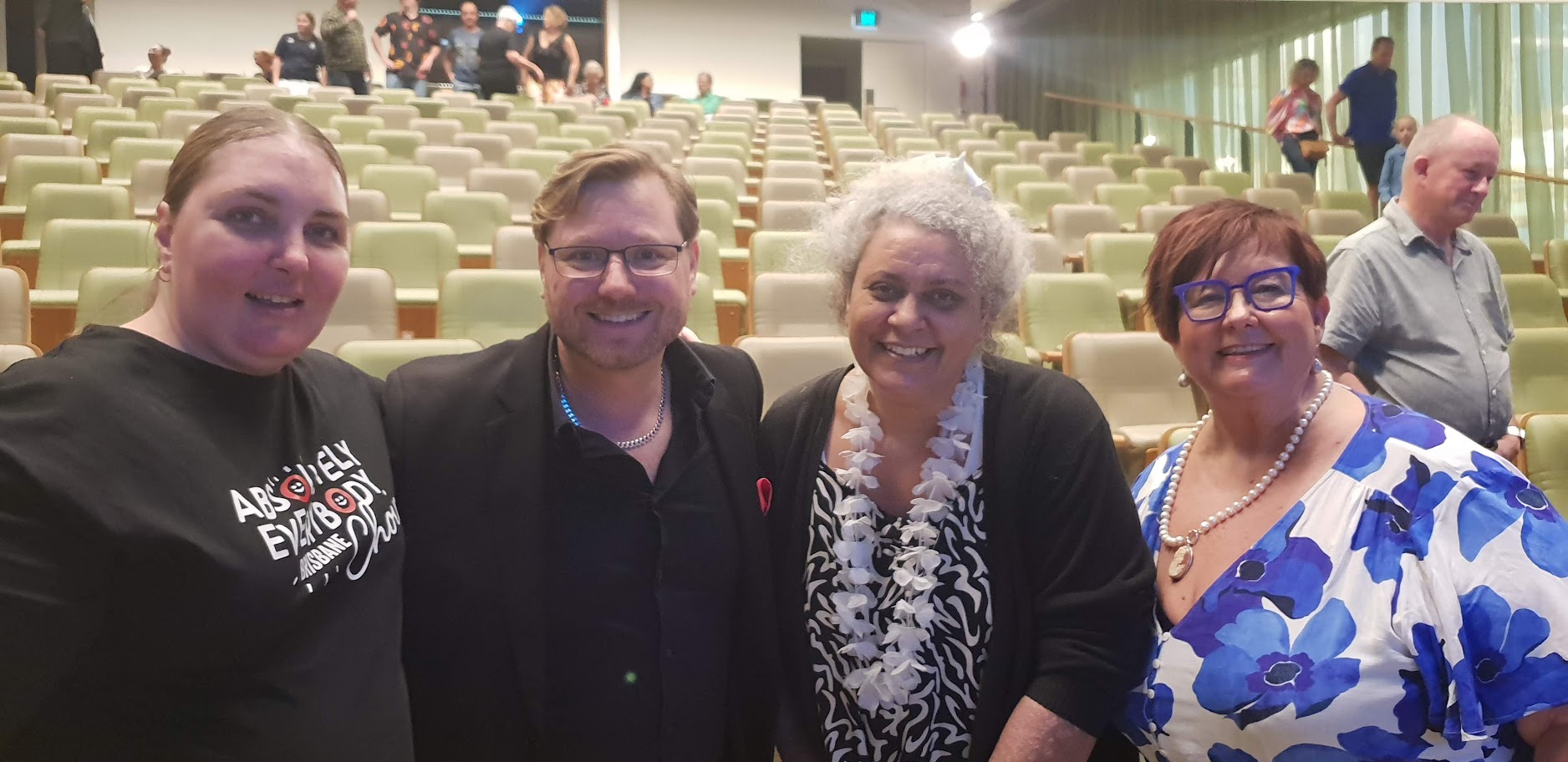
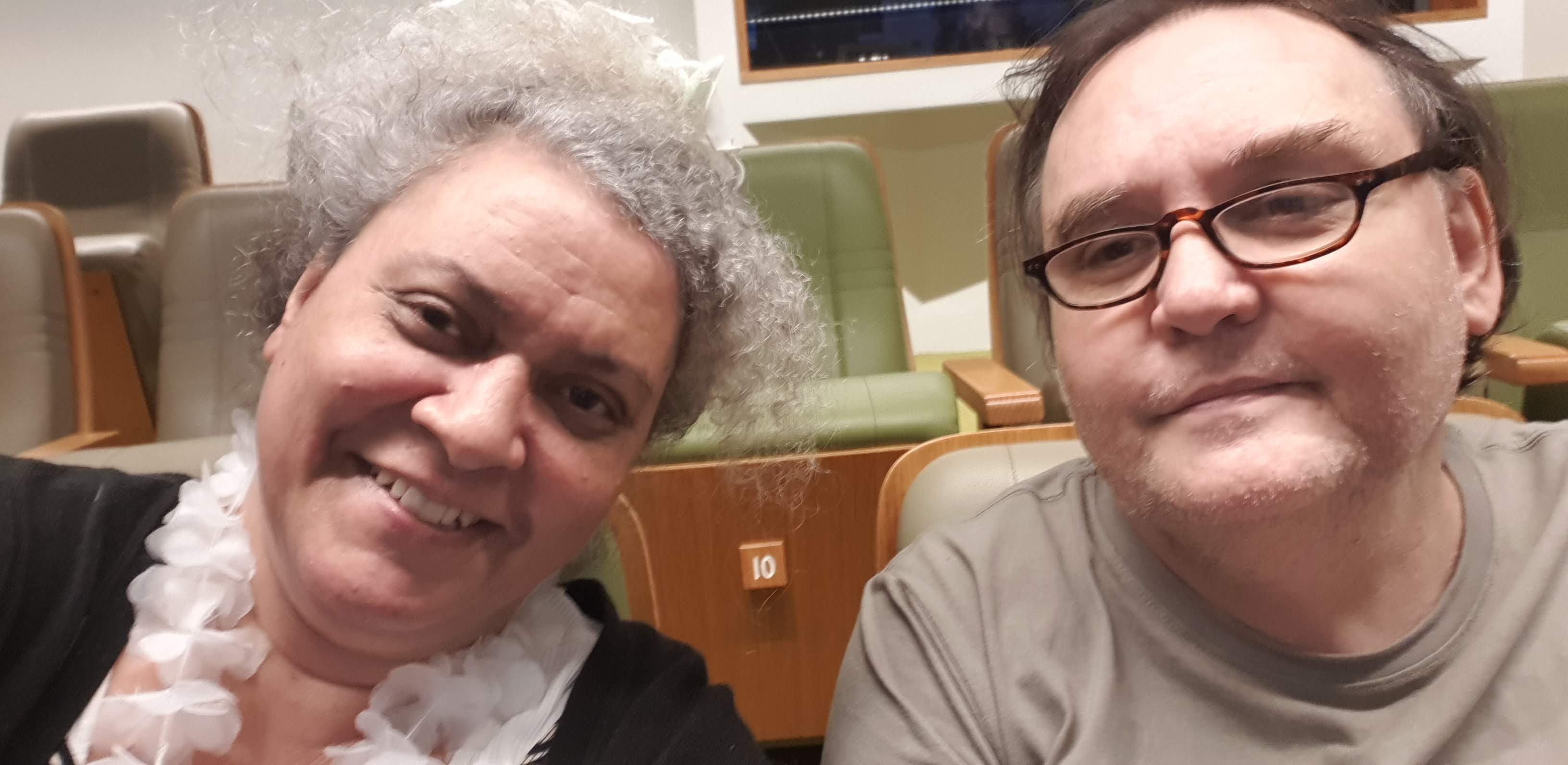
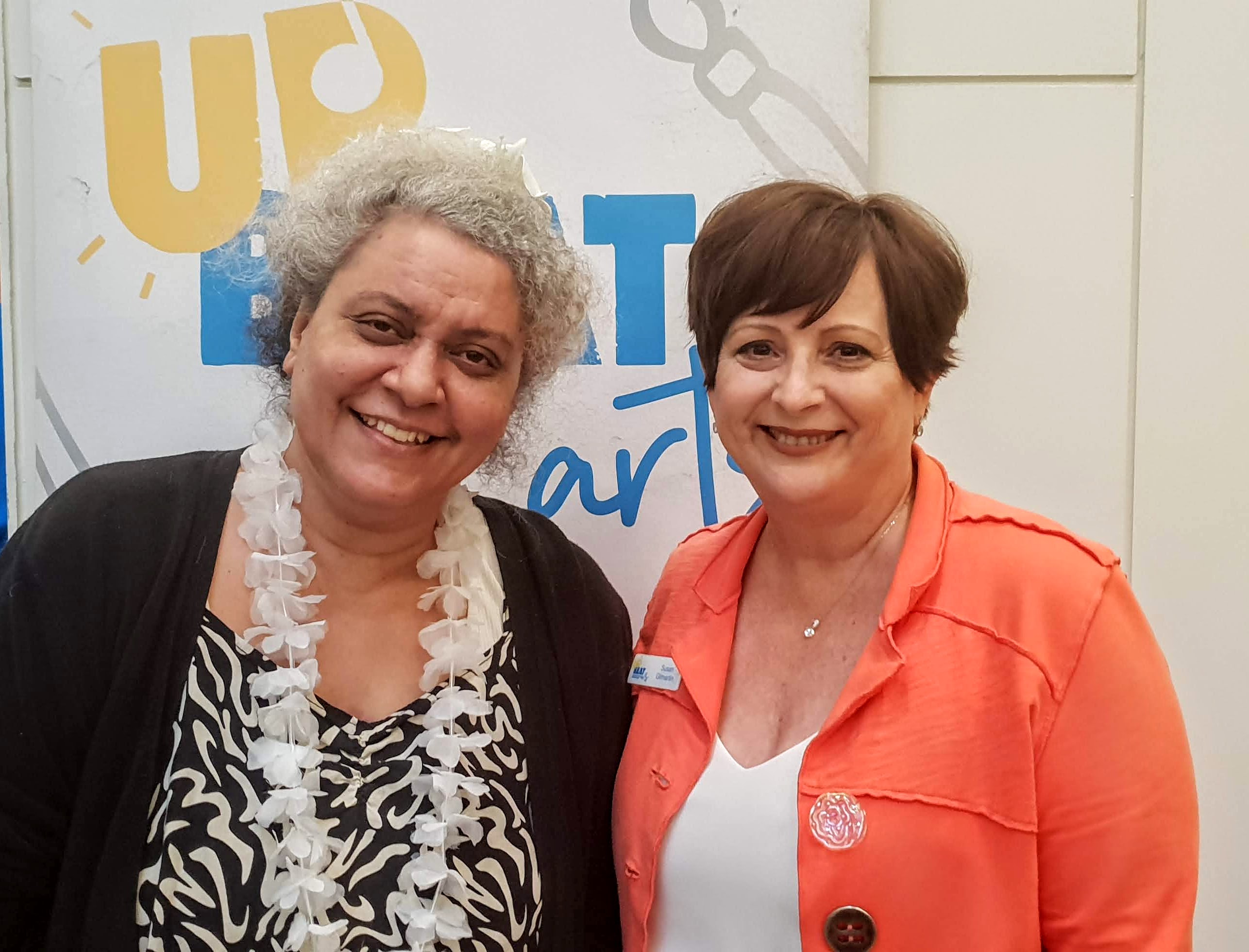
Pictured: Choir Member, Gregory Moore (Guest Artist) , June Perkins (Representing QWC), Cate Vicars (MC); The Choirs, June and David Perkins and June with Susan Gilmartin


 June Paisa Perkins